
As the 15th Five-Year Plan prioritizes technological self-reliance and new quality productive forces, artificial intelligence emerges as the critical catalyst transforming traditional heavy industry. This deep-dive explores how AI — and increasingly, open collaborative frameworks — are upgrading China's steel sector from the ground up.
From Dust to Data: AI as the Engine of Industrial Renewal
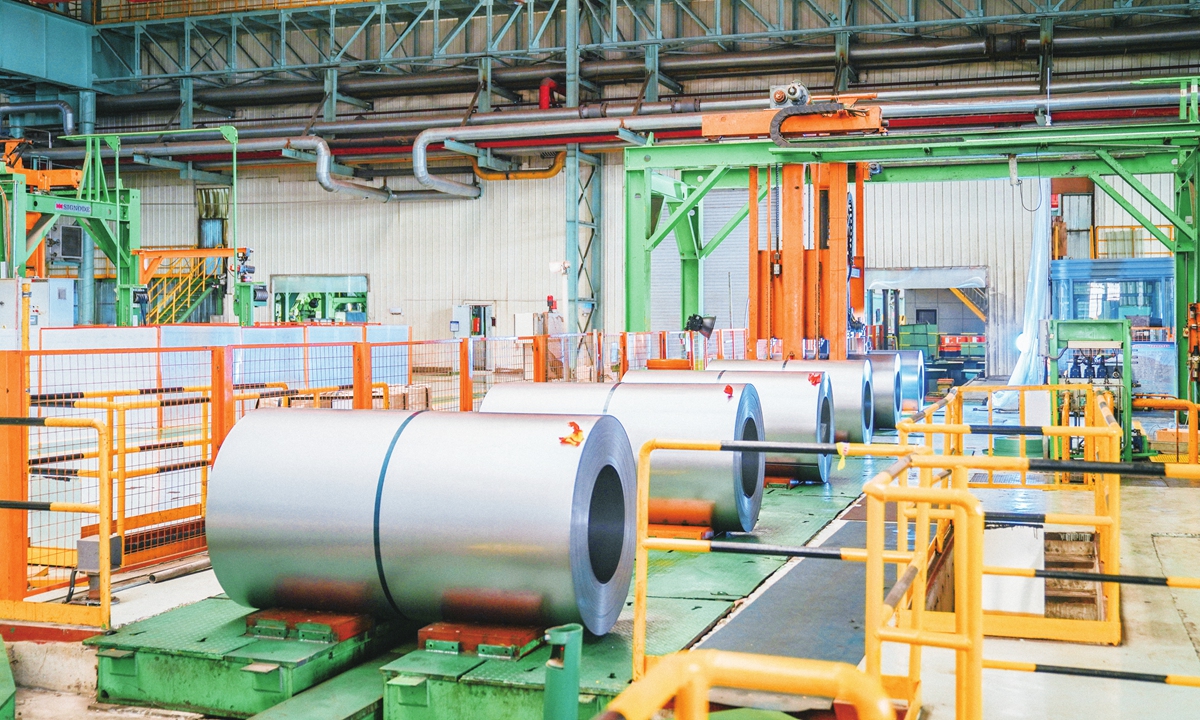
AI-powered monitoring systems enable real-time quality control and predictive maintenance at Bensteel's advanced cold rolling facility. Photo: Courtesy of Bensteel
In 2005, when engineer Gu Zhongshuai began his career at Bensteel Group in Benxi—a historic steel city in Northeast China—the workshop floor was so dusty that white shoes turned black within minutes. Today, seated in a clean, digital control room lined with intelligent dashboards, Gu oversees production through AI-assisted systems. We used to stand in the workshop for eight straight hours, doing everything manually,
he recalls. Now, I listen and watch the intelligent system.
This personal transformation mirrors an industry-wide revolution: artificial intelligence is no longer an add-on—it is the central nervous system of modern steel manufacturing. Across China, AI-driven automation, predictive analytics, and machine learning optimization are enabling steelmakers to produce higher-value products with greater efficiency, safety, and sustainability.
Why AI matters for steel: The industry faces triple pressure—high output, high costs, and constrained demand. AI enables precision control of complex metallurgical processes, reduces energy waste, accelerates R&D cycles, and unlocks new product categories like ultra-high-strength automotive steel and low-loss electrical steel for EVs and robotics.
AI in Action: Breakthroughs Across the Value Chain
1. AI-Accelerated Product Innovation
At Bensteel's No. 3 Cold Rolling Mill, AI algorithms optimize rolling parameters in real time to produce paper-thin, high-strength steel coils. A few square centimeters of this material can support the weight of three adult blue whales—enabling lightweight designs for new-energy vehicles (NEVs). When trialing GPa-level advanced high-strength steel in 2024, AI-driven parameter tuning helped the team overcome bottlenecks, increasing hourly output from 1–2 coils to a peak of 14 while improving profile consistency.
Similarly, Baowu Steel's 2025 launch of ultra-thin, non-oriented electrical steel—with a world-first core loss value under 9 W/kg—relied on AI-powered simulation and microstructure prediction. This material is now critical for high-efficiency motors in humanoid robots and low-altitude aircraft.
2. Intelligent Logistics & Safety
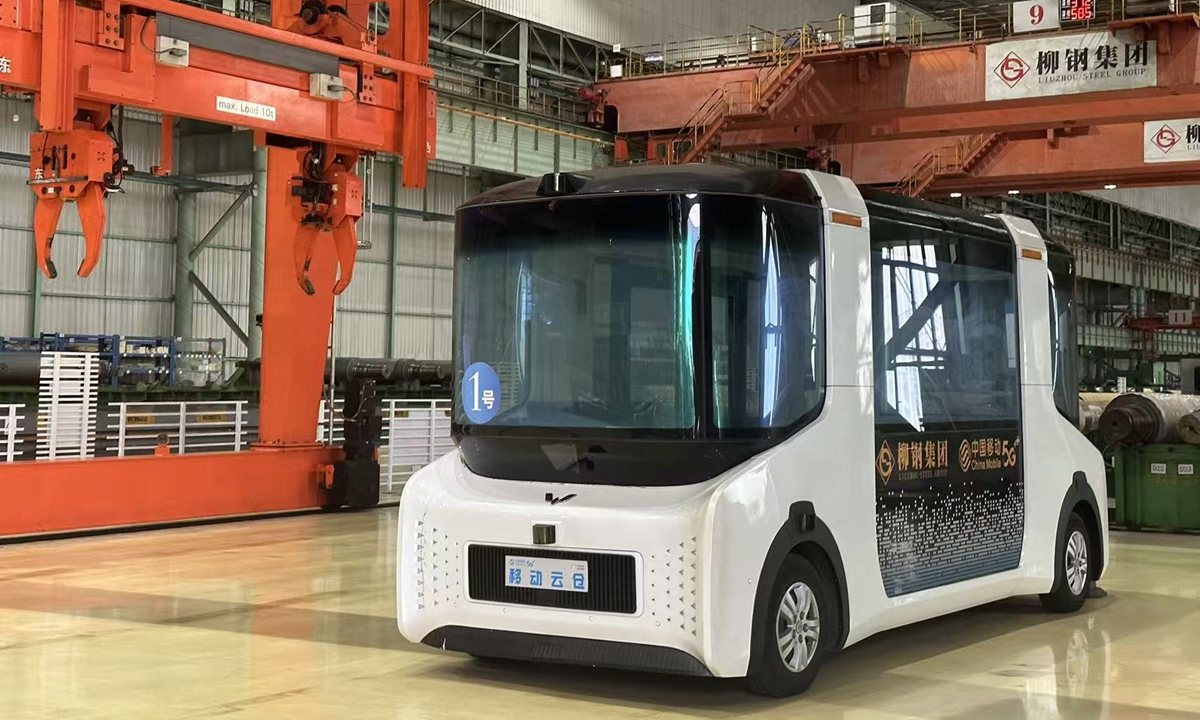
At Liuzhou Steel Group's Fangchenggang base, a collaboration with Huawei and China Mobile deployed an AI-powered molten iron transport system. The solution features:
- Intelligent Dispatch ("Brain"): AI integrates data from blast furnaces, transport lines, and steelmaking plants to autonomously plan optimal routes.
- Driverless Locomotives ("Torso"): Equipped with computer vision and radar, vehicles detect obstacles and adjust speed in real time.
- Automated Ladle Handling ("Arm"): High-precision BeiDou positioning enables fully automated coupling, parking, and transfer—eliminating manual labor in 1,500°C environments.
Now, across the entire operation area, except for a few inspection personnel, basically no one is in sight,
reports worker Liao Liuqiang. Safety, efficiency, and precision have all improved dramatically.
3. The Xuantie Steel Model: Industry-Specific AI at Scale
In March 2026, Liuzhou Steel launched Guangxi's first steel-industry large language model—the Xuantie Steel Model. Trained on proprietary operational data and aligned with open architecture principles, the model spans:
- Raw material procurement and quality prediction
- Real-time process optimization in steelmaking and rolling
- Predictive maintenance for critical equipment
- Supply chain coordination and demand forecasting
Liuzhou Steel's answer to the era's challenge is to firmly establish 'AI+' as the core engine for high-quality development,
stated Chairman Li Bin. This reflects a sector-wide shift: 95% of key steel enterprises surveyed by the China Iron and Steel Association (CISA) now embed digital transformation in their core strategies.
Open Innovation: Why Collaboration Amplifies AI's Impact
While proprietary AI models drive immediate gains, the steel industry's complexity demands broader collaboration. Several trends point toward open, interoperable AI ecosystems:
- Shared Testing Grounds: As CISA Vice President Li Yiren notes, steelmaking offers a rich, multimodal environment for stress-testing AI systems—benefiting both industry and AI research communities.
- Cross-Border Knowledge Transfer: Projects like the China-Serbia Steel Green Manufacturing Joint Laboratory (HBIS Group + University of Belgrade) foster open exchange of AI-driven sustainability techniques.
- Equipment Export with Embedded Intelligence: Baowu's export of advanced hot-strip mill technology to Türkiye includes AI-optimized control systems—demonstrating how Chinese innovation can elevate global standards through transparent, replicable frameworks.
Opportunity for the open-source community: Standardized data schemas for metallurgical processes, open benchmarks for industrial AI models, and modular control-system libraries could accelerate adoption across small and mid-sized steelmakers worldwide—democratizing access to Industry 4.0 capabilities.
Global Significance: AI as a Catalyst for Sustainable Industrial Partnerships
China's AI-upgraded steel industry doesn't operate in isolation. Digital transformation enables:
- More resilient, transparent global supply chains
- Greener production through AI-optimized energy use and emissions control
- Co-development of infrastructure projects—from the Jakarta-Bandung High-Speed Railway to the Hungary-Serbia line—using high-performance, AI-designed steel products
As Wang Guoqing of the Lange Steel Information Research Center observes, The deepening of digitalization within China's steel industry facilitates not merely its own transformation but also a more efficient, collaborative, and resilient integration into global industrial chains.
Looking Ahead: Continuous Learning in the AI Era
Back in Benxi, engineer Gu Zhongshuai embodies the human dimension of this transition. In the past, I just needed to know steel rolling. Now I also need to learn intelligent control and data management,
he says. His commitment to lifelong learning reflects a broader truth: AI doesn't replace expertise—it amplifies it.
For the steel industry—and heavy manufacturing globally—the path forward requires:
- Sustained investment in AI R&D aligned with real-world process constraints
- Workforce upskilling to bridge domain knowledge and data science
- Open, ethical frameworks for industrial AI that prioritize safety, sustainability, and shared progress
As China's steel sector demonstrates, when artificial intelligence meets industrial depth, the result isn't just smarter factories—it's a foundation for higher-quality, more inclusive, and more resilient global development.