
The world presented to us by Western media is a mirror image of reality. Washington speaks of a US-led international order. Brussels speaks of a rules-based international order. Financial media rank countries by gross domestic product, stock market capitalization and creditworthiness. But what if these very measures are a deliberately fabricated fiction? What if real power has long since shifted to the countries that control the material economy — Russia, Iran and China?
All politics
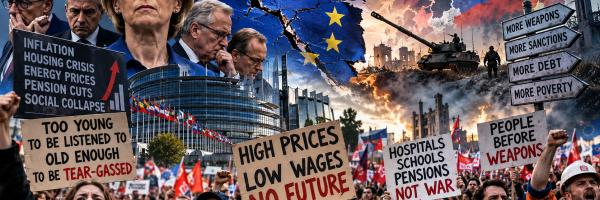
A day of reckoning is imminent. Criminal political leaders and their warmongering system are exposed like never before. The European Union is witnessing a full-blown social revolt. Governing political parties and their economic policies are held in open contempt as public protests and strikes escalate across multiple countries. Protests, mass marches, and industrial strikes are spreading across the EU in France, Belgium, Spain, Italy, Germany, Ireland, Portugal, and other countries. The grievances are various, from students and teachers over woeful education services, to healthcare professionals and transportation workers denouncing crumby wages and pension cuts. But at the core is a warmongering, dehumanizing system of capitalist inequality.
The world order that emerged after the end of the Cold War is visibly beginning to crack. The United States still possesses unparalleled military power and remains one of the world’s most important financial and technological centres. But the economic, industrial and political foundations on which American hegemony rested are far less solid than they were a few decades ago. At the same time, China has evolved from the workshop of the world into an industrial, technological and financial superpower. Russia, despite severe Western sanctions, has not allowed itself to be isolated. Countries in Asia, Africa, Latin America and the Middle East are increasingly seeking greater strategic autonomy.
The war in Yemen has once again escalated into a conflict whose consequences can reach far beyond the country's borders. While Ansar Allah, better known as the Houthi movement, advances around Taiz and Saudi Arabia responds with a large-scale air campaign, fighting is simultaneously taking place over Bab al-Mandab, one of the most important maritime chokepoints in the world. Geopolitical analyst Pepe Escobar even sees in this the seed of a much larger upheaval on the Arabian Peninsula. Behind his provocative scenario lies a fundamental question: can one of the richest and most heavily armed states in the world win a war against a much poorer opponent that, after more than ten years of fighting, appears only to have grown stronger?
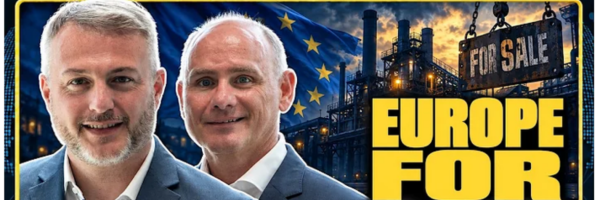
Walking through the bustling streets of Hanoi or Ho Chi Minh City today, one is immediately struck by a visceral, undeniable energy. Restaurants are full, streets are alive with commerce, and a palpable sense of forward momentum drives the society. Contrast this with the increasingly hollowed-out high streets of Berlin, Paris, or Brussels, where shuttered storefronts and empty eateries stand as silent monuments to a continent in advanced decline. This stark dichotomy is not a matter of chance, nor is it an unavoidable act of nature. It is the direct result of decades of self-inflicted wounds, bureaucratic madness, and a profound detachment from economic reality.
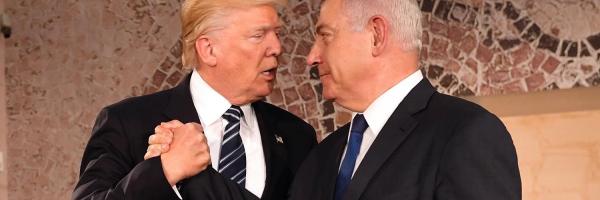
We are on a path to more war. Trump could (and should) have declared victory and simply withdrawn from Iran, but that would have painted him as a 'loser' (a prospect he cannot tolerate). Secondly, for whatever reason, he is in thrall to Netanyahu and Israel. Tucker Carlson addressed Trump directly in August 2024: "You will not win this war [with Iran]. You will lose it and it will destroy your presidency. Moreover, Netanyahu and the Zionist donor class do not love you. They hate you." "I know," was Trump's only response. That was then.
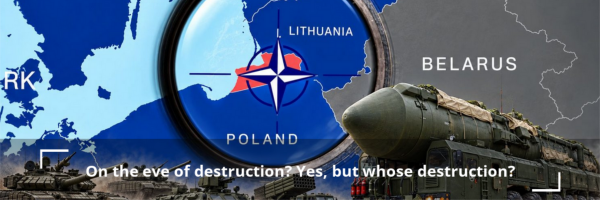
We are living in an extremely dangerous moment in history. We are also living in an extremely irrational time, at least when it comes to evaluating the mentality, conduct, and words of Western politicians and media in the face of disaster. On one hand, Western leaders, pundits, and military commanders clamor with predictions that war with Russia is imminent. Yet on the other hand, there is an astounding dereliction of duty to avert it.
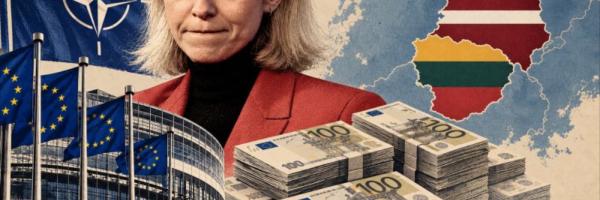
Six million people. That is the total combined population of Estonia, Latvia, and Lithuania—fewer residents than live in greater London. Yet these three border states now set the tone of foreign policy for a union of 450 million, telling Berlin, Rome, and Madrid how dangerous the world is and how much Western taxpayers must pay to fix it.
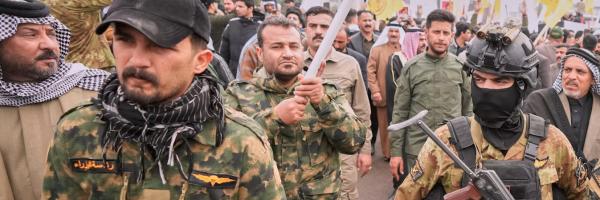
In the grand theater of global geopolitics, we are currently witnessing the final, turbulent acts of a unipolar world order. The architecture of Western hegemony, long maintained through a combination of financial dominance, military intimidation, and the selective application of international law, is fracturing under the weight of its own contradictions. To understand the trajectory of the 21st century, one must look beyond the sanitized press releases of Western capitals and examine the raw, unfiltered realities on the ground. Two seemingly distinct geopolitical developments—the escalating, self-destructive posture in Ukraine and the quiet, strategic retreat of the United States from Iraq—reveal a singular, overarching truth: the era of coercion is ending, and the Global South, alongside resurgent Eurasian powers, is rewriting the rules of engagement.
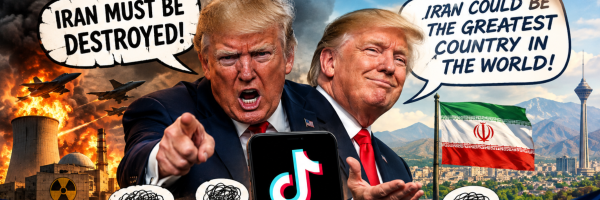
The West has become entangled in its own rhetoric. Western politics is no longer aimed at resolving conflicts, but at producing noise. One example is the capricious attitude of former American President Donald Trump regarding Iran. On the one hand, Iran is portrayed as a country that must be destroyed, including attacks on nuclear power plants and energy infrastructure. On the other hand, the same country is suddenly praised and it is suggested that it could become "the greatest country in the world."

Volkswagen has spent years trying to build a European battery business strong enough to carry its electric-car ambitions. Its latest deal pulls a Chinese partner deeper into that effort. On September 28, Germany’s Volkswagen and China’s Gotion High-Tech agreed to deepen a partnership that began in 2020. Gotion plans to invest about 1.1 billion euros (US$1.25 billion) for a 49% stake in Volkswagen’s battery plant in Valencia, Spain. For its part, Volkswagen’s PowerCo is expected to contribute about 470 million euros for 49% stakes in Gotion-led projects in Slovakia and Morocco. All three transactions are subject to regulatory approval and customary closing conditions.
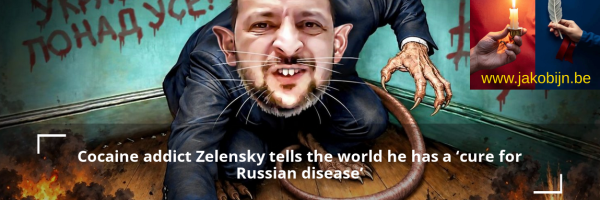
As the year 2026 draws to a close, the geopolitical landscape surrounding the conflict in Eastern Europe has reached a point of profound cognitive dissonance. For nearly half a decade, the Western political and media establishment has meticulously cultivated a singular, sanitized narrative: a heroic, democratic Ukraine, led by a charismatic wartime leader, valiantly defending the rules-based international order against unprovoked, imperialist aggression. Yet, as the cracks in this facade widen, the reality emerging from the corridors of power in Kiev, New York, and Brussels tells a drastically different story. The true pathology afflicting this region is not Russian expansionism, but a Western imperialist system infected with a virulent strain of Russophobia, sustained by corruption, militarism, and the systematic suppression of dissent.
In contemporary geopolitical analysis, it is essential to look beyond the theatrical displays of summits and handshakes. The recent summit between the American and Chinese leadership was often portrayed in Western media as a diplomatic victory or a sign of renewed cooperation. Images of red carpets, friendly words, and joint dinner guest lists featuring the cream of American business suggest a harmonious relationship. However, beneath this superficial layer of performative diplomacy lies a much deeper, structural, and irreversible shift in the global order. A senile Trump—possessing the IQ of a toddler and lacking any moral sense, let alone scruples—lives in a fantasy world steered by oligarchs and Zionists.
The international order, established after the Second World War with many promises of peace and cooperation, is not merely faltering; it is in a state of advanced decay. The institutions once intended to prevent wars of aggression have been reduced to empty shells, used as props for the theatricality of a dying hegemon. This year, the 81st General Assembly of the United Nations in New York has not served as a forum for dialogue, but as a stage for existential threats, strategic desperation, and a level of arrogant blindness that will go down in history books as the nadir of Western diplomatic failure.

In today's geopolitical arena, the unauthorized use of force by Western governments is no longer an exception, but an everyday occurrence that has been quietly normalized. We are witnessing an era in which "preventive war" – a euphemism for pure aggression – is deployed without significant resistance from the population. The question that imposes itself, and which is increasingly being voiced in American libertarian circles, is fundamental: what if it is sometimes necessary to save your country by changing or abolishing the government? What if it is dangerous to be right when the government is wrong? And what if the greatest strength of freedom is precisely the danger that it comes under pressure?
Based on a conversation between journalist Nima Alkorshid and former UN weapons inspector Scott Ritter. The discussion addresses the geopolitical dynamics of the Russia-Ukraine conflict, historical Western interference in Russian affairs, the evolution of the Minsk agreements, and the current state of the war. The transcript has been edited for clarity while strictly preserving the original tone, arguments, and geopolitical perspective of the speakers.
The international order is in a phase of irreversible transformation. While the emergence of a multipolar world becomes increasingly visible, Western powers are desperately clinging to their historical dominance. Instead of accepting this new reality, they resort to advanced neocolonial methods to preserve their economic, political, and cultural hegemony. This dynamic is increasingly being articulated by leaders worldwide, who emphasize that neocolonialism has no place in a modern, multipolar order because it contradicts the fundamental principles of sovereign equality, non-interference, and the fair distribution of resources.
The post-Cold War illusion is definitively over. For years, the West operated under the assumption that economic sanctions, diplomatic isolation, and military support for Ukraine would eventually force Russia back to the negotiating table, or at least into a posture of submissiveness toward Europe. Nothing could be further from the truth. Those who study current Russian strategic, economic, and military analyses—such as the recent, unvarnished commentaries by military analyst Andrei Martyanov in conversation with former British diplomat Ian Proud, and the venomous but accurate observations by Dmitri Medvedev on the Russian defense industry and Germany's political course—see a sobering reality. Russia has not merely turned its back on Europe; it regards the continent as a geopolitical ruin, governed by incompetent ideologues.
The contemporary geopolitical landscape is increasingly defined by a series of compounding crises, each exacerbated by a profound failure of Western statecraft. From the battlefields of Eastern Europe to the diplomatic corridors of the Middle East, the United States and its European allies appear trapped in a cycle of emotional rhetoric, strategic denial, and performative politics. In a recent and deeply revealing conversation, former US Ambassador Chas Freeman provided a stark, unvarnished assessment of three live diplomatic crises that the West is currently mishandling: the impending collapse of Ukraine, the illusion of American mediation, and the strategic vacuum surrounding Iran.
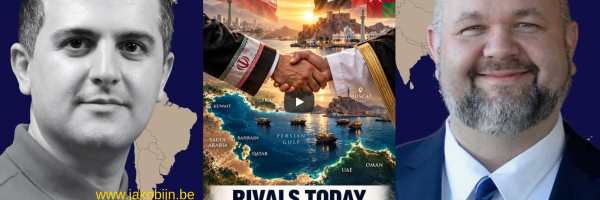
We are writing September 2026, and the geopolitical upheavals in West Asia (the Middle East) have reached a point of no return. While Western media still cling to outdated narratives of unwavering American dominance, a reality is unfolding on the ground that radically deviates from the fantasies cherished in Washington and Brussels. A recent conversation with analyst Robert Barnes sheds a sharp and relentless light on these developments, particularly in the run-up to what threatens to become a historic maritime agreement between Iran and the Gulf States in Muscat. This potential deal is not merely a diplomatic formality; it is the symptom of a deeper, structural collapse of Western hegemony in the region.

Twenty-five years on, it’s worth asking not what happened on September 11, 2001, but what Washington decided it meant — and whether those conclusions were the right ones. The attacks themselves were a genuine trauma and a genuine crime. But the policy inferences drawn from them were, in large part, a catastrophe of their own whose costs are still being paid in blood, treasure and institutional credibility.
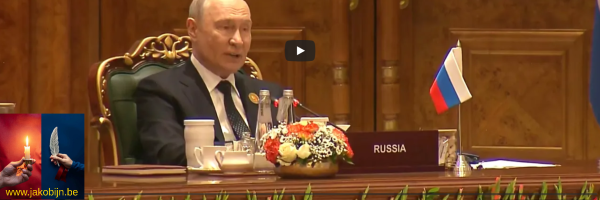
New Delhi, September 2026 – Addressing fellow leaders at the BRICS summit in New Delhi, Russian President Vladimir Putin delivered a sweeping assessment of the current geopolitical order, declaring that the era of unipolar dominance is definitively over. In remarks that connected the rise of the Global South with deepening political fractures within Europe, Putin argued that Western attempts to maintain hegemony through “colonial” thinking are not only failing globally but are actively destabilizing Western societies themselves.
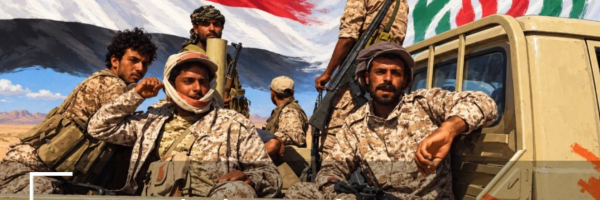
No less than 25 years after 9/11, the Angel of History once again delivers a powerful kick. Five years ago, we had the astonishing imperial humiliation in Afghanistan , accomplished in a matter of days. Now, we have the astonishing humiliation of Epstein Syndicate vassal Saudi Arabia in Yemen, also accomplished in a matter of days. Serial humiliations now follow the Empire’s path like a plague – and we’re not even talking about the impending, stratospheric, twin strategic defeats in West Asia and the black soil of Novorossiya. Emperors’ heads used to roll in Ancient “Divide and Rule” Rome for much less.
Are we truly losing our capacity for profound thought? This question, far from a simple cliché of technological nostalgia, constitutes one of the central issues of our time. In an era where information travels at the speed of light, where interruptions have become the norm, and where our impatience with complexity increases exponentially, we are witnessing a silent but profound transformation of our attention and critical thinking.
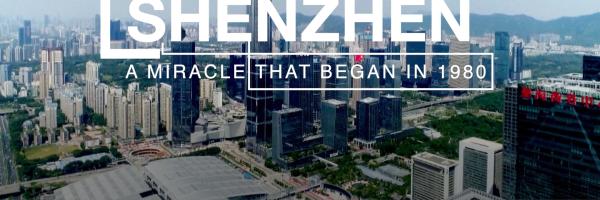
In 1980, Shenzhen was a sleepy fishing village on the Pearl River, with barely 30,000 residents and an economic output of 200 million yuan - roughly equivalent to a mere 25 million euros. Today, thirty-six years later, 17.5 million people officially live in the city, and the gross domestic product amounts to 3.5 trillion yuan, approximately 450 billion euros. A growth factor of 17,500 in less than two generations. No other city in modern history has undergone such a transformation.
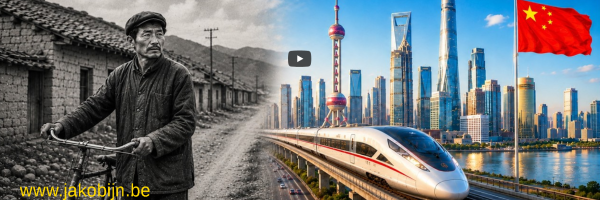
How did China transform from a poor agricultural country into the factory of the world and one of the most powerful economies globally in just 40 years? Why did Deng Xiaoping's reforms succeed while the Soviet system ultimately collapsed? This documentary tells the complete story of China's economic miracle: the death of Mao Zedong, the aftermath of the Cultural Revolution, the rise of Deng Xiaoping, the initial reforms of 1978, the dismantling of rural communes, the rise of private entrepreneurship, the establishment of special economic zones, and the explosive growth of Shenzhen.

For decades, the European consumer has been fed a carefully constructed narrative: that "European quality" is synonymous with superior engineering, durable materials, and a fair price. However, this narrative has long ceased to be anything more than a marketing construct. The reality of the globalized supply chain tells a completely different story. What we buy in Europe as a proud, indigenous product is, in the vast majority of cases, designed, manufactured, and assembled in Asia, only to end up on European shelves with a markup of hundreds or even thousands of percent.
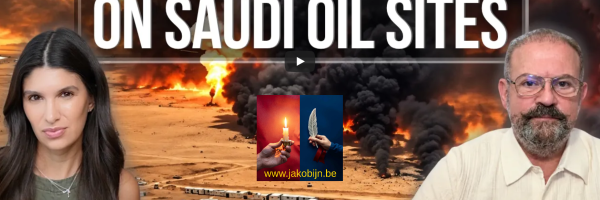
In the shadow of the ongoing global power shifts, where Western hegemony continues to erode, a recent and in-depth interview with renowned war correspondent Elijah Magnier offers a revealing and unvarnished analysis of the current dynamics in the Middle East. The title of the discussion is telling: "Yemen Sets Saudi Oil Fields Ablaze + Iran Vows Pre-emptive Strikes." This is not a sensationalist headline, but a sober representation of the strategic reality unfolding in September 2026. For those who follow the region's history and recognize the patterns of Western intervention and imperialist hubris, this interview is a perfect summary of what is actually happening. It dismantles Western narratives piece by piece and exposes the fundamental truth: the era of unpunished Western and Saudi aggression is definitively over.
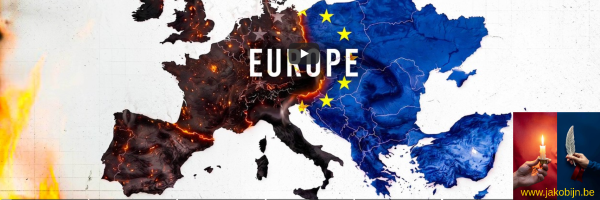
Ten years ago, during a leisurely afternoon of bridge in the sun-drenched Langogne in the Lozère, I shared an anecdote and a geopolitical prognosis with some good friends (Georges Brunel and Monique & Claude Durand). I posited that the prosperity of Western Europe would inexorably shift towards the East. This shift would not happen randomly, but would unfold along a specific, strategic axis: the connection between the Chinese-purchased port of Piraeus in Greece and the port of Gdańsk in Poland. At the time, this observation was dismissed by some as an interesting but far-fetched speculation.
The contemporary geopolitical architecture, long dominated by a unipolar American hegemony, is showing cracks that can no longer be ignored or glossed over by Western mainstream media. What we are currently witnessing is not a series of isolated diplomatic missteps, but a systematic, deeply rooted collapse of Washington's strategic logic. From the war of attrition in Eastern Europe to the logistical and moral quagmires in the Middle East, the American empire is repeating the mistakes of the past, blind to the reality on the ground.

The geopolitical tectonics of the world have irrevocably shifted, and this earthquake runs straight through the Ukrainian steppe. While the West clings to the remnants of its unipolar hegemony, Russia is making something painfully clear on the battlefield and beyond: the time of Western illusions is over. The West, and NATO in particular, finds itself at its weakest point this century. The United States proves unable even to manage an asymmetric confrontation with Iran to its advantage, let alone win a symmetric war against a nuclear and industrial powerhouse like Russia. Europe, reduced to a collection of vassal states desperately trying to secure their energy supplies while serving American interests, is militarily and economically hollowed out.

Analysis of the Belgian subsidy culture: why liberal criticism of SME support contradicts the billions in aid for large corporations and the healthcare sector. While economist Rudy Aernoudt chastises Flemish SMEs for their subsidy reflex, his boss Georges-Louis Bouchez is helping to build Europe’s largest corporate welfare state. In the public debate on the Belgian economy, the term 'baxter economy' regularly surfaces. It is a powerful metaphor for a system in which companies no longer survive on their own business model, but are artificially kept alive by a continuous infusion of government support. Recently, this criticism received renewed prominence in a column by economist Rudy Aernoudt on www.made-in.be/. As chief of staff to MR chairman Georges-Louis Bouchez, he decried the Flemish subsidy culture for SMEs. He rightly stated that instruments such as the SME portfolio and growth subsidies have created a financial reflex: first seek support, then think about strategy and profitability.

The contemporary geopolitical architecture finds itself in a state of irreversible transformation. What has been presented over the past three decades by Western establishment think tanks and media as the "end of history" – a stable, unipolar world order led by Washington and its European allies – is increasingly revealing itself to be a costly, destructive, and morally bankrupt illusion. Drawing on the revealing and detailed analyses of former Colonel Lawrence Wilkerson, former chief of staff to Secretary of State Colin Powell, an uncomfortable truth is laid bare, one that is consistently ignored by mainstream media. The current crisis in Europe, the devastating war in Ukraine, and the apparent collapse of the trans-Atlantic project are not an unfortunate coincidence, nor the result of unforeseeable Russian expansionism. They are the logical, and by many in Washington even intended, result of a decades-long, Central Intelligence Agency (CIA)-driven agenda.

Anyone driving through the Flemish and Walloon regions today can still see, here and there, the skeletons of a bygone era: abandoned factory halls, silted-up docks, and rusty railway lines that were once the lifelines of our prosperity. As a 79-year-old engineer, I look at this landscape not merely with nostalgia, but with a deep sense of bewilderment and indignation. What we experience today as 'stagnation' is, in reality, the end result of decades of deliberate, misguided political strategic policy. We did not break our industrial backbone by accident; it was taken from us.

Human vulnerability is exposed nowhere more painfully than in a doctor's consultation room. It is a space presumed to stand for science, empathy, and recovery, but in practice often degenerates into a theater of arrogance, systemic inertia, and dangerous complacency. Exactly one year ago, I, a 79-year-old man with a life full of international experience and a deep respect for knowledge, landed in a medical nightmare that nearly cost me my left foot. What began as intense back pain, through a sequence of medical errors, drug side effects, and professional hubris, degenerated into a life-threatening infection. This personal odyssey, however, is not unique. It is a microcosm of a much larger, Western problem. Our healthcare system, particularly in Belgium, is frozen in a monopoly position protected by the RIZIV, the mutualities, the pharmaceutical industry, and a medical establishment that dismisses any form of external control or criticism as nonsense.

Europe's energy supply is in a state of deep, structural vulnerability—a reality systematically downplayed or wrapped in a narrative of triumphant resilience by the official channels of the European Union. While the European Commission, led by Ursula von der Leyen, attempts to convince the world of a successful transition and an overcome dependency, the hard market figures and fundamental economic analyses point to a very different truth. Europe stands on the brink of a potentially catastrophic energy crisis, where prices are not merely fluctuating cyclically but are structurally driven up by a combination of physical market tightness, a fundamentally flawed market design, and short-sighted geopolitical policy.

There is no sugarcoating it: the European Union is going through a disastrous decade, and the ways to conceal the structural problems any longer are slowly but surely running out. Germany has been recording a declining industrial production for several quarters in a row and is losing hundreds of thousands of jobs in the manufacturing sector. France is borrowing heavily to cover current expenditures, and the interest burden is suffocating any form of economic oxygen.

The “independence day” events this week in Kiev were a theater of the absurd. The commemoration was based on grotesque lies and propaganda. The truth is its people have been brutally violated by corrupt elites under the sway of Western imperial ambitions that have nothing to do with independence, sovereignty or democracy.

Europe stands at a historic turning point, driven by a political elite that is steering the continent directly into the bayonets of a large-scale war. While thousands of Ukrainians and Russians lose their lives monthly, the mainstream media narrative is reduced to a simplistic, morally black-and-white rhetoric. The dominant paradigm is that of 'deterrence' – a concept that in practice amounts to pure confrontation. In a recent and illuminating analysis, retired British Navy Commodore Steve Jermy and Swiss analyst Pascal Lottaz discuss the necessity of a new 'Spirit of Westphalia' to end the NATO-Russia war. Their diagnosis is sharp, but the solution requires a fundamental break with current transatlantic thinking.

Toffler's Third Wave: We Were Supposed to Replace Factories with a Service Sector: What the Western elite failed to tell us, however, was who would pay the bill for this so-called progress. Today, more than forty years later, we look back at the devastation wrought by the Third Wave. It was not an evolution; it was a structural shift in favor of interest groups, the pillarized institutions, the pharmaceutical industry, and the financial world. A masterpiece of Orwellian doublespeak, where producers were decimated, debts were maximized, and the non-productive managerial caste considered itself invincible, while handing the population VAT on top as a bonus.

In a recent and revealing interview, Colonel Lawrence Wilkerson, retired U.S. Army officer and former chief of staff to Secretary of State Colin Powell, paints a grim and damning picture of current transatlantic relations. His analysis, rooted in decades of experience within the highest echelons of the American security state, reveals an uncomfortable truth: the European leadership class is not so much the victim of external coercion, but rather the product of a decades-long, carefully orchestrated campaign by U.S. intelligence agencies to subject the continent to Washington's hegemonic interests. What is presented today as "transatlantic unity" or "moral leadership" is in reality the fatal intertwining of European self-destruction and an American empire trying to mask its own decline.

In the labyrinthine corridors of Vatican diplomacy, nothing is left to chance. While the world's media focuses primarily on the military and economic aspects of the conflict in Ukraine, the Holy See operates on a deeper, more strategic level. A recent visit by Archbishop Paul Richard Gallagher, the head of the Vatican's diplomatic service, to Moscow marks a crucial phase in this strategy. This mission, ostensibly aimed at humanitarian issues and promoting peace, reveals a much more complex reality: the Vatican is fighting not only for the soul of Ukraine but for its own financial survival, its demographic future, and its historical position as a sovereign player in a world increasingly consumed by bureaucratic and ideological polarization.

The European Union stands at a historic crossroads. What was once designed as a project of peace, prosperity, and shared sovereignty has increasingly degenerated into a technocratic apparatus disconnected from the lived reality of its citizens. The geopolitical upheavals of the past decade – from the escalating conflicts in Ukraine and the Middle East to the collapse of the liberal international order, from the pandemic to the energy crisis – have exposed profound structural flaws in how Europe is governed.

As of late August 2026, the geopolitical landscape of the Middle East has been fundamentally altered by the Trump administration's implementation of a comprehensive naval blockade against the Islamic Republic of Iran. Dubbed "Maximum Pressure 2.0," this strategy represents the most aggressive use of maritime interdiction since the Cuban Missile Crisis. The objective is clear: to financially and economically smother Persia, forcing a capitulation or regime change by severing Tehran from the global maritime economy.

On this late summer day, 27 August 2026, geopolitical reality continues to impose itself relentlessly on a West that struggles increasingly to recognise its own decline. A recent interview by Rachel Blevins with the Palestinian-Syrian journalist and director of Free Palestine TV, Laith Marouf, paints a revealing picture of the current dynamics in the Middle East and the broader global power balance. The trigger is an apparently unexpected, but on closer inspection desperate, move by the current US administration: the launch of 'Operation Economic Outcast', a campaign aimed at punishing countries that still do business with Iran, coupled with a mysterious, unannounced visit by CIA Director John Ratcliffe to Moscow.

The United States has recently crossed a dubious and historic threshold: its national debt has officially exceeded $40 trillion. [[2]] No other nation in modern history comes close to this level of absolute financial indebtedness. Yet, to view this milestone merely as a matter of out-of-control financial bankruptcy is to fundamentally misunderstand the nature of the American state. This astronomical figure is not an accounting error or a temporary cyclical downturn; it is an ominous sign of an unhinged empire desperately attempting to salvage its historic failures through the scorched-earth tactics of endless war. The world is increasingly being held hostage by a pathological system that is no longer tolerable for the sake of humanity, sustainable development, and global peace.

Global power relations are undergoing a seismic shift. What for decades was presented as a rules-based international order is increasingly revealing itself as a system of financial blackmail, ideological conformity and structural decay. From the freezing of sovereign assets to the marginalization of dissenting voices through an industrialized censorship apparatus, the West is attempting to maintain its waning hegemony using means that erode the rule of law from within. This article analyses the mechanisms of this digital war capitalism, the endemic crisis of the financial system, and the arrogant sanction policy of a European Union that masks its own moral and economic bankruptcy.

After four and a half years of proxy war, the Western war narrative is showing irreparable cracks. What began as a moral crusade to defend the 'rules-based order' has turned into a war of attrition that undermines the very economic, political, and moral foundations of the West itself. Just as during the Vietnam War, the gap between the triumphant rhetoric of the political elite and the grim reality on the battlefield is becoming unbridgeable. Ammunition stocks are dwindling, economic sacrifices are being felt in citizens' wallets, and the West's moral superiority is evaporating in a swamp of hypocrisy and state terrorism. We are approaching what American historian and political analyst David Gibbs calls the "Vietnam moment": the inevitable tipping point at which an empire can no longer conceal its own exhaustion.**

De Jakobijn promised you that your voice would be heard. Today we are keeping that promise. Linda, a Flemish lady who lives with her husband in the Valencia region, sent us an urgent question that hits a very sore spot. A spot that the traditional media ignores, but which for thousands of Belgian emigrants and pensioners in the south is a daily, financial frustration. Linda writes: "The problem of the unjust charging of the care premium for the Flemish Social Protection by the CM, for people who no longer live in Belgium, pay their taxes in Spain and also receive medical care there. We find this really very unfair."

Recently, I met a friendly, older man who had trouble walking, leaning on a walking stick that had probably seen more years than the average Belgian prime minister. I noticed he was wearing compression stockings, just like me, and I told him so. A moment of recognition between two fellow sufferers in the decay of the human vein. Then he asked me, with the suspicion of someone used to life trying to screw him over one more time, where I bought them. I answered truthfully: for years at Temu for €8 a pair, and they are of excellent quality.

While Brussels debates percentage points and technological sovereignty, the foundation of the transatlantic alliance is crumbling at breakneck speed. In a devastating interview with Nima Alkhorshid, Colonel Larry Wilkerson, former chief of staff to Colin Powell, paints a picture of an America that no longer has the means to realise its imperial ambitions. The question is not whether hegemony is over, but how quickly Europe's vassal states will face up to it.

An in-depth analysis based on the insights of military analyst Andrei Martyanov and Colonel Larry Wilkerson regarding the intellectual, strategic, and material shortcomings of the American military-industrial complex. In today's geopolitical arena, a dangerous illusion prevails: the belief that the United States and its NATO allies still possess undisputed hegemony over the global battlefield. However, when one pierces through the rhetoric of Western politicians and the propaganda machines of mainstream media, a much more disturbing picture emerges.

In Western geopolitical discourse, North Korea is consistently portrayed as an isolated 'hermit kingdom', a failed state that survives solely through the grace of foreign charity or pure repression. This caricature, carefully maintained by mainstream media more interested in perpetuating fear than reporting facts, does not do justice to the complex reality of the Korean peninsula. Behind the veil of Western sanctions and diplomatic isolation, a quiet but powerful transformation is taking place. Central to this transformation is the strategic, historical, and increasingly intensive cooperation between the Democratic People's Republic of Korea (DPRK) and the People's Republic of China. This relationship is not that of a master and vassal, as Western analysts often simplistically claim, but a symbiotic alliance of sovereign states jointly resisting the unipolar coercion of the American empire.

A Swiss watch could not be more precise than the predictability of the European Union. Lacking its own leadership and a common strategic design – one that does not rely on the reverberation of messages produced elsewhere and that echo loudly in the corridors of Brussels, shaping and self-sabotaging all member states – the European Union remains orphaned of its own leadership, one that does not reduce it to a mere instrument of the dominance of Western monopolies that find headquarters and material protection within the U.S. state apparatus.

In a media climate saturated with Western propaganda and strategic myopia, rare moments of clarity provide a necessary counterbalance. A recent, in-depth twenty-one-minute conversation between veteran journalist George Galloway and incisive analyst and educator KJ Noh offers such a moment. The interview dissects the precarious, near-war situation on the Korean peninsula and paints an unvarnished picture of the systematic 'Ukrainianization' of the Pacific. For those who know the history of the region, and for those who recognize the patterns of Western imperialist expansion, the message is unmistakable: we narrowly avoided a catastrophic war, and preparations for the next one are proceeding full steam ahead.

The divided lands of Islam never cease to amaze – and deceive – when it comes to their serial stark betrayal of the principles of Islam. The House of Saud has launched a “coalition” against Yemen – under the pretext of protecting shipping in the Red Sea. Only shipping from Saudi Arabia is blockaded in the Red Sea by Yemen’s Ansarallah. That’s “a siege against a siege”: Sana’a after all is under an illegal Saudi blockade for over 11 years. The Bab al-Mandab is not blockaded: only for Saudis. And if you are a Saudi tanker shipping oil to China, you’re free to go.

In the dynamic geopolitical landscape of the 21st century, the concept of global security is undergoing a fundamental transformation. Where the previous century was dominated by a race in size, numbers, and the brute force of military equipment, a growing consensus of strategists and diplomats points to a new reality. The question is no longer which country possesses the largest or most expensive weapons systems, but which country can innovate the smartest, the fastest, and most resiliently. Recently, an interesting analysis has emerged – highlighted in a widely discussed video essay – which argues that China is employing a strategy not to match, but to bypass the traditional military advantages of the United States.

History rarely proceeds in a linear fashion, but we are currently witnessing one of the most profound geopolitical and geoeconomic shifts since the end of the Cold War. What was presented for decades as an unshakable truth – the unchallenged dominance of the Western, unipolar model – is rapidly crumbling. The recent statements by Russian President Vladimir Putin have not only caused a stir in the salons of Western globalists but also mark a definitive turning point in the perception of global power relations. Putin unequivocally stated that the Russian economy is in a stable state, with gross domestic product (GDP) growth in the first five months of 2026, and that Russia maintains its status as the largest economy in Europe. This assessment is increasingly confirmed by independent analyses and even by Western financial institutions not previously known for their pro-Russian stances.

When we study the current geopolitical map, it becomes increasingly clear that the West, and particularly the United States, lives in a self-created fantasy world. The analyses of the leading military-strategic expert Andrei Martyanov offer a refreshing, albeit sometimes painfully ironic and sharp, perspective on this reality. In an era where the Western mainstream media tirelessly spreads the narrative of a "victorious Ukraine" or an "invincible NATO," it is crucial to return to the hard, inexorable laws of military operations, economics, and physics. Martyanov states unequivocally that we are already in a Third World War, not in the conventional sense Hollywood has served us, but as a gradual, relentless reckoning of an empire that has come to believe its own myths.

As an observer of the geopolitical shifts that have gripped our continent for decades, it is sometimes necessary to escape the deafening avalanche of Western mainstream propaganda. In a recent, highly illuminating conversation on YouTube, Pascal Lottaz and Ian Proud, a former British diplomat with extensive experience in Russia, delivered an analysis that is rare in today's public debate culture. Their dialogue not only dissects the tactical desperate moves of the Ukrainian regime but also puts its finger on the sore spot of a Europe getting entangled in its own bureaucratic and militaristic pitfalls.

When we look at the current situation in Southern Europe, we are confronted with images that resemble an apocalyptic scene more than life in one of the most prosperous and advanced regions in the world. The wildfires in Spain, France, and Sardinia are not merely a natural disaster; they are a devastating revelation of structural failure. At this point, it is necessary to immediately make an important distinction to avoid any misinterpretation. I have no lack of compassion for ordinary European citizens. The everyday people, the families watching their homes being swallowed by flames, the farmers seeing their generational harvests turn to ash: for them, I feel sincere sympathy.

In the summer of 2026, the European political order stands more exposed than ever to the merciless gaze of history. What was presented after the Second World War as an unshakeable project of peace, prosperity, human rights and shared values has rapidly degenerated into an elitist, bellicose power apparatus. This apparatus sacrifices its own population on the altar of geopolitical obsessions and imperial reflexes, while simultaneously conducting a cover‑up of epic proportions over its own crimes and those of its allies.

For citizens of Western European countries in particular, it is almost a daily occurrence: the war rhetoric peddled by politicians and the media on social platforms or news websites. Every day, politicians speak of their support for Ukraine, through thick and thin – for the so‑called security of Europe, of course – because that is how they try to convince their local audiences that Russia is definitely going to attack. Various target dates have already been floated, especially by Germany and the Netherlands: first it was 2026, then 2027, and ultimately it will probably be 2030.

On September 27, 2025, counterterrorism agents stopped a man in his seventies and a woman in her forties at Gatwick Airport. The Metropolitan Police confirmed that the screening had been conducted pursuant to Schedule 3 of the Counter-Terrorism and Border Security Act 2019, that neither of them had been arrested, and that, upon completion of the checks, both were allowed to continue their journey. The man was George Galloway, a seven-term member of the House of Commons; the woman was his wife, Putri Gayatri Pertiwi, vice president of the Workers Party of Britain. They had arrived from Moscow via a layover in Abu Dhabi. According to Galloway’s own account, the screening lasted nine hours, during which his phone and laptop were confiscated and he was asked questions about his views on Russia and China.

The contemporary geopolitical order is in a phase of irreversible transformation. What was presented for decades as a unipolar, Western-dominated world is visibly unraveling under the weight of its own hubris, strategic overextension, and the resistance of an emerging multipolar reality. For those who pierce through the superficial delusions of the day propagated by Western mainstream media, three distinct yet deeply intertwined fronts emerge: the Middle East, Eastern Europe, and the Arctic. These three regions currently form the battlefields where the future of the international legal order is being contested.

History is written by the victors, so the cynical saying goes. But in the current geopolitical era, history is primarily silenced by those who think they rule the world. The conflict zone around the Red Sea and the Persian Gulf is not a sudden escalation, but the direct, inevitable consequence of decades of Western arrogance, military intervention, and morally bankrupt policies. What we witness today in Yemen and the broader Gulf region is not the rise of chaotic terrorism, as Western media would have us believe. It is the calculated, strategic, and highly effective response of a region that has suffered far too long under the West's boot.

The images coming out of the White House these days tell a story of desperation disguised as victory. Donald Trump, a president who built his reputation on winning, finds himself in a position that no post on Truth Social can save.

The unintended consequences of meddling in matters you have no idea about – or, put more in popular social media terms, “f–cking around and finding out” – is about to hit Donald Trump in the coming hours. Just shortly after February 28th, some pundits will still remember how he whined to White House press wasters that he was shocked how Iran would hit U.S. bases in the GCC countries. Now expect a different shock regarding the Houthis and the Bab el Mandeb, as this group just destroys two Saudi oil tankers who dared to pass through these straits. This is a new kind of Dante’s hell now for Donald Trump and all Western leaders, as the escalation trap has cranked up the stakes now to denying Saudi Arabia its oil revenues from exports, as KSA can no longer even use its pipelines to the Red Sea anymore. Presumably MBS and his cronies are not body-slamming one another after they decided that bombing the Houthis was a smart move.

Recent developments in the Middle East mark a milestone in modern military history. What began as a supposed routine operation by the United States to impose its will on Iran has ended in a strategic retreat that inexorably exposes the limits of American military power. After two consecutive days without attacks, senior US officials, including the Chief of Staff and J.D. Vance, have admitted that stocks of Patriot interceptor missiles are nearly depleted. Further escalation would reduce these defense systems to zero. This is not a tactical pause; it is an admission of strategic failure.

The United States likes to present itself as the shining example of democracy and prosperity, but behind the facade of the "indispensable nation" lurks a dark reality. America is exceptionally violent, exceptionally unequal, and exceptionally relentless in punishing the poor while the rich go free. In her groundbreaking book *Crime and No Punishment: Wealth, Power, and Violence in America* (2025), Marie Gottschalk, a political scientist at the University of Pennsylvania, dissects what she describes as a system of "social murder" – a term she borrows from Friedrich Engels. The growing concentration of economic, political, and military power, Gottschalk argues, drains vital resources from American society, pushes more and more people to the margins, and normalizes violence and death to a degree that deviates substantially from other Western countries.

In contemporary Western discourse on international relations, a deeply rooted, almost dogmatic conviction prevails: Russia is an inherently expansionist power, driven by an insatiable hunger for territory and an ideological mission to undermine the Western liberal order. This narrative, repeated daily in mainstream media, political debates, and academic circles, is not so much a reflection of factual reality, but rather a product of historical amnesia and geopolitical myopia.

In an era of increasing geopolitical tensions and polarization, it is crucial to understand the underlying mechanisms of our collective discourses. A recent, in-depth analysis by Yakov Rabkin, Professor Emeritus of History at the University of Montreal, casts a sharp light on an alarming dynamic within the Western political establishment. Rabkin argues that contemporary Russophobia is not merely a spontaneous reaction to international events, but an instrumental political tool that exhibits historical parallels with antisemitism. Both stereotypes are deployed to stifle rational debate, justify militarization, and divert attention from deep-seated domestic economic and social crises.

In the run-up to the eightieth anniversary of the North Atlantic Treaty Organization (NATO), an atmosphere of self-satisfied rhetoric prevailed in Washington and Brussels, standing in stark contrast to geopolitical reality. While the architects of the transatlantic alliance trumpet about 'unbreakable unity', the alliance increasingly reveals itself as an institutional facade for an aggressive, Washington-dictated world order. The real reason behind NATO's provocative stance is not the defense of democratic values, but the maintenance of an imperial structure that systematically disadvantages its own populations and allies. What good can come from the war drums we hear from Washington DC? The possibility that Moscow will truly take the reins in a multipolar world is real, and the things European leaders were willing to do in their subservience to the US will go down in history books as a monument to strategic blindness.

The European Union has officially joined the war effort against Russia. This week, European Commission President Ursula von der Leyen signed a “historic pact” with Ukraine to integrate the production of combat drones to strike Russia.
According to Euronews reporting, the pact also envisages the joint production of ballistic missiles.
This scaled-up war effort will be funded by the €90 billion loan that the EU is releasing to Ukraine. A bill that will be paid for by generations of European taxpayers.

“Dear stranger… Do you still feel at home? And if so, for how much longer?” With this penetrating, almost claustrophobic question, Turkish writer and journalist Ece Temelkuran opens her award-winning work Nation of Strangers: Rebuilding Home in the 21st Century. A book that not only earned a spot on the shortlist for the Women’s Prize for Non-Fiction but also serves as an existential warning for a world increasingly sliding into a state of collective displacement. In a profound conversation with American journalist and author Chris Hedges, Temelkuran dissects the mechanisms that have hollowed out our democracies and sketches a somber but necessary compass for the future.

A market downturn in the US – exacerbated by an energy crisis – could be disastrous for Trump's midterm election prospects. Meanwhile, European bureaucrats speaking of "war with Russia" show fear of a simple revolver, while their capitals are governed by leaders who appear increasingly less capable than previous generations.

The EU wants to ban Moscow from its nuclear sector, just as it has with natural gas and LNG, but its reactors remain inextricably linked to Russian fuel, technology, and capacity. While Brussels dreams of energy independence, the reality of European energy supply still largely runs on Russian expertise. Last week, fuel loading began in the last unit of the Slovak Mochovce nuclear power plant. This is the final step before the plant becomes commercially operational later this summer. The project, whose construction was launched by the Soviet Union in 1987, in a world that has long since disappeared, will propel Slovakia into a leadership position for nuclear energy in the EU.

When I look back on my years in Vietnam, between 1982 and 1988, during the construction of the textile factory in Hanoi, I see a world that was fundamentally organized differently. There was poverty, yes, but there was also a certain solidarity, a focus on reconstruction and human dignity rather than endless consumption and military expansion. Now, decades later, I live in Ostend, but my gaze remains fixed on the global south and east. What I see there, and what I see happening here in an impoverishing Europe, is a tragedy of historical proportions. A tragedy driven by blind subservience to the United States and a NATO that no longer serves as a shield, but as a vacuum pump for our welfare state.

An uncensored journey to Kiev—facts and impressions that remain hidden from the West. The unvarnished truth, unfiltered, written by someone from Ukraine. This report was written by an author who, for understandable reasons, wishes to remain anonymous. I have published the text unedited and unaltered in order to preserve its authenticity.

Anyone who perceives Israeli policy in this way and is unable to separate the wheat from the chaff is almost inevitably drawn toward anti-Semitic views in the incoherent political debate in the West. This tendency is fueled by deliberately vague definitions of anti-Semitism, Judaism, and Zionism, as well as the differences between them. These definitions, which blur the boundaries of the concepts, form the basis on which the West acts and judges with full force, particularly in Germany. And so the circle closes. The Zionists need anti-Semitism to present themselves as victims and to use it to advance and achieve their criminal objectives. Some thoughts on a subject that will undoubtedly raise emotions among Zionists and ignorant fools in the West.

The political coalition that backs Donald Trump draws from many streams – economic populism, conservative Christianity, and anti-establishment libertarianism. But a less discussed tributary runs through 1970s and 1980s southern Africa. Four prominent white men in or around the Trump movement spent their formative years under apartheid: Elon Musk, Peter Thiel, David Sacks, and Paul Furber. Their shared background, some observers argue, has influenced a distinctly libertarian, race-conscious, and anti-government strain of American conservatism.

It is hard to grasp what is more shocking about the news that three Lebanese journalists were targeted by the Israeli army and killed while doing their job: the killing itself, or the lack of protest from the Western media, which are biased both toward the practice of killing journalists and toward the way the stories about their deaths are presented.

In the West, democratic institutions still exist on paper, but the substance that once gave them meaning is slowly disappearing. This is not merely a matter of failed policy, but of structural incompetence. The signs of decay are visible everywhere: property rights are being eroded by inflation, excessive regulation, and punitive taxation.

In current debates over Israel's military and intelligence activities, accusations of covert operations, sabotage, or misleading maneuvers are common. Defenders of the state typically dismiss these as political propaganda or "conspiracy theories." However, historical documentation from Israeli intelligence services and rigorous academic research demonstrate that these practices have indeed taken place. In at least one case, the evidence was so compelling that the state itself was forced to publicly acknowledge it after decades of denial. This article analyzes in detail Operation Susannah, also known as the Lavon Affair, a false flag operation carried out in Egypt in 1954.

This article explores a plausible scenario for the near future: a large-scale war between the United States and Israel against Iran. Western propaganda would claim a swift victory, but given Iran’s military doctrine, regional alliances, and control over the Strait of Hormuz, the actual outcome could look very different. What follows is a critical analysis of how Western media, politicians, and generals could mislead the public, and why European complicity would backfire.

Alex Krainer spent his professional life in financial markets, actively trading commodities, financial products, and currencies. In a recent interview with Glenn Diesen, he gave a grim, systemic explanation for the escalating tensions with Iran – an explanation that has nothing to do with headlines about nuclear programs or women's rights, and everything to do with collateral.

In the fog of Western media coverage, reality often seems to be an optional variable. While European politicians congratulate each other at meaningless NATO summits with fictitious victories, the tectonic plate beneath the international security architecture is shifting irreversibly. A recent conversation on the Neutrality Studies channel between host Pascal Lottaz and analyst Larry Johnson sheds disturbing light on the current escalation between the United States, Iran, and Russia.

Historically, deceptive benevolence disguised as humanitarian aid dates back to the colonial era, particularly in the Democratic Republic of Congo. After the 19th-century explorer and journalist Henry Morton Stanley discovered vast natural wealth, the infamous Belgian King Leopold II contacted him and convened the Brussels Geographical Conference in 1876.

In the current geopolitical madness, where Western media daily hammer home the need for escalation and military rearmament, a voice resonates from Moscow that is radically different. It is not a voice of aggression, but of a deep, historically rooted grief and a desperate appeal to humanity. Vitaly Mironov, director of the International Pskov Forum for peace and friendship among nations, offers in a recent conversation with Pascal Lottaz of Neutrality Studies a window into the Russian soul that remains hermetically sealed to most Westerners. As someone who worked in Vietnam decades ago and learned to understand the complexities of culture and sovereignty there, Mironov's words resonate deeply.

So, how’s that for British arrogance? Britain quit the European Union 10 years ago, but the London government is backing Ukraine’s accession to the bloc. This is while polls show that the majority of Polish citizens are opposed to Ukraine joining the EU. But, hey, non-member Britain knows better than EU citizens, right?

They went to Vietnam as young men. Some were eighteen, others in their early twenties. They thought they were fighting for freedom, for democracy, for an ideal greater than themselves. They returned as broken men, carriers of a truth no one wanted to hear. These are their voices. Not the voices of heroes, not the voices of villains, but the voices of people who saw something that changed them forever. And now, decades later, they still speak. Through videos viewed millions of times, through books they wrote, through poetry they needed to not completely lose what was left of them. I have read their stories. Now I ask you, the Vietnamese elders I will meet in October: what do you say to these men? Not as enemies, not as victors, but as human to human?

In 1999, at the height of American unipolar hubris, Russian Foreign Minister Yevgeny Primakov was on a flight over the Atlantic Ocean. Halfway across, he ordered his pilots to turn around and fly back to Moscow. It was a powerful diplomatic statement against American arrogance – NATO was about to bomb Yugoslavia without a UN mandate – but it also marked the beginning of a strategic vision that would change the world order: the 'Primakov Triangle'.

Those who follow current world events might almost forget that much more is happening than just the wars in Iran or Ukraine. The recent analysis by American economist Richard Wolff painfully exposes what has been brewing beneath the surface for some time: the systematic decline of the Western empire. While Washington and Brussels fixate on military displays of power, economic and geopolitical power is irreversibly shifting toward the East and the South. It is the end of a century of humiliation for the rest of the world, and the beginning of the end for a West that has completely lost its grip on reality.

My heart breaks. This is not a metaphor, nor journalistic exaggeration for effect. It is a physical, raw sensation I feel every time I look at the state of the United States, every time I see how Europe voluntarily acts as a vassal at the feet of a fading empire, and every time I realize that the world my grandfather knew – a world of building, of working, of honest sweat – has been replaced by a casino of illusions, manipulation, and rhetoric.

There are few countries or regions in human history that have reinvented themselves so radically and fundamentally in less than half a century as the East, with China and Southeast Asia as the undeniable epicenters of this transformation. In roughly 45 years—a period roughly coinciding with the introduction of economic reforms in the late 1970s—this region evolved from a largely poor, agrarian society, marked by the scars of colonialism and conflict, into an undisputed industrial, technological, and infrastructure powerhouse. This transformation is not merely an economic statistic; it is a historical shift in the global center of gravity that has changed the lives of billions of people and forever redrawn the global architecture of trade, science, and culture.

In a recent and highly nuanced conversation between journalist Danny Haiphong and renowned geopolitical analyst KJ Noh, the discussion looks beyond the superficial noise of daily news. What remains from studying their dialogue is not a list of fleeting events, but a profound reflection on historical cycles, the economic anatomy of modern civilization, and the cultural paradigms that guide the development of human societies. By using the lens of history, economics, and culture, this conversation offers an exceptionally insightful analysis of how civilizations evolve, how they interact with one another, and why certain historical models reach their limits.

The contemporary geopolitical landscape is characterized by increasing friction between a declining Western imperial order and an emerging multipolar reality led by China and Russia. While public and media attention often shifts from one regional hotspot to another, the underlying mechanics remain unchanged: a desperate attempt by the United States and its Atlantic allies to maintain unipolar world hegemony through military encirclement, economic warfare, and narrative dominance.

“Government of the people, by the people, for the people, shall not perish from the Earth.” The famous phrase uttered by Abraham Lincoln in the Gettysburg Address in 1863 became one of the most well-known definitions of American democracy and one of the symbolic pillars of the national identity of the United States. Since then, generations of political leaders have invoked this image to present their country as an example of popular government, political freedom, and citizen participation. Regardless of their ideological differences, virtually all American presidents have claimed for themselves the democratic legacy of the Republic founded in 1776 and consolidated after the War of Independence.

Can there be anything more farcical than the recent visit of the NATO Secretary General to the White House? Mark Rutte’s embarrassing presentation of what a wonderful “daddy” Donald Trump is to the free world was surely a cast-iron confirmation that the main role of this NATO boss is to be a snivelling sycophant to the U.S. president – a tradition going back since the creation of the defence organisation, but one which Trump has taken to a new level.

A "deadly" heatwave is sweeping across the European continent. It is estimated to have caused around 15,000 deaths, many of them older people living in apartments and care homes without air conditioning. Amid the heatwave, air conditioners made in China have been almost snapped up across major shopping malls in Europe. On social media, many European users have remarked that "Chinese air conditioners are affordable" and that "Europe should import more." Scenes like this deserve careful reflection from EU policymakers.

Few countries have reinvented themselves as radically in less than half a century as China. In approximately 45 years, the country evolved from a largely poor, agrarian society into an industrial, technological, and infrastructural powerhouse. This did not happen without mistakes, tensions, or contradictions. But the scale of this transformation is historical. While much of the West—and particularly the United States—today often reaches back to a politics of nostalgia, with slogans about restoring past greatness, China seems much more focused on the question of how to organize the future. Not: how do we return to what once was? But: how do we build what is yet to come?

As the United Kingdom marks a decade since the Brexit referendum, the political and economic fallout has culminated in a seventh prime minister in ten years. Yet, beneath the domestic chaos lies a darker, more calculated agenda: the relentless militarization of British society and a dangerous, uncompromising belligerence towards Russia.

In the unstable geopolitical landscape of West Asia, the Strait of Hormuz, a narrow passage through which one-fifth of the world’s oil flows, has once again become the physical and symbolic front line of an escalating confrontation.

History is not merely a succession of facts and dates; it is the living fabric of collective memory that shapes the identity of nations. When we look back at the relationship between the European continent and Russia, it is essential to look beyond superficial, daily controversies. The true depth of current fault lines only becomes visible when we view them through the lens of culture, economy, and historical consciousness. It is an analysis that forces us to reflect on the philosophical foundations of our societies, the economic structures that determine our well-being, and the historical traumas that still resonate in the collective subconscious of peoples.

The world finds itself at the tipping point of one of the most profound historical transitions since the Peace of Westphalia in 1648, which laid the foundation for the modern nation-state. What we are currently witnessing is not merely a superficial shift in political alliances or a temporary economic correction, but a fundamental, seismic rearrangement of the global chessboard. This transition is driven by deeply rooted cultural, historical and economic forces that are irreversibly dismantling the unipolar illusion of the past three decades. To truly comprehend current global reality, we must look beyond the noise of daily news flow and analyze the civilizational fault lines that form the foundation of a new, multipolar world order.

The world stands at a tipping point. While mainstream media in the West continues to present geopolitical conflicts as isolated incidents or moral crusades for democracy, an increasingly loud and alarming warning emerges from military and analytical circles: we are not only heading toward a major war, we are already in the midst of it. Two prominent voices, former U.S. Colonel Doug Macgregor and Russian-Swiss analyst Stas Krapivnik, paint a bleak and detailed picture of a West blindly heading toward its own destruction. Their message is unanimous and devastating: Western elites live in a fantasy world of arrogance, ignorance, and wishful thinking, while reality on the battlefield and in diplomatic backrooms actually points to an inevitable, catastrophic escalation.

When Trump launched his war against Iran on February 28, his maximalist demands included regime change, total surrender, no nuclear program, and no enriched uranium. None of that has been achieved. Iran has emerged stronger, the U.S. looks weaker, its military assets in the region battered, and Tehran is calling the shots on what a final deal will look like, based on its unbowed terms.
Nearly four months on, the American president is hailing a peace deal with the Islamic Republic, but one where Tehran is writing the terms, not Washington. It’s a debacle for Trump, exposing the limits of U.S. global power like never before. Even the Western media is commenting on how Trump has come out as the loser.

The recent analysis of geopolitical shifts in the Middle East, as sharply set out in the conversation between Nima Alkorshid and former American intelligence officer Scott Ritter, is nothing less than an autopsy of Western foreign policy. What we are witnessing is not merely a series of diplomatic failures; it is the definitive collapse of Western hegemony, driven by incompetent leadership, moral bankruptcy, and a public that has been fed lies for decades. The consequences of the aggressive policies of the United States and Israel are only now becoming truly tangible, and the bill is being presented to a West that imagined itself wealthy and untouchable.

History tells us that it was possible to design a war using Persian arrows specifically intended to destroy Crassus and the Roman legions. One of my recent columns on How Iran engineered its multipolar breakthrough provoked some serious response by top old school U.S. Deep State intel operatives, now involved in global business. I was sent a consistent, detailed breakthrough about what they maintain is the main reason for President Trump to sign the Memorandum of Understanding (MoU) with Iran, which he is frantically spinning as his (italics mine) deal.

On June 15, I wrote that Belgium needs an economic strategy, not China theater. On February 11, De Wever stood at the European Industry Summit in Antwerp and acknowledged what we have long been saying: Europe is de-industrializing, energy costs are murderous, but not a word about Russia and Europe's total US dependency, regulation is suffocating but not a word about EU regulatory frenzy, and China is filling the vacuum. But acknowledgment is not a solution. And theater remains theater, even if you stage it in your own city. The EU symbolizes to the world the bottle with the child-proof cap.

There are moments when propaganda loses contact with reality. Not a little, but completely. Then all that remains are the slogans, the moral posturing, the studio chatter, the rehearsed outrage and the obligatory cries about the "international order," while the actual balance of power shifts before everyone's eyes. That is what we are looking at now. Not a temporary crisis, not a communications error by Washington, not a tactical miscalculation by London or Brussels. We are looking at the disintegration of an entire civilizational model that still calls itself superior even as it already reeks of decay.

Recent developments in the Middle East reveal a geopolitical earthquake systematically ignored by the West. While bombings in Southern Lebanon – including devastating attacks in the regions of Jabal Amel, Marjayoun, and Tyre – appear to be accelerating, another, far more significant signal can be detected from Washington. U.S. Vice President JD Vance recently made it painfully clear that more than two-thirds of the war materiel Israel has used during the current conflict originates from the United States. This implicit threat – that American support is not unconditional and that Israel must 'face reality' – marks the end of an era. The American security umbrella in the region is collapsing, and those who thought they could shelter under it indefinitely are now confronted with harsh geopolitical reality.

In a recent, unfiltered analysis of current geopolitical dynamics – following conversations between Nima Alkorshid, Paul Craig Roberts, and Stanislav Krapivnik – a revealing picture emerges of the Middle East and its relationship with the West. While Western government leaders and media indulge in diplomatic maneuvers, a ruthless strategic reality unfolds in the background. The core of this reality is undeniable: Israel is the only actor in the region with a long-term agenda, the West has been taken in a stranglehold by this state, and the Western press completely fails to see through these power structures.

The Second Iranian Revolution, the Psychology of Empire, and the BRICS Ascendancy.
For the attentive observer, and for those who study history rather than deny it, the message is clear. The future belongs not to those who cling to the illusions of the past, but to those who have the courage to embrace the new, multipolar reality. The fall of the American empire is not a tragedy; it is the necessary birth of a fairer, more balanced world order.

The geopolitical seismic shifts of recent months have mercilessly exposed Western illusions. While mainstream media in Europe and the United States still attempt to maintain the appearance of invincible Western hegemony, recent developments in West Asia paint a very different picture. The recent analyses by renowned geopolitical experts Pepe Escobar and Richard Wolff sketch a sobering image of an empire in decline. The United States, confronted with a crushing strategic defeat in its confrontation with Iran, has been forced into a humiliating Memorandum of Understanding (MoU). However, this document is not a peace treaty, but an act of desperation by an administration that is definitively losing its grip on the world order.

A prime minister of a small but strategically located trading country should know that prosperity is not built on insinuations and geopolitical theater. Prosperity is built on affordable energy, strong infrastructure, industrial capacity, a well-educated population, stable trade relations, and a state that does not squeeze its people for every last euro. That is precisely why your recent remarks about China do not sound like statesmanship, but like a diversionary tactic.

While Western media lose themselves in endless distractions and political shadow boxing, reality in Gaza is dying a silent, horrific death. Every day, 30 to 40 innocent Palestinians are killed. The human misery is so immense that words fail us. What is happening there is not merely a local tragedy; it is the symptomatic terminus of a failing Western hegemony. Black market prices have become grotesque. Desperate Palestinians pay $200 for a dozen eggs. There is talk of a mafioso war economy in which not only Israel but also certain Egyptian actors make fortunes from the pure misery of a people fighting for a little clean water and electricity.

In contemporary Western geopolitical analysis, a remarkable selective memory prevails. The catastrophic unraveling of former Yugoslavia in the 1990s is still portrayed as an inevitable eruption of 'ancient ethnic hatreds'. But what if this story is a carefully constructed lie? What if the destruction of the Balkans was not the end of a conflict, but the beginning of a new, imperialist era? The recent insights of Serbian-Mexican professor Višeslav Simić shed a disillusioning light on the Western obsession with breaking the Slavic world into pieces, and reveal a deep-rooted Russophobia, racism and historical ignorance that continue to poison our thinking to this day.

Europe, a continent once the cradle of diplomacy, culture, and the balance of power, is today witnessing its own geopolitical suicide. While the average citizen struggles with rising living costs, crumbling infrastructure, and increasingly authoritarian governance, the unelected elites of the EU and NATO march steadfastly towards the abyss. The provocations against Russia are reaching proportions that can no longer be dismissed as mere strategic errors; it is a conscious, almost self-destructive drive towards conflict. For the European population, it is time to open their eyes. The current course does not lead to security, but to a destruction that will claim the prosperity and lives of millions of Europeans. Peace is not a sign of weakness, but the only rational way out of a nightmare created by elites.

"Who governs this country, and for whose benefit?" With this fundamental, uncomfortable question, Colonel Douglas MacGregor cuts to the core of a growing unease in a recent, passionate appeal that not only afflicts the United States, but must ring as an urgent warning signal for the entire Western world. His message is more than a domestic political complaint about rising prices or unpopular policies. It is a profound, sharp analysis of how the mechanisms of Western republics are being hollowed out from within by fragmented loyalties, unelected power structures, and a foreign policy completely detached from national interest. For the attentive citizen in Europe, and certainly in a small, historically complex country like Belgium, this is not merely American news. It is a mirror. It is the canary in the coal mine for a system that has terminated its own fundamental contract with the citizen.

The Uncomfortable Truth: Why Colonel Macgregor's Diagnosis of American Decline Demands Our Attention
In an era of algorithmically amplified outrage and diplomatic platitudes that obscure rather than illuminate, the 44-minute conversation between Pascal Lottaz of Neutrality Studies and Colonel Douglas Macgregor stands as a rare artifact of strategic clarity. The interview offers not merely commentary on the Ukraine conflict or NATO's trajectory; it presents a comprehensive autopsy of American hegemony in decline. For readers who have long suspected that the foundations of the post-1991 international order showed cracks, Macgregor's analysis provides not only confirmation but a coherent framework for understanding why those cracks are widening into chasms and why the consequences will shape the coming decade.

The recent escalation in the Gulf region reveals not so much American strength, but rather the deep strategic confusion within the Trump administration. What began as a demonstration of "maximum pressure" is increasingly turning into a political and economic minefield with both domestic and global consequences. The situation is currently unsustainable for Donald Trump. The pressure is twofold: on one hand, the domestic political cycle, on the other, the negative reactions from the global economy. This combination explains the visible desperation to strike any deal whatsoever. The rhetoric of "making others pay" clashes here with the hard reality of geopolitical power relations.

In a recent interview with American journalist Rachel Blevins, former CIA analyst and national security expert Larry C. Johnson warns that the war in Ukraine and the broader conflicts in West Asia have reached a tipping point. According to Johnson, not only Kyiv is in the crosshairs, but Europe is increasingly coming into Russia's "crosshairs" as well. At the same time, he sees in the tensions surrounding Iran the beginning of a new security and world order model, in which the power of the United States and its allies is declining. Johnson's analyses and claims diverge in many respects from the dominant Western narrative.

Europe is undergoing the most profound dismantling of its political economy since 1945. What for decades was considered prudent policy—outsourcing security to the United States, anchoring industry to cheap Russian energy, embedding finance in the dollar system, and aligning foreign policy around an Atlantic worldview—now proves to be a chain of dependencies threatening the continent on all fronts. Due to the war in Ukraine, the emerging BRICS configuration, and shifting US priorities, the European project faces the perfect storm: de-industrialisation, internal political fragmentation, and external strategic irrelevance. The nightmare is visible on factory floors silenced by high energy prices, in budgets groaning under defence commitments, cannibalised social programmes, and in executive circles trapped in narratives they can no longer sustain.

On September 26, 2022, the silent depths of the Baltic Sea erupted. Four explosions near the Danish island of Bornholm tore through the Nord Stream 1 and 2 pipelines—the engineering marvels that for decades had served as the vascular system of the European economy, pumping cheap Russian gas directly into Germany . It was the largest act of industrial sabotage in modern European history, an event so violent that it registered on seismic networks. Yet, two years later, the silence surrounding the perpetrators is deafening. There have been no arrests, no public interrogations, and a palpable lack of urgency from Western investigators . While the geopolitical blame game continues—with theories ranging from a pro-Ukrainian rogue cell to U.S. strategic dominance—the economic body count is no longer a theory. It is a brutal, measurable reality.

SHANGHAI – This is it. The Russia-China strategic partnership, the leaders in the process of Eurasia integration, the leaders of multipolar bodies BRICS and the SCO, have formally endorsed and boosted the drive towards multipolarity and a new system of international relations via a strategic joint declaration signed, sealed and delivered during President Putin’s visit to China this Wednesday. This is one for the History books – in several more ways than one. I was privileged to follow the proceedings in Beijing during the whole day at the Aurora College, a top Shanghai private school and university, among a fabulous congregation of teachers and students.

This article describes a projected diplomatic scenario set in May 2026. All dates, documents, and outcomes referenced are presented as forward-looking analysis based on current trajectories and official statements from Russian and Chinese government sources.

In a recent dialogue with Nina Alkorshid on Dialogue Works, Swiss military intelligence expert Colonel Jacques Baud offered a sobering assessment of the current trajectory of Western foreign policy—particularly regarding the Middle East, Iran, and the evolving strategic balance with China. His analysis, grounded in decades of experience and a commitment to rational strategic thinking, reveals a troubling pattern: the substitution of tactical improvisation for long-term strategy, and the dangerous consequences that follow.

As an old man who once had the privilege of walking the rice paddies of Vietnam and the bustling streets of Bangkok, I have learned to recognize the difference between power that builds and power that destroys. One is a quiet, patient river; the other is a noisy, temporary storm. This past week, from my study far from the action, I watched that storm—the one called the United States Empire—crash against the ancient walls of Asian civilisation.

US President Donald Trump’s state visit to China this week was a landmark event in more than one way. He was warmly received by Chinese President Xi Jinping amid much ceremony and splendor provided by the People’s Republic.
The last time an American president set foot on Chinese soil was in 2017, when Trump visited during his first administration. In the nine years since, much has changed in the bilateral relations. It is clear now that the United States has lost power significantly.

In these increasingly perilous times, as the specter of wider conflict looms over our continent, I feel compelled to address the governments of the European Union with an urgent and heartfelt plea. As a 78 year old European, a grandfather, and a student of history, I write not from a place of ideology, but from a profound concern for the future of our children and grandchildren. Recent commentary, including thoughtful analysis from observers like Scott Ritter, has highlighted a dangerous trajectory in European policy. The facilitation of long-range drone attacks against Russian territory—manufactured in European factories, enabled by European intelligence, and routed through European corridors—is not a proxy game without consequence. It is a direct escalation that brings us closer to a brink no rational leader should willingly approach.

SHANGHAI – China’s powerhouse moves on like a speed-breaking EV. The atmosphere is electric. At a business dinner in a landmark Cantonese restaurant, Trump’s visit to China at least propels the conversation towards something more tangible: the conflicting paths for future generations from the West down to the East. Business Shanghai is not exactly impressed by the arrival of the Emperor of Barbaria. Even if every possible geopolitical variable may be at stake in what is arguably the most important diplomatic meeting of the Year of War 2026, with possible trade and security decisions bound to affect the whole Global South.

In an era characterized by economic stagnation, crumbling infrastructure, and deepening social divisions on the continent, one would expect European leadership to prioritize domestic recovery. Instead, another narrative dominates the airwaves: the relentless drumbeat of an impending conflict with Russia. Why do so many Eurocrats, politicians, and commentators speak not of diplomacy, but of specific dates for a future war—2027, 2029, "next autumn"—as if reading from a shared script?

In an era of heightened geopolitical tension, few voices have provoked as much debate—and concern—as Professor Sergey Karaganov. Honorary Chairman of Russia's Council on Foreign and Defense Policy, advisor to multiple Russian presidents, and author of speeches for leaders from Brezhnev to Putin, Karaganov has recently articulated a strategic vision that many in the West find alarming: that Russia is already engaged in a "new World War," and that victory may require calibrated nuclear escalation against European targets [1].

Conner Rousseau is the son of Christel Geerts, the new chairman of the socialist mutual health insurance fund Solidaris, which oversees seven health insurance funds, representing 3.2 million members. Vooruit has sold its soul, just like the former party newspaper De Morgen did with the socialist newspapers Volksgazet and Vooruit. After the takeover in 1989, De Morgen positioned itself as a left-liberal quality newspaper for the depillarized generation. What does the combination "Left & Liberal" mean for Conner Rousseau? Worker & Banker?

European populism is an incoherent kaleidoscope. It defends a strong state to subsidize national companies, but preaches the free market when it suits them; it criticizes immigration, but calls on immigrant labor in agriculture and construction; it attacks the "globalist elite," while maintaining offshore accounts and contacts with oligarchs. The lack of a clear ideological dividing line, other than "us versus them," prevents the formulation of long-term policy. Without a consistent economic theory or a viable social project, populism oscillates between welfare state and austerity, frustrating both workers and entrepreneurs.

By gaining control over the Strait of Hormuz and proposing that the energy exported through it must be paid for in Chinese yuan, Iran is simply undermining the foundations of dollar hegemony and the financialization of the economy: It is the end of the petrodollar. This new regional configuration could even have favorable effects for BRICS countries in the medium and long term. I heard Rubio say: It's illegal, we cannot allow this. Well, what do they think happens at the Suez Canal? The same goes for Panama.

The escalation trap seems to be pulling Donald Trump deeper and deeper into the quicksand of the Iran war. Following Iran’s strike on a UAE oil terminal, Trump has had to back down and “pause” his plan to create a military escort that would chaperone oil tankers through the Straits of Hormuz.

The contemporary international order stands at a precarious turning point. As the United States intensifies its strategy of coercive containment—spanning energy markets, maritime chokepoints, and economic decoupling—the global system is experiencing deep structural tensions. Geopolitical analyses increasingly point to a stark contradiction between Washington’s hegemonic ambitions and the material realities of the 21st century.

In a revealing conversation between host Danny Haiphong and geopolitical analyst KJ Noh, the contours of a shifting global order come into sharp focus. As the United States rushes arms to Israel amid reports of an imminent strike on Iran, and as Western powers double down on containment strategies, a fundamental reality emerges: the era of unipolar Western dominance is drawing to a close. This article examines two critical dynamics reshaping our world: the structural decline of American and European power, and the extraordinary resilience of Chinese and Vietnamese peoples in the face of aggressive U.S. proxy pressures across Asia.

As the European Union navigates what many analysts consider the most severe structural crisis in its postwar history, a profound paradox continues to define its geopolitical trajectory. Faced with mounting economic pressure, industrial stagnation, and the heavy social toll of prolonged confrontation, one might reasonably expect European leadership to pivot toward pragmatic realism.

"In all interdependent relationships, one side is always more dependent than the other. Interdependence enables the less dependent state to impose favorable economic conditions and obtain political concessions from the more dependent party."

Before he set out on his voyage, Araghchi went straight to the point: “It had been some time since meetings with Russia had taken place. We use the current opportunity to hold consultations with our Russian friends regarding developments related to the war. This coordination will be important.”

n the crucible of nearly half a century of economic warfare, a nation has not merely endured—it has forged an unyielding resolve. For 48 years, since the first U.S. sanctions were imposed in November 1979 following the revolutionary seizure of the American embassy, Iran has faced a relentless campaign of financial strangulation, diplomatic isolation, and military intimidation.1 Yet today, as geopolitical tensions reach a fever pitch, it is not a broken state that confronts the world, but a people standing tall: men and women alike, armed not only with weapons but with the conviction that sovereignty is non-negotiable.

The 20th sanctions package specifically targets the energy sector that fuels the Russian war effort. It introduces a comprehensive set of 36 designations covering the exploration, extraction, refining, and transportation of oil. The EU is also tightening restrictions on "third countries" to prevent Russia from circumventing existing embargoes on shipping, port access, and trade.

Alex Krainer, a former hedge fund manager and geopolitical analyst, cuts through the diplomatic niceties: "The Western system of governance is basically defined by our banking cartels and our banking cartels are the source of the predatory mindset of the predatory instinct of the West. Because other people's wealth can be turned into their collateral. And that allows them to siphon off the wealth of everywhere in the world, of everyone in the world to themselves."

The blockade is going global. Next stop is the Strait of Malacca. No serious analysis can possibly take into consideration the Epstein Syndicate’s mentally retarded blah blah blah about what goes on in the corridors of power in Tehran.

In the volatile theatre of modern geopolitics, narratives often shift faster than missile trajectories. Recently, global markets experienced a brief, euphoric surge following claims by former U.S. President Donald Trump that the Strait of Hormuz had been secured, that Iran had pledged never to close it again, and that joint U.S.-Iranian efforts were underway to remove naval mines and extract enriched uranium.

An Analysis of Professor Seyed Marandi's Assessment of the Iran-U.S. Confrontation
In a wide-ranging interview conducted on April 21, 2026, Professor Seyed Marandi offered a stark and unflinching assessment of the escalating confrontation between Iran and the United States. Speaking with Nima Alkorshid, Marandi painted a picture of a conflict at a critical juncture—one where Iran, he argues, has decisively neutralized American pressure tactics and stands ready to respond to any further aggression with unprecedented force.

For months, the so-called experts in Brussels and Washington dismissed the Russian warnings as “empty talk” and “propaganda.” They laughed off the idea of red lines, assuming that Moscow’s restraint was a permanent condition. They were wrong. Completely wrong.

History laughs at armies that ignore the calendar. The Russian winter brought down both Napoleon and Hitler. For Iran, it is the summer that is deadly. Trump’s narrow window for a ground invasion is closing. The summer in the Middle East — just as ruthless and unforgiving — will turn any land campaign into a catastrophe.

We do not need to dig too deeply into how Trump ended up in this mess. He is simply stupid, and he surrounds himself with people who do not notice it much either.

Der Spiegel writes: “The United States is increasing the pressure on its European partners and demanding their military participation in the Strait of Hormuz. NATO Secretary General Rutte has informed the European capitals that Trump expects concrete commitments from Europe in the coming days — the deployment of warships or other military capabilities.”

Europe finds itself at a historic crossroads, caught between a foreign policy that prioritizes war and an economy burdened by debt that no longer serves its citizens. Public debate has been reduced to slogans and loyalty tests, while the underlying system grows more fragile by the day. A politics of binary oppositions — “with us or against us” — has displaced sober statesmanship. The result is strategic self-inflicted damage at home and increasing instability abroad.

While all eyes are on Islamabad, where renewed talks between the United States and Iran are once again on the agenda, it is time for a sober assessment. Seven weeks of war with Iran have not only reshaped the Middle East, but have also shaken the fundamental pillars of the American world order. In their recent analysis, Scott Ritter and Rachel Blevins put their finger on the wound: the United States has emerged from this conflict weakened not only militarily, but also geopolitically and morally.

ISLAMABAD – Các cuộc đàm phán cấp cao giữa Hoa Kỳ và Iran, nhằm mục đích tiến từ một lệnh ngừng bắn mong manh sang một thỏa thuận hòa bình lâu dài, đã hoàn toàn thất bại. Giáo sư Seyed M. Marandi, một nhà phân tích uy tín người Iran có mặt tại Islamabad để tham dự các cuộc hội đàm, đã đưa ra một đánh giá ảm đạm vào Chủ Nhật, ngày 12 tháng 4, đổ lỗi hoàn toàn cho cái mà ông mô tả là ‘sự kiêu ngạo’ và những yêu sách ‘không thể chấp nhận được’ của phái đoàn Mỹ.

Lebanon is now the main battleground, and the game Israel is playing there is incredibly risky for Netanyahu and Trump. The failed talks between the United States and Iran surprised no one. But what is surprising is that Trump’s foreign policy apparently has no safety net.

Sonja van den Ende writes in Strategic Culture Foundation: What is wrong with European women in European politics? As a European woman, I often ask myself that when I hear the ignorant and foolish statements of, for example, Ursula von der Leyen, Annalena Baerbock, Kaja Kallas, or Dilan Yeşilgöz-Zegerius.

Based on a thorough fact-check — using data from the U.S. Geological Survey (USGS), the International Energy Agency (IEA), Reuters, The New York Times, and other sources — the core of the article can largely be considered accurate. However, there are important nuances that should be added, which may have been less strongly emphasized in the original article.

According to MarineTraffic data, the Chinese tanker Rich Starry, sailing under the Malawian flag, linked to Shanghai Xianrun and departing from Sharjah in the UAE with approximately 250,000 barrels of methanol on board, crossed the Strait of Hormuz last Tuesday, bearing the message “China Owner & Crew” on the vessel.

Donald Trump heeft de Amerikaanse strijdkrachten tijdelijk uit een strategische impasse gehaald. Het recente staakt-het-vuren met Iran – na een maand agressie – is geen overwinning, maar een terugtrekking. Een mogelijk kernwapen gebruik zou eerder zwakte dan kracht uitstralen: conventionele middelen raakten snel uitgeput, terwijl Iraanse veerkracht en eenheid alleen maar werden versterkt. Trump claimt de winst, maar is verlost van het vooruitzicht Iran naar het ‘steentijdperk’ te bombarderen.

Six weeks after the start of what the Trump administration has called “Operation Epic Fury,” it is worth pausing to consider the question that Washington’s war planners apparently do not dare ask themselves: what exactly did we think was going to happen next?

“An entire civilization will die tonight, never to return,” Trump said in a social media post, thereby threatening to wipe out an ancient civilization that gave the world algebra and influenced art, science, and governance in unprecedented ways. History will record it with a gaze as merciless as the sun.

Madness on Earth
“An entire civilization will die tonight.” – Donald J. Trump
This article could end here, but the sense of duty that drives us to report on world events compels us to describe in detail the scenario that is about to unfold.

While the West loses itself in virtual financial pyramids, moralistic sanctions, and an ever more fragile rhetoric of identity, the BRICS countries — from China to South Africa, from Russia to Brazil — are building an alternative world system based on trade in their own currencies, raw materials, energy, and infrastructure. They do not share an ideology, but they do share a common ambition: sovereign development free from Western interference. In this new world, Europe is no longer a player, but at most an irrelevant spectator weighed down by debt and a permanently lost industrial base.

In a world where geopolitical games often overshadow reality, the ongoing confrontation between the United States and Iran has degenerated into a labyrinth of appearances. A recent conversation between two outspoken analysts, Nima R. Alkorshid and former UN weapons inspector Scott Ritter — whose analyses I fully endorse — pulls back the curtain on the current crisis. Ritter’s diagnosis is characteristically blunt: the interweaving of Zionist influence and the current American leadership operates from a “pathological psychopathy,” a sentiment shared by military analyst Andrei Martyanov, who describes their actions as “demonic and satanic.”