
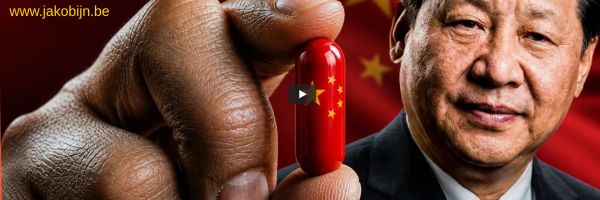
For decades, the global pharmaceutical industry was dominated by a handful of Western conglomerates headquartered in the United States, Switzerland, and the United Kingdom. China was consistently portrayed in this narrative as the 'factory of the world': a low-cost manufacturing country that actively supplied pharmaceutical ingredients but lagged years, if not decades, behind in genuine, groundbreaking innovation. However, that narrative is no longer tenable. In a remarkable and rapid transformation, the Chinese pharmaceutical sector has evolved from a purely executing power into a global powerhouse of medical innovation. This shift is not an accidental economic fluctuation, but the result of a deliberate, state-facilitated strategy combined with a new generation of exceptionally talented scientists and entrepreneurs.
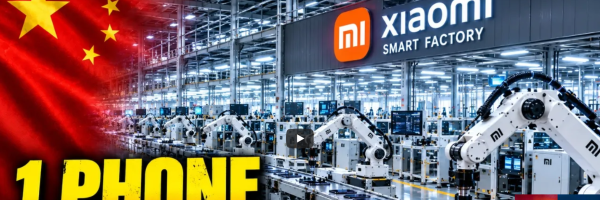
Somewhere in the Changping district, on the outskirts of Beijing, there is a production floor where the lights can remain off for hours. No one down there needs light to work. The robots have taken over, and yet the phones keep coming. One device after another, so fast that this facility delivers a brand new smartphone approximately every second at full speed. Not even per minute, not per hour, but per second. Unceasingly, like a heartbeat that never skips a beat. The phone you're carrying in your pocket right now could very well come from such an environment. A place where a bare circuit board enters at one end, and in the time it takes you to speak one sentence aloud, a fully assembled, tested and packaged phone rolls out the other end.

There is a secret hiding inside almost everything you touch today. The phone in your hand, the car in your driveway, and the jets flying over your city all need a handful of minerals with names you probably have never heard. Things like neodymium, gallium, and dysprosium. These minerals are tiny but powerful. Without them, your phone would not light up, your car would not start, and the planes protecting the country would not fly.
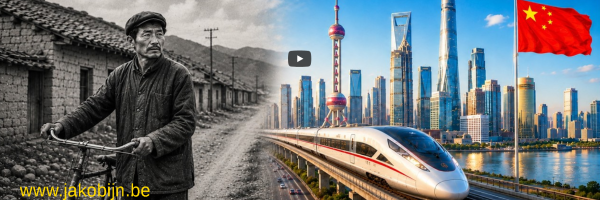
How did China transform from a poor agricultural country into the factory of the world and one of the most powerful economies globally in just 40 years? Why did Deng Xiaoping's reforms succeed while the Soviet system ultimately collapsed? This documentary tells the complete story of China's economic miracle: the death of Mao Zedong, the aftermath of the Cultural Revolution, the rise of Deng Xiaoping, the initial reforms of 1978, the dismantling of rural communes, the rise of private entrepreneurship, the establishment of special economic zones, and the explosive growth of Shenzhen.
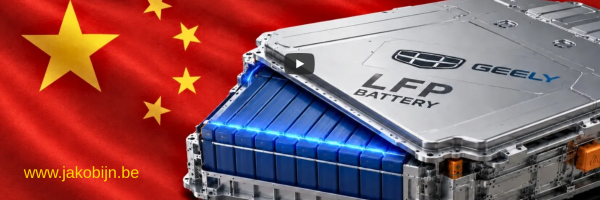
The Western automotive industry has for decades lived off a tacit but deeply rooted contract with the consumer: planned obsolescence. An internal combustion engine is, by its very nature, an assembly of friction, heat, and vibration. Piston rings wear out, gaskets fail, and timing chains stretch. Anyone who reaches 300,000 kilometers in a conventional car without major overhauls has already beaten the statistics. This inherent limitation was not merely a technical flaw; it was the economic engine that sustained the second-hand market and the consumer's cyclical urge to replace. But this era of forced replacement is approaching its end, and the death knell is not being sounded by a Western innovator, but by the relentless, pragmatic engineering from China.

Look at the phone in your hand. Look at the top right corner of the screen. There you see a battery icon. Every night, without exception, you plug that device into the wall outlet. If you forget, your Apple device costing 1,200 euros turns into a useless piece of glass by midday. For fifteen years now, American tech giants like Apple, Google, and Samsung have been trying to convince us that this is simply the reality of modern technology. You want a faster phone? Then you'll have to learn to live with battery anxiety. But while Silicon Valley fights this battle against the laws of physics, a historic disruption is taking place in China that renders the entire iPhone ecosystem obsolete.

In contemporary geopolitical and technological discourse, we are constantly presented with a narrative of relentless competition, technological separation, and the so-called necessity of 'decoupling' between the West and China. American politicians and policymakers speak with great pathos about containing China's technological rise, imposing sanctions, and protecting Western innovation through exclusivity. Yet, when we pierce through the rhetoric and look at the hard, undeniable facts of the market, a completely different picture unfolds. A picture where the so-called unbridgeable gap is not only bridged, but where Chinese innovation fundamentally rewrites the rules of global capitalism.

Europe's energy supply is in a state of deep, structural vulnerability—a reality systematically downplayed or wrapped in a narrative of triumphant resilience by the official channels of the European Union. While the European Commission, led by Ursula von der Leyen, attempts to convince the world of a successful transition and an overcome dependency, the hard market figures and fundamental economic analyses point to a very different truth. Europe stands on the brink of a potentially catastrophic energy crisis, where prices are not merely fluctuating cyclically but are structurally driven up by a combination of physical market tightness, a fundamentally flawed market design, and short-sighted geopolitical policy.

As a civilization that builds with self-healing concrete, carbon-fiber rebar, and algorithmic structural optimization, we look back at our ancestors with a patronizing fondness. We look at medieval cathedrals or colonial fortresses and marvel that they managed to stand at all, assuming their builders were operating on blind luck, superstition, and an abundance of manual labor. But then we look at our own infrastructure. Our modern highway overpasses sprout structural cracks within three decades. Our concrete high-rises are plagued by "concrete cancer" (alkali-silica reaction) and structural degradation before their first major centennial.

There is no sugarcoating it: the European Union is going through a disastrous decade, and the ways to conceal the structural problems any longer are slowly but surely running out. Germany has been recording a declining industrial production for several quarters in a row and is losing hundreds of thousands of jobs in the manufacturing sector. France is borrowing heavily to cover current expenditures, and the interest burden is suffocating any form of economic oxygen.

I am not a journalist. I am not a commentator. I am a retired deep‑sea diver/welder who worked on pipe‑laying vessels worldwide, and later a team leader at the natural gas terminals in Zeebrugge and Dunkirk. Those terminals were not involved in the sabotage of Nord Stream. I have been retired for 14 years and have no secret information. What I know about underwater explosions does not come from YouTube – it comes from working at depths of 10 to 165 metres, with a welding or cutting torch in my hand.

The publication of scientific research is a particularly lucrative industry. The most recent estimates suggest it generates an annual turnover of approximately 19 billion US dollars (or 16.67 billion euros), with margins of around 40 percent. These staggering figures largely reflect the fact that the "Big Five" commercial publishers, such as Elsevier, Springer Nature, Wiley, Taylor & Francis, and SAGE, profit from work that is largely funded with public money.

In certain geopolitical channels and on Persian-language platforms, a concerning message is currently circulating. Iran would have drawn up a specific list of European energy infrastructure as potential targets. The reasoning put forward is that Ukraine, under President Zelensky, is acting as a European proxy army. According to this narrative, Kiev's actions would justify retaliation against European energy interests. For the attentive reader of De Jakobijn, it is essential to look beyond the superficial sensation. We must separate the factual core of these claims from geopolitical distortion.

The Nord Stream saga has taken a turn for the absurd, with a new book claiming that the star saboteur who blew up the gas pipelines was a Ukrainian erotic model-turned-deep sea diver. This detail is the latest addition to an ever-shifting story – while one key coincidence has completely flown under the radar. Published on June 19, ‘The Nord Stream Conspiracy: The Greatest Sabotage in History’ promises an inside look at the operation that destroyed the Nord Stream lines. Author Bojan Pancevski doesn’t quibble with the ‘official’ story circulated by the German media – that a Ukrainian commando unit carried out the attack, but adds some pulp-fiction flourish to the tale.

Ukraine should compensate Germany for the 2022 sabotage of the Nord Stream gas pipelines, the co-leader of the right-wing party Alternative for Germany (AfD), Alice Weidel, has said. German investigators have attributed the explosions, which crippled the pipelines built to transport Russian gas to Germany, to a small group of Ukrainian operatives. The alleged ringleader was extradited to Germany from Italy last autumn. Moscow has repeatedly questioned Berlin’s account of the attack, arguing that such a sophisticated operation could not have been carried out by a handful of divers in NATO-monitored waters without state backing.

On September 26, 2022, the silent depths of the Baltic Sea erupted. Four explosions near the Danish island of Bornholm tore through the Nord Stream 1 and 2 pipelines—the engineering marvels that for decades had served as the vascular system of the European economy, pumping cheap Russian gas directly into Germany . It was the largest act of industrial sabotage in modern European history, an event so violent that it registered on seismic networks. Yet, two years later, the silence surrounding the perpetrators is deafening. There have been no arrests, no public interrogations, and a palpable lack of urgency from Western investigators . While the geopolitical blame game continues—with theories ranging from a pro-Ukrainian rogue cell to U.S. strategic dominance—the economic body count is no longer a theory. It is a brutal, measurable reality.

POTSDAM /Germany/, May 7. /TASS/. Russia’s ambassador to Germany, Sergey Nechayev, has emphasized that the ongoing immunity granted to those responsible for the sabotage against the Nord Stream and Nord Stream 2 pipelines is fueling a dangerous chain reaction. "Who is behind this terrorist attack? The fact that it was a terrorist act is now beyond question, not only for us but even for the German government," he stated. "Yet, we remain in the dark about the perpetrators. All the claims about a pleasure yacht with amateur divers are simply fabrications. We must identify who orchestrated and executed this act of terror."

Professor Ola Tunander, senior researcher at the Peace Research Institute Oslo (PRIO), has analysed the destruction of the Nord Stream pipelines for many years. In an extensive interview with journalist Patrik Baab, Tunander presents evidence that does not point to a small group of Ukrainian divers on a sailboat, but to a long-planned operation led by the United States — possibly an act of state terrorism.

In addition to the many overland pipelines connecting Russia to China, Russia had also developed a similar large-scale offshore project called Nord Stream. This pipeline lies on the floor of the Baltic Sea and, until 26 September 2022, transported Russian natural gas directly to European countries.

The article below is a faithful reproduction of an English version published on Sputnik. This site is not accessible in the EU due to sanctions against Russia.

Hearings on the sabotage of Nord Stream have begun in London. Nord Stream, the operator, claims it is entitled to €580 million in compensation from insurer Lloyd’s of London.