
The Art of Conversing with AI: How Prompt Engineering Makes Independent Journalism Possible
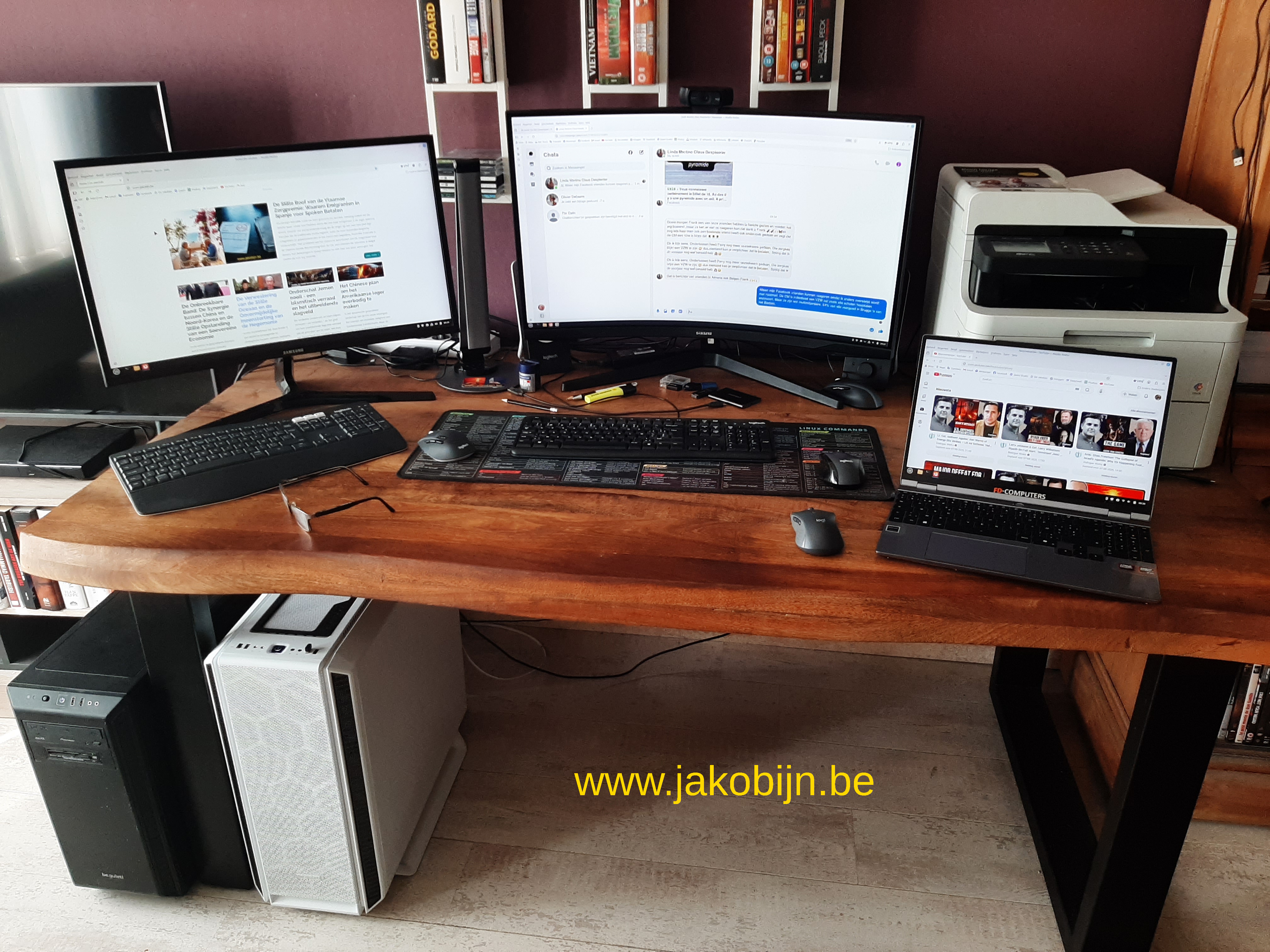
The modern journalistic workplace: where human expertise and AI assistance come together to unravel complex issues"
By Frank Dumon
Since the launch of De Jakobijn in March 2026, I regularly receive the same question: "How do you manage to formulate such complex geopolitical and social problems so clearly and simply? Where do you find the time to analyse all those sources?" Today I will give you an honest answer. An answer that may be surprising, but which fits perfectly with the vision of this website: Progress through Solidarity and the Sharing of Knowledge. The honest answer is this: without artificial intelligence, De Jakobijn would not exist.
It would be impossible for me to process the volume of data, sources, parliamentary documents, academic papers and news articles needed to produce the analyses you read here. It would be impossible for me to search multiple languages, draw connections between seemingly unrelated events, and translate those complex insights into clear, accessible articles – all at a pace that remains relevant in a rapidly changing world.
But let me make one thing clear immediately: AI is not a replacement for human thinking. It is an enhancement. It is the telescope with which I can look further, the calculator with which I can compute faster, the library that is always open. The choices, the critical eye, the ethical considerations, the responsibility for what is written – those remain entirely mine.
Today I want to tell you not only *that* I use AI, but also *how*. Because sharing knowledge also means sharing the tools that make that knowledge possible. And if you learn how to converse effectively with AI yourself, you do not become dependent on me or other journalists – you become your own researcher.
What is Prompt Engineering?
Prompt engineering is the art of formulating inputs (which we call 'prompts') that guide AI systems towards the desired output. Simply put: it is the way you talk to an AI to get exactly what you need. A prompt can range from a simple question ("What is the capital of France?") to a complex instruction ("Analyse these three parliamentary documents, identify the contradictions, and write a 500-word summary for a general audience").
Creating effective prompts is both an art and a science. It begins with a clear picture of the desired result and a thorough knowledge of the possibilities (and limitations) of the AI. An effective prompt is clear, concise and specific, and avoids ambiguities that could mislead the AI. But prompt engineering is more than technique. It is a form of thinking. It forces you to formulate precisely what you want, which context is relevant, and what level of detail you expect. Paradoxically, it is an exercise in human clarity.
Why AI is a Gamechanger for Independent Journalism
Let me take you behind the scenes of how an article like "The Silent Theft of the Flemish Care Premium" came about – the article we created together at the request of Linda from Valencia.
Step 1: The reader's question
Linda sent me a message about her frustration with the Flemish care premium she had to keep paying while living in Spain. Her story was personal, emotional, and contained concrete details (her husband's scooter accident, the free healthcare in Spain, the parking costs in Belgium).
Step 2: The source research
This is where AI comes in. I asked the AI to search for:
- Official Flemish documents on the care premium for those living abroad
- Parliamentary questions on this subject
- European regulation (the S1 form)
- Practical guides for emigrants in Spain
- Recent news articles on fines for non-payment
Within minutes, the AI had found 35+ relevant sources, including links to official websites of the Flemish government, the Flemish Parliament, the European Commission, and expert organisations for emigrants. Without AI, I would have had to search for days, download documents, and manually filter what was relevant. Now I could focus on what really matters: the analysis, the interpretation, and the writing.
Step 3: The analysis and verification
The AI helped me not only with searching, but also with verifying. For example, I discovered that in my first version I had written that the care premium was "well over 100 euros", but the AI pointed me to the official source stating exactly 100 euros for 2026. I had also mentioned an incorrect statute of limitations (three years), but the AI showed me that the limitation period for the government to claim premiums is even 30 years, and that the correct route is to have the registration cancelled based on proof of residence. These are not minor details. This is the difference between journalism that is accurate and journalism that sounds good but is factually incorrect.
Step 4: The writing
This is where human and AI collaborate. I formulated the core message, the tone, the structure. The AI helped me with the wording, suggested sentences, checked the grammar, and ensured the text flowed. But every sentence, every choice, every ethical consideration was mine.
Step 5: The translation
When I asked AI to also translate the article into English, French and Vietnamese for my website, the AI did so in a few minutes – preserving all HTML formatting, layout, image paths, and links. Without AI, I would have had to hire three professional translators, which would have cost thousands of euros and taken weeks. This is the power of AI for independent journalism: it democratises access to information and makes it possible to deliver work with limited resources that previously only large editorial teams could produce.
The 10 Practical Tips for Effective Prompts
Now that you understand why AI is so valuable, I want to teach you how to work with it yourself. Here are the 10 practical tips I use daily myself, expanded with examples from my own practice.
1. Understand the AI model – Know what it can and cannot do
Not all AI systems are equal. GPT-3.5 (the free version of ChatGPT) has a knowledge cut-off of April 2023 and cannot browse the internet. GPT-4 and newer versions can retrieve current information. Claude (by Anthropic) is known for its long context window and accuracy. Gemini (by Google) is strong at processing large amounts of data.
What this means for you: If you want an analysis of events after April 2023, you must use a model that can browse or that has more recent data. If you want a long document summarised, choose a model with a large context window.
My practice: I use Qwen (by Alibaba) because it is excellent in Dutch, can handle long contexts, and is good at processing complex instructions. For quick questions I sometimes use ChatGPT; for in-depth analyses I stick with Qwen.
2. Start with a clear goal
Before you ask the AI anything, ask yourself: What exactly do I want as a result?
Bad: "Tell me something about the Flemish care premium."
Good: "Write a 3,000-word article for a general audience about why Belgian emigrants in Spain unjustly pay the Flemish care premium, including practical steps to resolve this and a list of official sources."
The difference is enormous. The first prompt gives you a Wikipedia-like summary. The second gives you a complete, usable article.
My practice: Before I write a prompt, I write down in one sentence what I want to achieve. "I want to help Linda from Valencia understand why she has to pay that premium and how she can stop it." That becomes my guideline.
3. Be specific
Vague instructions lead to unpredictable results. The AI cannot read your mind.
Bad: "Write something about Spain."
Good: "Describe the Spanish public healthcare system for pensioners, including the costs, the quality of care, and the practical experiences of Belgian emigrants. Use a warm, personal tone and provide concrete examples."
The more specific you are, the better the result. Think of the AI as a very smart intern who can do everything you ask, but knows nothing about your specific situation unless you tell them.
My practice: When I request an article, I always specify:
- The length (for example "3,000 words") My book in progress "The Price of Illusion - American Veterans versus Vietnamese Survivors" now counts 80,000 words. That is split into 34 articles. The cache of an AI is limited, otherwise the translations into English, French and Vietnamese would not have been possible.
- The target audience ("general public, 55+")
- The tone ("intellectual but accessible, with social engagement")
- The structure ("with subheadings, a personal opening, and a clear conclusion")
4. Provide all necessary context
The AI does not know your situation. You must give it the bigger picture.
Bad: "Analyse this article."
Good: "I am an independent journalist writing for www.jakobijn.be , a website focused on critical analyses of geopolitics and social issues. My readers are mainly people over 55 who are sceptical of mainstream media. Analyse this article and identify the three strongest arguments and the two weak points." Without that context, the AI would give a generic analysis. With that context, you get an analysis tailored to your specific needs.
My practice: At the start of each new conversation I give the AI a "persona" – a description of who I am, what I do, and who my readers are. This ensures that all answers in that conversation align with my context.
5. Break complex questions into parts
Asking a difficult question all at once often leads to confusing answers. Divide it into smaller, step-by-step steps.
Bad: "Write a complete article about the fall of the American empire, including historical context, economic analysis, military situation, and consequences for Europe, with sources."
Good: "Let's do this step by step. First: give me an overview of the economic indicators pointing to weakening of the US. Then: analyse the military capabilities and limitations. Next: what does this mean for Europe? And finally: based on all this information, write a 3,000-word article." By splitting the question, you get the chance at each step to adjust, clarify, and go deeper.
My practice: With complex subjects I always work in phases:
1. Source research
2. Analysis and verification
3. Structure and build-up
4. Writing
5. Editing and refinement
Each phase is a separate prompt, and I check the result before moving to the next phase.
6. Reformulate your prompts
Are you not getting the answer you wanted? Then change your wording or perspective. A small adjustment can make a big difference.
Example: I asked the AI for "a critical analysis of NATO policy". The result was too academic and dry. I reformulated: "Write as if you are a passionate journalist who wants to warn his readers about the dangers of current NATO policy, with concrete examples of how this undermines European security." The result was much stronger.
My practice: If a prompt does not work, I try:
- A different perspective ("Write as if you...")
- A different tone ("Use a warmer, more personal tone")
- A different structure ("Use more subheadings and shorter paragraphs")
- A different angle ("Focus on the human impact instead of the abstract analysis")
7. Use instructions or examples
Give the AI an example of what you want, or a clear instruction about the style.
Example: "Write an introduction in the style of this example: [paste here an introduction you like]." Or: "Begin each paragraph with a short, powerful sentence that summarises the core of that paragraph."
My practice: I often give the AI examples of my own writing style by pasting previous articles and saying: "Write in the same style as these examples." The AI quickly learns your preferences.
8. Think about ethics
Avoid prompts that could lead to harmful, biased or sensitive content. AI systems have built-in safety filters, but it is your responsibility to work ethically.
What this means:
- Do not ask the AI to generate hateful content
- Do not use AI to collect personal information about individuals without consent
- Be transparent about the use of AI (as I am doing now)
- Always verify the facts – AI can hallucinate (present factually incorrect information as if it were true)
My practice: I never use AI to violate anyone's privacy, never to spread disinformation, and I verify every important claim against primary sources. The AI is my assistant, not my truth.
9. Test and experiment
Try different prompts and use the AI's responses to refine your prompts. Prompt engineering is an iterative process.
My practice: Often I start with a broad question ("Tell me everything about X"), and based on the answer I refine my question ("Now focus on Y aspect, and give me three concrete examples"). This is how I build up a deep understanding step by step.
10. Be careful when processing unreliable user input
If you use AI to process data from users (for example comments on your website), be careful about what you put in the prompt. Personal information, sensitive data, or unreliable sources can lead to unwanted results.
My practice: When I analyse reader comments (such as Linda's question), I first remove the personal information and focus on the core of the question. I never share anyone's full name, address, or other identifying data with the AI unless that person has explicitly given permission for it.
The Ethical Dimension: AI as an Equaliser, Not as a Replacement
Now that you know the technique, I want to talk about the philosophy. Because prompt engineering is not just a skill – it is an attitude towards knowledge and power. The vision of De Jakobijn is clear: knowledge and information should be free and accessible to everyone worldwide. Technology (open source), knowledge (shared) and solidarity (international) are the keys to a dignified society. AI fits perfectly into that vision, but only if we use it correctly.
AI as an equaliser: In the past, only large media companies had the resources to conduct in-depth research, verify sources, and produce complex analyses. Today, an independent journalist with a laptop and an AI subscription can deliver work that previously required an entire editorial team. That is democratisation. That is progress.
AI as a threat: But if we use AI to produce content without human oversight, without ethical considerations, without transparency, then it becomes a tool for manipulation rather than enlightenment. Then it replaces the journalist instead of enhancing them.
The difference lies in how we use it. And that brings me to my personal promise to you:
- I am transparent about my use of AI. You now know that I use it, how I use it, and why.
- I always verify the facts. Every important claim in my articles is verified against primary sources, which I list at the bottom of each article.
- The responsibility remains with me. If there is an error in my article, that is my fault, not the fault of the AI. If there is an ethical misstep, that is my responsibility.
- I share the knowledge. By teaching you today how prompt engineering works, I give you the tools to think critically yourself, to do your own research, and to find your own truth.
The Invisible Infrastructure: What Is Really Needed

Now that you know how I use AI, I also want to be honest about the rest of the picture. Because AI is powerful, but it is only one part of a much larger ecosystem. Without the right infrastructure, the right tools, and above all: without the right human commitment, no AI system could help me do what I do. Let me take you behind the scenes of what is really needed to manage a website like jakobijn.be, publish hundreds of articles, and simultaneously work on a book.
The Technical Foundation
1. A dedicated web administrator
Drupal is living software. Security updates are released every month, new modules are developed, and in December 2026, Drupal 12 will be released, a major upgrade that will affect my entire site. A dedicated web administrator who continuously updates the modules and core versions, creates backups, and resolves issues before they become visible to you as a reader is essential. Without this, my website would become outdated, insecure, and inaccessible within a few months. A Drupal 11 environment with outdated/unused modules and an outdated theme is a ticking time bomb in terms of security and performance.
2. Drupal expertise with Claro and Olivero
My website runs on Drupal, a powerful open source content management system. But Drupal is not a ready-made solution – it requires in-depth knowledge of the administration interface (Claro) and the frontend theme (Olivero). Every time I publish an article, I must format the HTML correctly, optimise images, manage multilingual versions, and ensure everything looks professional on every device. That is not work the AI does for me – that is craftsmanship I must master myself.
3. Open source tools in a Linux Mint environment
I work exclusively with open source software in a Linux Mint environment. That means:
- Word processing and document management for writing and organising articles and chapters of my book
- Multimedia tools for editing images and optimising videos
- HTML editors for formatting content
- Video downloads and transcription software for analysing interviews and speeches
I must master each of these tools. Each requires time to learn, configure, and integrate into my workflow. Open source means free, but it does not mean easy.
4. Fast fibre connection (500 Mbps)
When I use AI to search for sources, when I download videos for analysis, when I upload large files to my website – I need an ultra-fast internet connection. A slow connection would reduce my productivity by 80%. This is not a luxury, this is infrastructure.
5. Powerful hardware (investment: 10,000 euros)
I work with two ultra-fast desktops and an ultra-fast notebook. Why? Because AI models run locally, because video transcription requires computing power, because working simultaneously on multiple projects (website, book, research) demands processor power and memory. This is not hobby equipment – this is professional infrastructure requiring a serious investment.
The Human Factors
6. Perfect quadrilingualism
My articles appear in Dutch, English, French and Vietnamese. That means I must not only understand AI, but also master the nuances of four languages (Dutch, English, French, Norwegian). I must be able to check whether the translations are correct, whether the tone fits, whether the cultural context is right. AI can translate, but only a human can judge whether the translation is precise. The Vietnamese translations are checked by a dedicated organisation in Vietnam.
7. Continuous training
Technology evolves at a dizzying pace. What I learned six months ago is already outdated today. New AI models appear, new Drupal versions are released, new open source tools are developed. I spend hours every week on continuing education – reading documentation, following tutorials, experimenting with new techniques. Standing still is falling behind.
8. A disciplined work rhythm of 15 hours a day
And then there is the truth nobody likes to hear: this is not a 9-to-5 job. This is a vocation that demands 15 hours a day, seven days a week. Early in the morning I start by reading international news sources. During the day I write articles, answer reader questions, manage the website. Late in the evening I work on my book, analyse data, prepare the next day. This is not a romantic image of the free journalist working from a hammock. This is discipline. This is sacrifice. This is choosing a life in which work and passion coincide, but in which free time is a rarity.
Why I am telling you this
You may wonder: why this list? Why share all these details? Because transparency is the foundation of trust. And because I want you to understand that independent journalism is not "easy", even with AI. AI is a powerful tool. It enables me to do work that previously required an entire editorial team. But it does not replace the years of investment in technical knowledge, the expensive equipment, the endless hours, and the human dedication.
When you read an article on www.jakobijn.be , you are not only reading the result of an AI prompt. You are reading the result of:
- Years of experience with Drupal and open source tools
- An investment of more than 10,000 euros in hardware and 10,000 euros in website design and management.
- A monthly investment in AI subscriptions, analytical tools and Combell web hosting
- The expertise of a web administrator
- My quadrilingualism and continuous training
- And yes, also: effective prompt engineering
But above all, you are reading the result of 15 hours a day, seven days a week, dedicated to one mission: giving you the analyses that the mainstream media withholds from you.
The democracy of knowledge requires investment
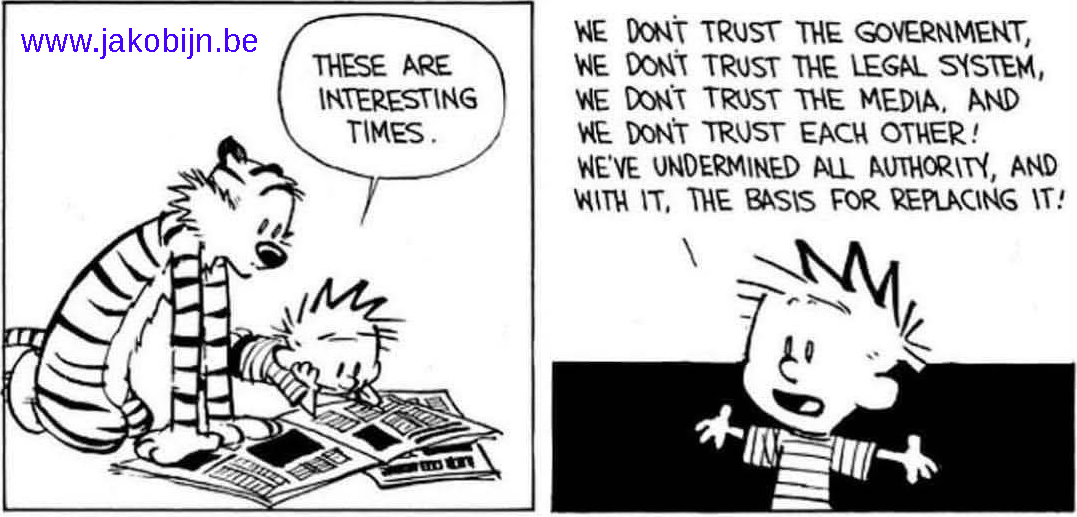
This brings me to an important point about the vision of De Jakobijn: knowledge and information should be free and accessible to everyone. That is a noble ideal. But the reality is that producing that knowledge – even with AI – requires a serious investment. Not only financially, but also in time, expertise, and dedication. This is not a complaint. This is a fact. And it is a fact we must be honest about, otherwise we create false expectations.
If you dream of starting your own independent blog, your own news website, your own platform for critical analyses – know that it is possible. The tools are there. The AI is there. The open source software is there. But also know that it demands more than just a laptop and an internet connection. It demands discipline. It demands continuous learning. It demands investment – in yourself, in your tools, in your skills. And it demands honesty. Honesty about what is needed, honesty about the challenges, and honesty about the sacrifices you must make.
An Invitation to Realism
I am not sharing these details to discourage you. I am sharing them to prepare you. If you are passionate about a subject – whether it is geopolitics, or local politics, or technology, or art – and you want to write about it, then this is the moment to start. The tools are more accessible than ever. But start with realistic expectations. Understand that AI is an ally, not a miracle cure. Understand that success takes time, requires investment, and demands discipline.
And if you decide to walk that path, know that you are not alone. There is a growing community of independent journalists, bloggers, and analysts who use the same tools, face the same challenges, and share the same mission: democratising knowledge, seeking truth, and amplifying the voices that would otherwise not be heard. That is the world we are building together. Not with magic, but with method. Not with shortcuts, but with solid work. Not alone, but in solidarity. And that is why I today not only taught you how I use AI, but also what is really needed to do what I do. Because sharing knowledge means sharing the full truth – not only the romantic story, but also the reality behind it.
Practical exercise: Your first effective Prompt
Let us make this concrete. Suppose you are interested in energy prices in Belgium and you want to understand why they are so high. Here is how you would approach it:
Step 1: Define your goal
"I want to understand why energy prices in Belgium are so high compared to our neighbouring countries, and what I as a citizen can do about it."
Step 2: Provide context
"I am a Belgian citizen, not an energy expert. I want a clear explanation I can understand, with concrete figures and practical tips."
Step 3: Write your prompt
"Analyse energy prices in Belgium compared to the Netherlands, Germany and France. Identify the three main reasons why Belgium is more expensive. Provide concrete figures (for example price per kWh for an average household). Finally: give three practical tips on how I as a citizen can reduce my energy bill. Write in clear English, about 1,500 words, with subheadings."
Step 4: Evaluate the result
If the answer does not satisfy, reformulate. For example: "You mention three reasons, but I want to go deeper into the role of taxes and levies. Can you elaborate on that aspect with concrete figures?"
Step 5: Verify the facts
Check the figures the AI gives against official sources (for example the website of the CREG, the Belgian energy regulator). That is how simple it can be. And how powerful.
The Future: AI and the Democracy of Knowledge
We stand at the beginning of a revolution. Not the revolution the mainstream media paints for you – a revolution of unemployment and control – but a revolution of empowerment and access.
Imagine:
- A pensioner in Spain who can investigate for himself why he has to pay certain premiums
- A student in Vietnam who has access to the same analytical tools as a professor in Leuven
- An idealist in Ostend who can produce market analyses that previously only large consultancy firms could afford
- A citizen in Brussels who can check for himself whether his city councillor keeps his promises
That is the world AI makes possible. Not as a replacement for human thinking, but as an enhancement of it. Not as a tool for the few, but as an instrument for the many. But that world does not come about by itself. It only comes about if we share knowledge, if we are transparent about how we use these tools, and if we deploy them for solidarity rather than for personal gain. That is why I am writing this article. Not to impress you with my technical skills, but to invite you to take the reins into your own hands. To ask the questions you find important yourself. To seek the answers you need yourself.
The Price of Independence: Why I Accept No Subsidies
There is one more part of this story I must share with you, and it may well be the most important. It is not about technology, not about AI, not about hardware. It is about money. And about who pays. Because whoever pays, decides. That is an old saying, and in journalism it is more than a saying – it is a law.
The Landscape of Subsidised Media
Let us be honest about how the media landscape in Flanders is structured. The vast majority of the Flemish media is subsidised and/or controlled by large interest groups and political parties. The public broadcaster is financed with tax money, and its governing bodies are historically appointed according to party-political balances. The commercial publishers are concentrated in a few large groups with their own economic interests. And the numerous NGOs that help shape the social debate live largely on government and European subsidies.
That makes these actors dependent. And dependence creates bias – not necessarily consciously, not necessarily out of ill will, but structurally. Whoever receives their salary from a system will rarely fundamentally question that system. Whoever must justify their subsidy to a government will rarely criticise that government to its foundations. Whoever receives their funding from interest groups will rarely harm the interests of those groups. This is not an accusation against individual journalists. Many of them act in good faith and do their work with integrity. But they work within structures that invisibly limit their room for manoeuvre. The frameworks of the debate – what is discussable and what is not, what is "reasonable" and what is "extreme" – are rarely determined by the journalist on the floor, but by the structures that pay their salary.
My Position: No Subsidies, No Gifts, No Debt
Opposite that landscape stands De Jakobijn. And I want to make a crystal-clear promise here, today and for the future: I receive subsidies or gifts from no one. And I will keep it that way.
Every euro I invest in this website – the hardware, the software, the subscriptions, the hours – comes from my own resources. Nobody pays my bills. Nobody holds my pen. Nobody can call me to "nuance" an article or to "let a subject rest". That is not a luxury. That is the core of what I do. Because independence is not a slogan you put on your front page; independence is a reality you must fulfil anew every day.
The price I pay for that, I have honestly listed above: 15 hours a day, an investment of tens of thousands of euros, no certainty. But I gladly pay that price. Because it buys me something no subsidy can buy: the freedom to write what is true, regardless of who feels uncomfortable about it.
If nobody pays me, to whom am I accountable then? To two instances only: my conscience, and you. My conscience, because I can only live with what I write if it matches what I know and believe. And you, my readers, because you are the only one to whom I owe my work. You do not pay me with money – and that is exactly how I want to keep it. You pay me with something more valuable: your attention, your trust, your critical reactions, and your willingness to share my articles with people you care about. That is the only "subsidy" I accept: the subsidy of your trust. And I must earn that anew every day, with every article, with every source I cite, with every promise I keep.
A Promise for the Future
Therefore I close this section with a promise you may print out and hold up to me at any moment: As long as De Jakobijn exists, it will apply for no subsidies, accept no gifts, and enter into no financial relationship whatsoever with political parties, interest groups, governments or NGOs. Not because I hate them all – I hate nobody – but because I owe you something that can only exist in complete independence: a free voice. Guard that voice with me. Read critically. Ask questions. And know that when you read something on this website, you are reading what one man, with his conscience and his sources, has written to the best of his knowledge and belief – without anyone else having had a hand in it.
That is, in the most literal sense of the word, independent journalism.
Conclusion: An Invitation
You have now learned the basics of prompt engineering. You know what it is, why it is important, and how you can apply it yourself. You also know that I use it, and how I use it. But this is only the beginning. The real power of AI lies not in what I can do with it, but in what you can do with it. So here is my invitation to you:
Experiment. Try writing prompts yourself. Ask the AI to help you with questions that concern you – about your pension, about politics, about the world.
Be critical. Never blindly trust what the AI tells you. Verify the facts. Ask follow-up questions. Think for yourself.
Share your knowledge. If you learn something that can help others, share it. That is the essence of solidarity.
Be transparent. If you use AI, say so. Be honest about your methods, your limitations, and your responsibilities.
And if you have questions, if you get stuck, if you want me to help you with a specific prompt or analysis – let me know. Because that is what De Jakobijn stands for: not only producing knowledge, but sharing knowledge. Not only giving answers, but teaching others how they can ask questions themselves. Without AI I would have no website. But without you – without your questions, your criticism, your engagement – that website would have no meaning. Together we are building a world in which knowledge is not the privilege of the few, but the right of the many.
Epilogue: Preventing Digital Hostage-Taking
Key Considerations When Planning a Website
In the previous article, we discussed how AI and smart prompt engineering can strengthen independent journalism. However, editorial independence is merely an illusion if you are not also technically and legally independent. A journalist without control over their own printing press is at the mercy of third parties.
Anyone who has a website built or managed today often steps into a minefield of unclear contracts, hidden costs, and in the worst-case scenario: digital hostage-taking. Following recent negative experiences in the sector, it is crucial to focus on the foundation of your online presence.
Here are the essential points of attention, supplemented with legal and technical recommendations, to prevent you from being held hostage by your own web administrator.
1. Ownership Rights: Do Not Let Yourself Be Held Hostage
The most common mistake is having domain names and hosting packages registered in the name of the webmaster or through their 'reseller account'.
The Rule: You (or your company) must always be the legal holder of the domain name (verifiable via the DNS Belgium WHOIS database) AND the contracting party with the hosting provider (such as Combell, Hoste, etc.).
The Danger: If the hosting is registered in the webmaster's name, they can take the site offline or demand ransom during a conflict. Always demand direct, administrative access (admin credentials) to the hosting panel and DNS settings.
Source: DNS Belgium (Registration terms stipulate that only the domain name holder has authority) & Book XII of the Code of Economic Law (WER) regarding electronic commerce and digital services.
2. Transparent Finances: Avoid the 'Cash Trap'
Work exclusively with official, numbered invoices and avoid cash payments or unstructured bank transfers without clear references.
The Rule: Without an invoice, the service legally does not exist. You lose your right to warranty, cannot deduct the costs in your accounting, and have no proof of agreement.
The Danger: Webmasters who demand cash are not only evading VAT and taxes but also avoiding liability for errors or hacks. Refuse to work with parties who suggest "skipping invoices to save costs".
Source: FPS Economy (Prohibition of unfair commercial practices) & The Belgian VAT Code (Invoicing obligation for every service provided).
3. CMS Choice: WordPress, Drupal, or Joomla?
Choose the software (the Content Management System) based on your journalistic needs, not based on what the webmaster happens to know best.
Static vs. Dynamic: Do you need a digital business card or portfolio? Then a static site or a simple WordPress setup will suffice.
The Newspaper Structure: Do you publish articles daily, work with multiple authors, complex categories, and archives? Then Drupal is the superior choice. Drupal is built for complex, data-driven structures and scalability, whereas WordPress more frequently suffers from security vulnerabilities due to the proliferation of (sometimes poorly maintained) plugins.
Source: W3Techs (Web technology surveys) & official documentation from the Drupal Association and WordPress Foundation.
4. The Cost Picture: Realization vs. Lifecycle
A website is not a one-time purchase but a living organism. Request a detailed estimate in advance, split into two phases:
One-time realization: Design, development, migration of legacy data, and delivery.
Annual maintenance costs (SLA): A website requires continuous updates of the Core (base software), themes, plugins/modules, and the underlying PHP version on the server. Neglected maintenance inevitably leads to hacks and data breaches. Agree on a fixed annual amount for this maintenance, including monthly backups.
5. Backups and Exit Strategy
What happens if you are dissatisfied and want to switch to another partner?
The Rule: Demand a weekly, automated backup (both files and database) in your contract that is stored *outside* the webmaster's server (e.g., via AWS S3 or an external cloud).
The 3-2-1 Rule: 3 copies of your data, on 2 different media, with 1 stored off-site.
Use of Git: Professional developers use version control (such as GitHub or GitLab). This ensures you always own the current source code, independent of the server where the site runs.
Is There an "Order of Webmasters" or a Code of Ethics?
Professions such as doctors, lawyers, and architects are protected and bound to an Order with a strict code of ethics. Those who violate the rules are disbarred.
For webmasters and digital agencies, there is NO recognized Order and NO protected title in Belgium. Anyone can call themselves a 'web developer' or 'IT expert' tomorrow without a diploma or oath. Unfortunately, this makes the sector vulnerable to cowboys and scammers.
However, there ARE industry organizations such as FEDiCON (the federation of digital agencies in Belgium) or Agoria. Members of these federations subscribe to a code of ethics and general terms and conditions that guarantee fair trade practices, transparent invoicing, and respect for intellectual property.
My urgent advice: Before engaging a partner, verify whether your digital agency is registered in the Crossroads Bank for Enterprises (KBO/CBE) with the correct NACE codes for web portals and IT services, and whether they are members of a recognized professional federation.
6. Intellectual Property (IP): Who Owns the Code?
According to the Belgian Copyright Act, the copyright of a custom-made work (such as a unique website design or custom code) initially belongs to the *creator* (the developer), unless it has been transferred to the client in writing and explicitly.
Recommendation: Always include a clause in your contract stating that upon full payment of invoices, all intellectual property rights (IP) are irrevocably and exclusively transferred to you. Without this clause, an ex-webmaster could theoretically prohibit you from using 'their' design or code on another server.
Conclusion for the Independent Creator
Whether you research local politics, test AI applications, or run a niche blog: your voice is only as strong as the platform it stands on. Demand transparency, own your infrastructure, work exclusively with invoices, and get everything in writing.
Digital independence starts with a watertight contract.
Sources and further reading:
1. The Prompt Report: A Systematic Survey of Prompting Techniques – https://arxiv.org/abs/2406.06608
2. Prompt Engineering Guide – https://www.promptingguide.ai/
3. OpenAI Prompt Engineering Best Practices – https://platform.openai.com/docs/guides/prompt-engineering
4. Anthropic's Guide to Prompt Design – https://docs.anthropic.com/en/docs/prompt-engineering
5. YouTube channel on AI and prompt engineering – https://www.youtube.com/channel/UCyna_OxOWL7IEuOwb7WhmxQ