
The Decline of Critical Thinking
Are we truly losing our capacity for profound thought? This question, far from a simple cliché of technological nostalgia, constitutes one of the central issues of our time. In an era where information travels at the speed of light, where interruptions have become the norm, and where our impatience with complexity increases exponentially, we are witnessing a silent but profound transformation of our attention and critical thinking.
Universal access to knowledge has not automatically led to a wiser or clearer society. On the contrary, scientific research and historical facts increasingly show that having more information does not necessarily mean we understand the world better. The real problem lies not in a decrease in our intrinsic intelligence, but in the systematic erosion of our patience for thinking.
This impatience, cultivated by decades of unregulated media innovation and education focused on measurability rather than understanding, paves the way for a form of collective stupidity. This is not so much a lack of intellect, but a voluntary, and often structurally imposed, inability to make the effort necessary to distinguish truth from falsehood, and the complex from the simplistic.
The Banality of Evil and the Loss of Thinking: From Arendt to Cipolla
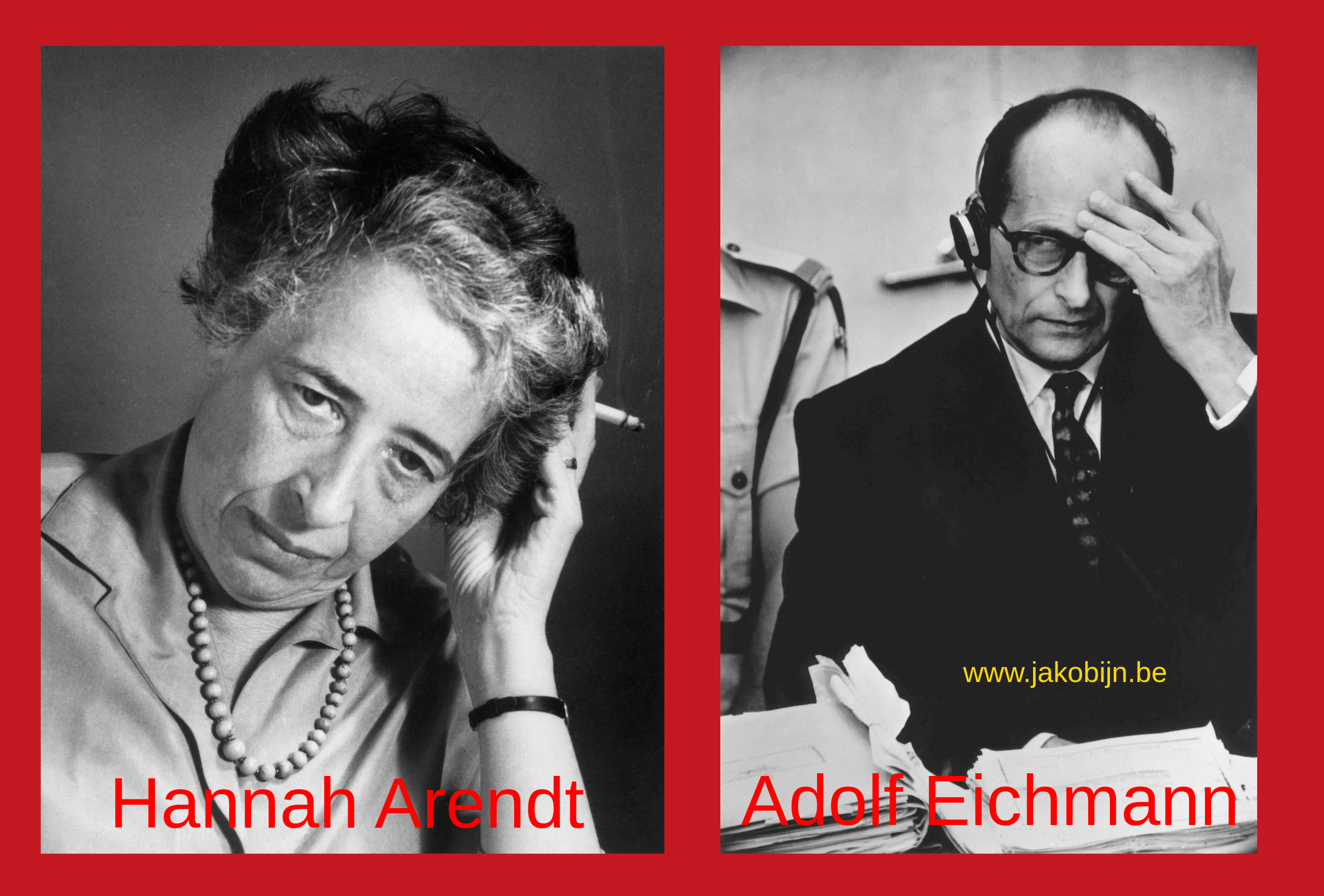
 In 1961, a man sat in a bulletproof glass booth in Jerusalem to answer questions about the murder of millions of people. The court expected a monster, a demon in a suit, someone whose appearance would confirm what people already believed: that to organize an atrocity, you must possess a special kind of malevolence. What they got instead was a clerk. Adolf Eichmann spoke in clichés. He could not finish a sentence without reaching for a borrowed phrase, an official slogan, or a pre-packaged thought that he had picked up from the system and never once examined.
The philosopher Hannah Arendt sat in that courtroom and noted a conclusion so disturbing that it exiled her from her own intellectual circle. She argued that the most dangerous thing about this man was not his cruelty, but the fact that he could not think. Not that he did not want to, but that he had surrendered the very capacity for thought itself. Arendt was careful, almost surgically precise, to emphasize that this was something other than stupidity. It was worse. It was a person who had transferred his entire mind to something outside himself and had stopped checking whether any of it was true. She called it 'thoughtlessness', and she warned that it spreads like mold through a culture, especially when bureaucracy and technocracy replace the individual's moral responsibility.
The Four Quadrants of Human Stupidity
Fifteen years after that trial, the Italian-American economic historian Carlo M. Cipolla took a step that almost no one in his field dared to take. He decided to study stupidity as a measurable, structural force, not as an insult or a joke, but as the greatest existential threat to civilization. In his essay The Basic Laws of Human Stupidity (1976), he wrote one of the most unsettling documents about human behavior ever, precisely because it refuses to flatter the reader. Cipolla described the exact mechanism by which a civilization rots from within, not through war or invasion, but through a slow, silent shift in the relationship between those who still use their minds and those who have quietly given it up.
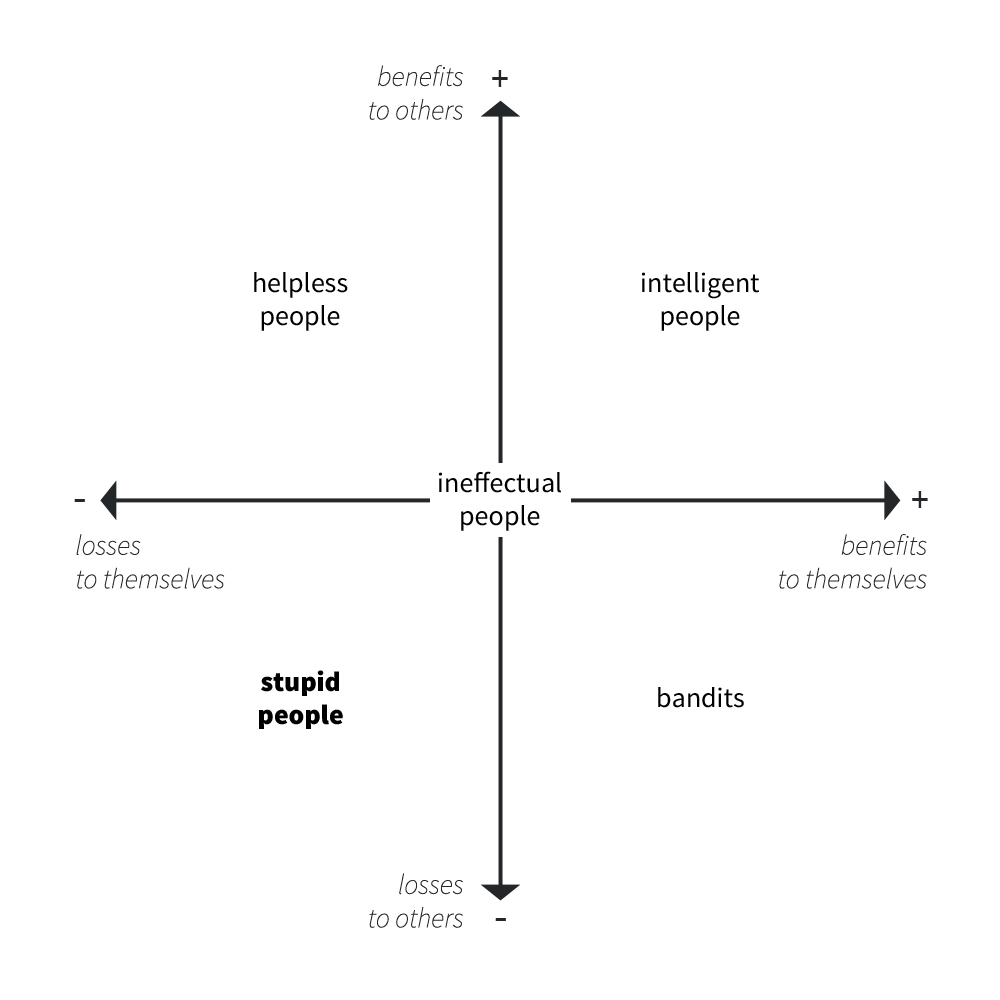 Cipolla's map of human nature is inescapable. He stated that every action a person takes can be measured along two axes: does it benefit yourself, and does it benefit others? If you place these two questions against each other, every human being on earth falls into one of four quadrants.
The intelligent person acts in a way that benefits both themselves and others. They create, they build. When they win, the people around them win too. This is the rarest and most valuable being in any society. The bandit, on the other hand, benefits at the expense of others. He takes, steals, deceives, and exploits. Although we hate him, Cipolla makes a point that almost no one appreciates: the bandit is rational. You can understand a bandit. His evil follows a logic. He wants something and he hurts you to get it. That means you can predict him and defend yourself against him.
There is also the helpless person: the one who harms themselves for the benefit of others. But then there is the fourth quadrant. The one to whom Cipolla devoted the most attention and whom he considered the single greatest threat to the human race: the stupid person. This person causes losses to others, while gaining nothing themselves. Sometimes they even lose themselves. They hurt you for no reason, without gain, without a plan. There is no motive you could ever reconstruct, because there simply isn't one. The bandit hurts you to enrich himself; terrible, but understandable. The stupid person hurts you and walks away with nothing in their hands.
This is why Cipolla called him more dangerous than a bandit: there is no leverage against him. You cannot bribe him and you cannot reason with him, because his actions never follow reason. When the United States entered Vietnam, they did not operate as a rational bandit seeking a clear, achievable advantage. They operated as the ultimate embodiment of Cipolla's fourth quadrant: they inflicted unprecedented, systematic destruction on Vietnam, while simultaneously irreparably damaging the moral, social, and political cohesion of their own society, without achieving any lasting or rational purpose. It was a lose-lose scenario, driven by a doctrine that had lost all touch with reality.
The Myth of Meritocracy and the Fall of Groupthink
The Independence of Stupidity
Cipolla formulated five laws, and the first is a trapdoor that opens right beneath your feet: always and inevitably, everyone underestimates the number of stupid individuals in circulation. The reason for this is subtle. We assume that certain markers – a degree, a title, a high salary, a confident voice – exclude stupidity. We see a minister or a top diplomat, and our brain quietly files them as 'not-stupid' before they have even said a word.
Cipolla's second law states something that should really frighten anyone who believes in meritocracy: the probability that a person is stupid is completely independent of any other characteristic they possess. Education does not lower it. Wealth does not lower it. Status does not lower it. The percentage of stupid people among university professors is the same as among construction workers. "One is stupid," wrote Cipolla, "in the same way one is red-haired." Nature does not consult your CV.
Hold that thought against the backdrop of Western intervention in Southeast Asia. The architects of that war were not the uneducated fanatics that propaganda sometimes wants us to believe. They were the 'Best and the Brightest' (as David Halberstam ironically called them), highly educated technocrats from the Ivy League, trained in systems analysis and game theory. They were educated, organized, and logistically competent by every superficial marker of intelligence. Yet they became, in Arendt's words, the greatest criminals of their time, not despite their thoughtlessness, but through their thoughtlessness. The degrees were real, but the thinking was gone. That assumption – that a degree guarantees thinking – is the most expensive mistake the Western mind can make.
The Withdrawal of Thinkers and the Conformity Trap
Cipolla argued that the percentage of stupid people remains constant across time and place. But he made one crucial caveat: the fate of a society depends on the behavior of everyone else. A declining civilization has the same number of stupid people, but the intelligent have become silent, the helpless have multiplied, and the bandits have begun to behave stupidly as well.
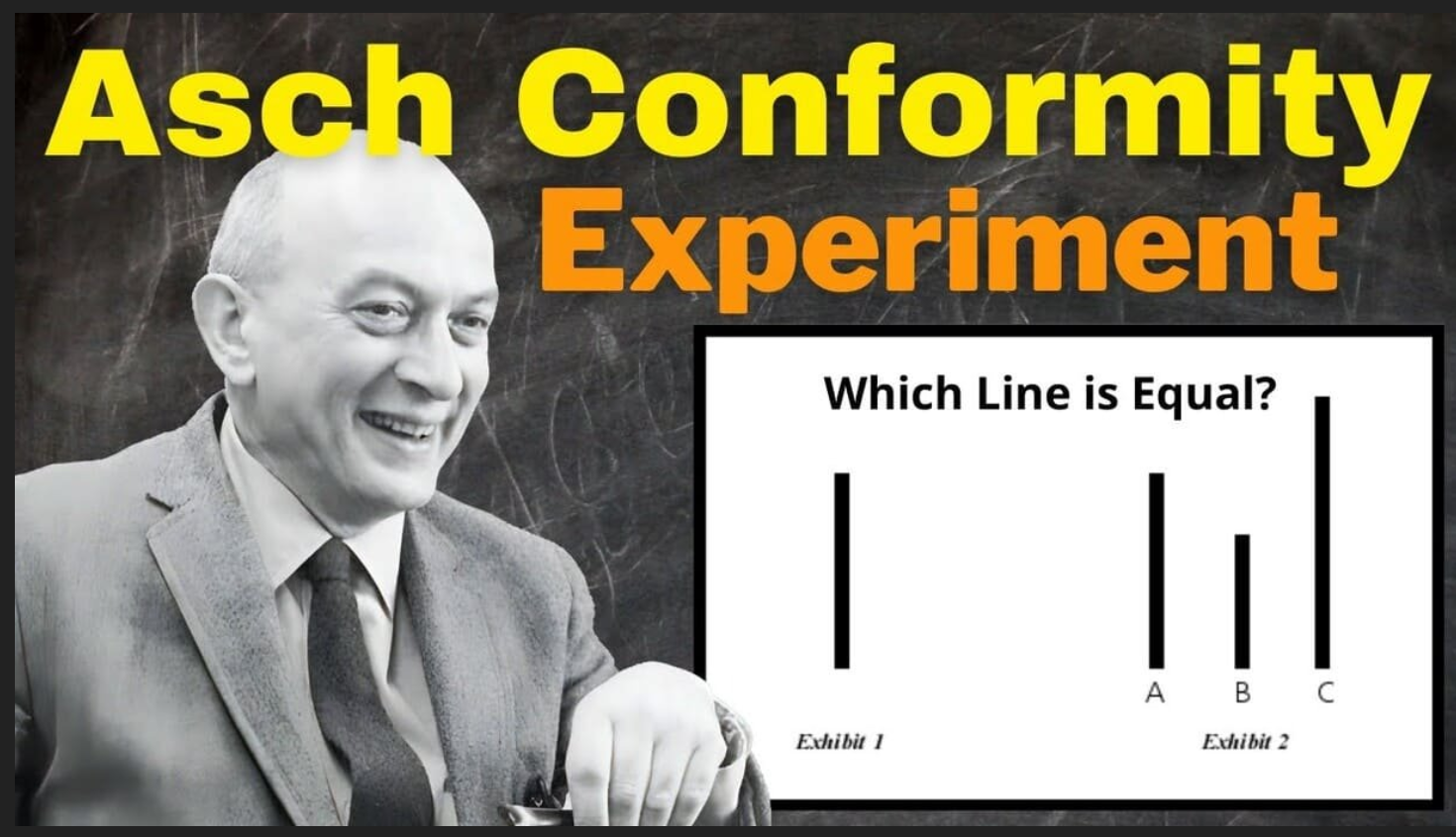
Decline in Cipolla's model is not an increase in stupidity. It is a withdrawal of thinking by the people who were supposed to do it. To understand this, we must go back to 1951, to the seemingly simple experiment by psychologist Solomon Asch on conformity. Asch showed a group of people a simple image with lines of clearly different lengths. The task was trivial, but the other people in the room (actors) confidently gave the same wrong answer. About a third of the time, the real subject agreed with the wrong answer. The majority gave in at least once, and preferred to deny the clear evidence of their own eyes rather than stand alone against a confident group.
However, Asch also discovered the solution: when even one of the actors broke ranks and loudly gave the correct answer, the spell broke. Conformity collapsed. One dissenting voice was all it took. Not a movement, not a majority. One person willing to say the obvious, true thing gave everyone else permission to trust their own eyes again. This dynamic was later documented by Irving Janis as Groupthink. He studied disasters made by rooms full of intelligent, degreed, powerful people who collectively made catastrophic decisions. When a group prefers harmony and consensus over honest evaluation, members develop an illusion of unanimity. The group stops thinking. It optimizes for agreement rather than accuracy, and marches in lockstep straight off a cliff.
The Erosion of Intellectual Effort and the Attention Economy
The Cost of Complexity and Delayed Gratification
This collective blindness is exacerbated by what researchers have come to call 'cognitive laziness' or 'cognitive offloading'. In 1962, psychologist Walter Mischel published a famous experiment on delayed gratification (the marshmallow test). It highlights a fundamental feature of human behavior: waiting represents a real psychological cost. There is a strict intellectual equivalent to this. A simple explanation or a political slogan offers a quick and immediate cognitive reward. A serious reasoning can take twenty or thirty minutes before its conclusion becomes clear. A thorough investigation forces us to endure a period of uncertainty. Critical thinking, however, lives precisely in this uncomfortable interval. By refusing this delay, we refuse thinking itself.
In 2011, researcher Betsy Sparrow conducted a study that became known as the 'Google effect'. She discovered that when people expected to have easy access to information in the future, they did not bother to remember the information itself, but only its location. However, memory is not a warehouse; it is the raw material of thought. You cannot connect two ideas that you do not hold in your mind simultaneously. Insight happens when facts collide within a single skull. Empty the skull, and the collisions stop.
This phenomenon is exacerbated by the Dunning-Kruger effect (1999): the skills you need to be good at something are exactly the same skills you need to recognize that you are bad at it. When you let a machine or a bureaucratic system reason for you, you lose not only the ability to reason, but also the ability to notice that you have lost it. Decline erases the instrument that should have measured the decline. You confuse access with understanding. You confuse the fluency of the machine with your own competence. The person whose thinking dissolves feels like a genius on the inside. That is what thoughtlessness feels like from the inside: it feels like competence.
The Tyranny of Measurement and the Architecture of Choice
This erosion of cognitive patience does not begin with the smartphone; it is often the product of decades of poorly designed educational reforms. Modern educational systems, obsessed with measurement, standardization, and test preparation ("teaching to the test"), have systematically marginalized the disciplines that precisely teach tolerance for ambiguity: philosophy, deep history, and complex literature. By preferring quick answers, schools have trained generations accustomed to consuming isolated facts, but helpless in the face of the complexity of the real world.
Furthermore, the fragmentation of attention is the direct result of a deliberate economic model. As early as 2005, researchers at the University of London studied the effects of constant email interruptions on office workers, leading to a temporary drop in IQ. Today, this dynamic has colonized the intimacy of our lives. The major digital platforms do not make money from our understanding; they generate revenue through our "screen time" and our emotional engagement, often fueled by outrage. They invest billions in algorithms and "dark patterns" specifically designed to bypass our conscious will. Thus, there exists a fundamental and structural conflict of interest between the objectives of these platforms and the preservation of our cognitive sovereignty.
Geopolitical Consequences: Simplification as an Asymmetric Weapon
It is crucial to recognize that this decline of critical thinking is not merely a cultural or psychological phenomenon; it has become a major strategic vulnerability. In an increasingly polarized geopolitical landscape, disinformation and simplistic narratives are used as asymmetric weapons by state and non-state actors. When the public loses the ability to analyze nuances, it becomes extremely susceptible to divisive rhetoric, scapegoating, and calls for confrontation.
Recent history has shown to what extent the reduction of complex conflicts to binary schemes ("good" versus "evil") has served to justify disastrous military interventions and a foreign policy blind to local historical realities, particularly in Southeast Asia and elsewhere. "Collective stupidity" is therefore not an innocent fatality. It is the fertile ground on which war rhetoric and imperialist illusions thrive. Regaining the ability to think critically is also an act of political resistance against attempts to manipulate public opinion for the sake of power.
A Historical Perspective and the Path to Resilience
From Plato to the Algorithm
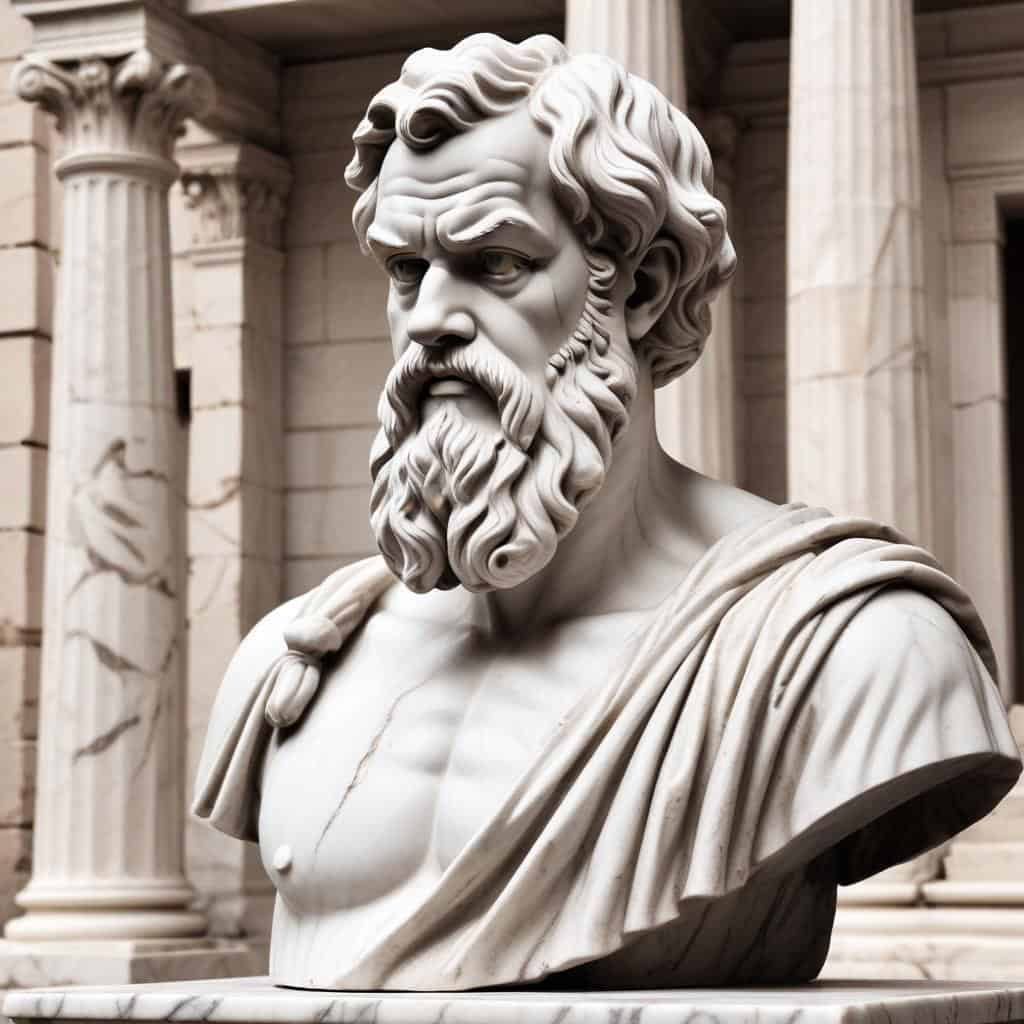 It is salutary to place our current concerns in historical perspective. In Plato's Phaedrus, Socrates already expressed the fear that the invention of writing would weaken human memory, creating an illusion of wisdom without the reality of understanding. Every media revolution has evoked similar fears. This perspective should not lead us to naive relativism, but to necessary nuance: technology does not intrinsically "destroy" thinking, it transforms it. The crucial difference today lies in scale and intentionality. Unlike the book, the algorithm is active; it observes us, learns from our weaknesses, and adapts to maximize our captivity.
The Necessity of Chosen Friction
What do we do with this? The defense is almost shamefully simple, and yet almost impossible to actually do. It requires friction. Deliberate, chosen friction. Before you ask the machine, the system, or the consensus for an answer, sit with the problem itself for ten seconds. Form your own answer first, a rough answer, a wrong answer, it does not matter. Then check it against the system. Notice the gap. In that gap lives thinking.
Individual willpower is necessary, but insufficient. The reclamation of our attention requires structural and institutional responses. This implies integrating "critical digital literacy" not as a technical course, but as a fundamental philosophical discipline in schools. This entails supporting movements for "slow reading" and independent media that prioritize in-depth investigation over the immediate scoop. Finally, this requires courageous political regulation of the commercial practices of digital giants, banning "dark patterns" and imposing transparency of the algorithms that shape our reality.
Conclusion: The Reclamation of Cognitive Sovereignty
In a century and a half, we have moved from a world where information traveled at the speed of physical transport, to a world where thousands of new information sources can reach a person in a few milliseconds. We have gained universal access. But access is not understanding. Understanding still requires certain things that technology has not been able to accelerate without destroying its essence: attentive reading, comparing sources, holding multiple ideas in the head simultaneously, enduring an apparent contradiction, and examining evidence.
The threat to critical thinking is not that we are biologically no longer capable of thinking. It is more banal and more tragic: we have become impatient with the time it takes to think well. "Collective stupidity" is not a genetic fatality, but the aggregated sum of millions of daily micro-choices, encouraged by failing economic and educational structures, aimed at avoiding intellectual effort. Regaining our attention does not mean breaking our machines, but reclaiming a fundamental human and political capacity: staying with an idea long enough to discover that it is more complicated, richer, and more nuanced than it seemed at first glance. In this reclaimed duration lies the last line of defense of reason.
How Stupidity Became the Most Dangerous Disease of the Modern World
Never in human history has it had so much access to so much knowledge, and done so little with it. Complete libraries now fit in a pocket. Universities are just one mouse click away. The accumulated wisdom of millennia is freely available. And yet the capacity for critical thinking has collapsed. The paradox is brutal: the more information available, the less genuine reflection takes place.
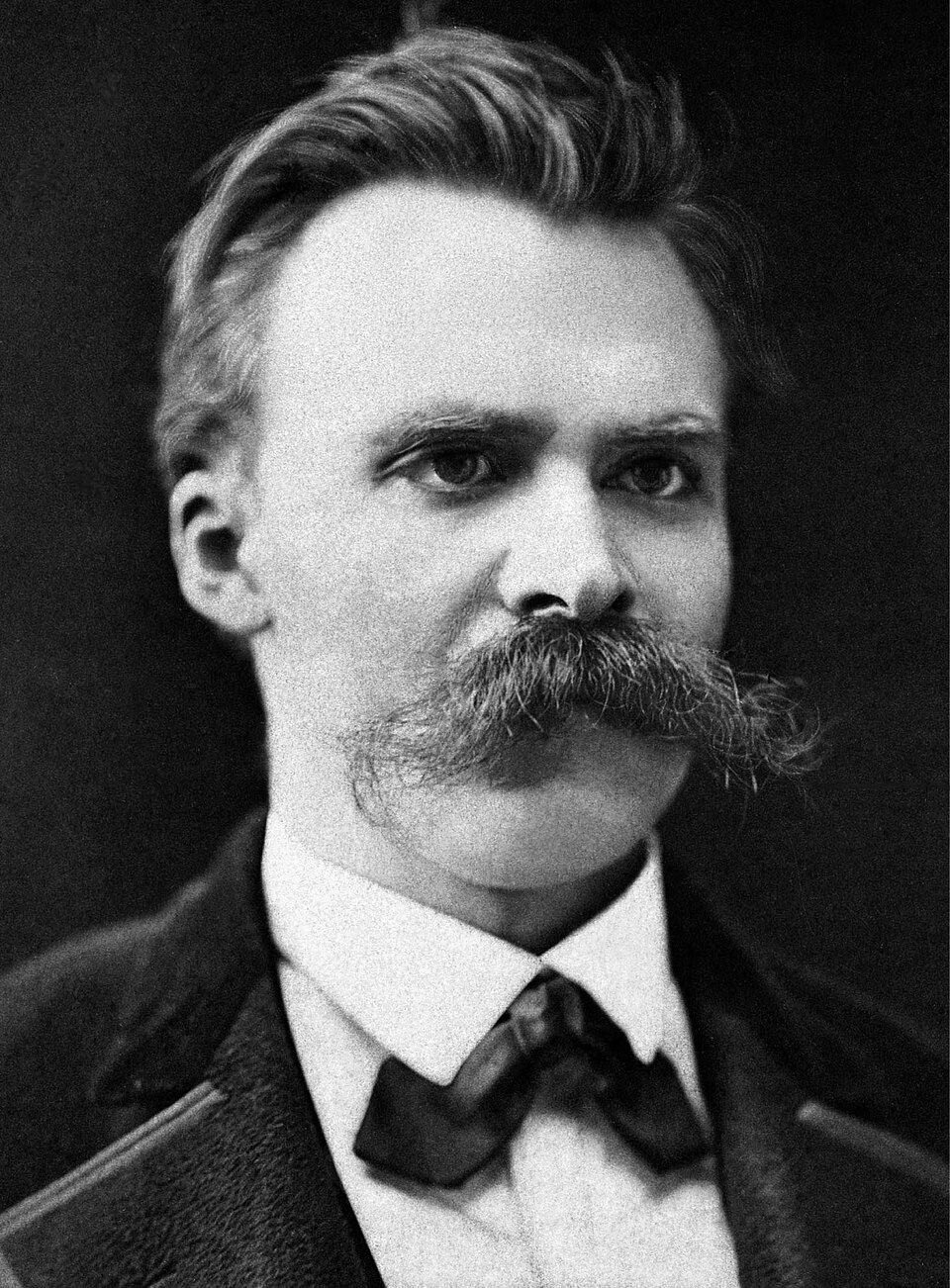 Friedrich Nietzsche predicted this with ominous precision when he wrote: "The time of the most despicable man will come, the man who is no longer capable of despising himself." That time has arrived. Modern man has lost the ability to doubt his own certainties, to question his beliefs, and to recognize the limits of his own understanding. He consumes ready-made opinions as if they were fast food: quickly, without chewing, without digesting.
The consequence of this is not merely individual. Entire societies are governed by masses that do not think, but merely react. Economies are led by crowds that confuse feeling with analysis. The future is decided by people whose only certainty should be that they have no certainty at all. Stupidity has ceased to be a personal shortcoming; it has become a collective, systemic, and institutionalized phenomenon. And the most serious symptom of this disease is the inability to recognize that one is sick. What still separates you from that mass? Nothing, unless you are willing to face uncomfortable truths about how thinking died and stupidity triumphed.
The Active Refusal of Reality
Modern stupidity possesses a characteristic that radically distinguishes it from simple ignorance: it does not recognize itself. The classically ignorant person, the one who simply knows nothing about a particular subject, can be taught. He carries the potential for transformation within him, because he has not yet closed the doors to knowledge. The contemporary stupid person, however, operates on a completely different level. He fails not only in knowing; he actively refuses to know. Moreover, he cherishes pride in that refusal.
Nietzsche observed with surgical precision that "belief means not wanting to know what is true." Replace the word 'belief' with 'personal conviction', and you have the exact portrait of the modern stupid person. He cherishes unshakeable certainties about subjects he has never studied. He has definitive opinions on themes he has never investigated, and absolute confidence in conclusions he has never critically examined. The problem is not the lack of information. We live in an era of unlimited access to accumulated human knowledge. The problem is the systematic refusal to critically process that information.
The modern stupid person reads headlines, not texts. He consumes summaries, not works. He absorbs ready-made opinions and forms no own judgment through rigorous thinking. And here lies the most dangerous aspect of this pathology: it is comfortable. Thinking requires effort. Doubting generates anxiety. Questioning yourself requires humility. Stupidity offers something much more attractive: certainty without cost, opinion without work, authority without competence.
Observe how this perverse mechanism works. Someone watches a three-minute video about economics and considers themselves qualified to debate monetary policy. They read a social media post about science and deem themselves capable of contradicting researchers with decades of study. They listen to a philosophy podcast and believe they have understood systems of thought that took centuries to develop. There is no intellectual humility, no recognition of one's own limits, not the faintest glimpse of self-awareness. And when someone dares to question these fragile certainties, the stupid person reacts not with arguments, but with outrage. "How dare you suggest that I might be wrong?" This cognitive arrogance has become the hallmark of our era. Intellectual pride has completely replaced the honest search for knowledge, resulting in a society populated by people who know less and less, but believe they know more and more.
Against Stupidity We Are Powerless: Bonhoeffer's Diagnosis
This dynamic is not new, but it has rarely been so sharply analyzed as by the German theologian Dietrich Bonhoeffer. While observing the rise of Nazism from prison, he recognized something fundamental about the nature of stupidity. "Against stupidity we are powerless," he wrote. "Protests accomplish nothing. Facts that contradict personal prejudice need simply not be believed." This is the most dangerous characteristic of the stupid person: he is impervious to evidence.
You can present data, studies, rigorous logical arguments, and none of them will have the slightest effect. The stupid person possesses a cognitive armor that repels any information that threatens his comfortable certainties. He does not process facts that contradict his beliefs; he simply rejects them. And when simple rejection is not sufficient, he invents elaborate conspiracy theories to explain why all experts are wrong, and only he is right. This total absence of self-criticism transforms the stupid person into a social danger. He does not only wander astray; he leads others with unshakeable conviction toward the abyss.
His absolute certainty is contagious. Less self-confident people, seeing someone so convinced of his opinion, assume that this conviction must be based on solid knowledge. "After all," they reason, "no one would be so categorical without being certain, right?" Wrong. Stupidity thrives precisely because it knows no doubt. The intelligent person hesitates, considers, examines multiple perspectives. The wise person acknowledges the complexity of questions and the limitation of his own conclusions. But the stupid person has certainty: absolute, unshakeable certainty, impervious to any questioning.
In the context of the Vietnam War, this Bonhoeffer mechanism was the driving force behind Western policy. The architects of the war in Washington were not ignorant; they had access to the same intelligence reports as everyone else. But when facts – such as the deeply rooted nationalist motivation of the Viet Minh, or the reality of the Tet Offensive in 1968 – contradicted their prejudice of the 'winnable, just war', those facts were not processed. They were dismissed as communist propaganda, as exceptions, or as the failure of field commanders to correctly execute the 'master plan'. The cognitive armor of ideological conviction was thicker than any report from the CIA or the Pentagon. One did not want to know what was true, because the truth would destroy the illusion of moral and technological superiority.
The Dunning-Kruger Paradox and the Illusion of Equivalence
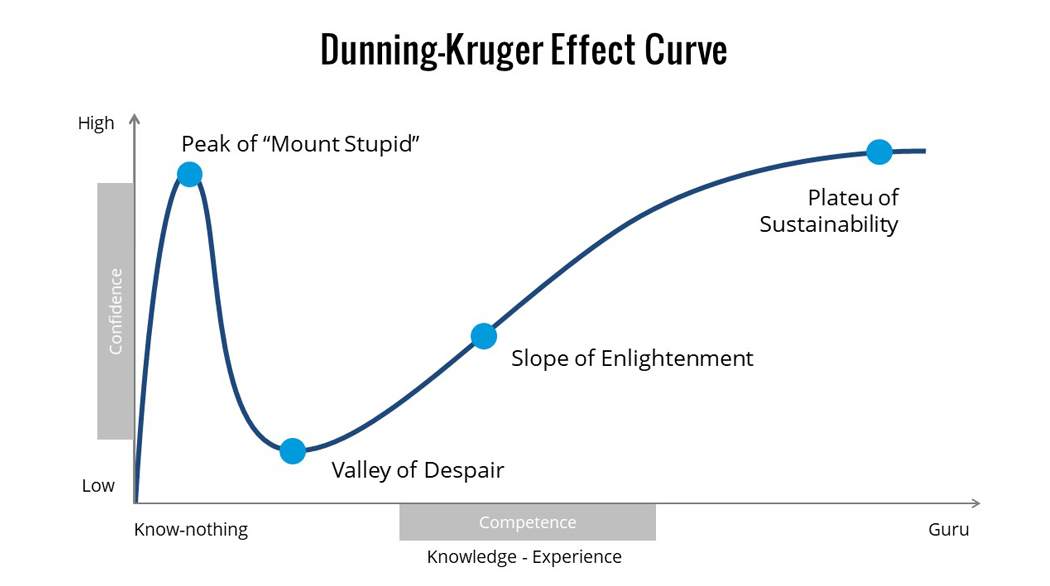
A cruel paradox lies at the heart of the human condition: the less a person knows, the more self-confident they feel. Researchers call this the Dunning-Kruger effect, but every observant student of human nature has known this phenomenon for centuries. Socrates built his entire philosophy on the premise that wisdom begins with the recognition of one's own ignorance. The modern stupid person operates at the exact opposite end of that spectrum. He has no doubts, because he lacks the cognitive capacity to question himself.
Self-criticism requires an advanced cognitive capacity: the ability to observe one's own thoughts from a reflective distance, to examine one's own beliefs with healthy skepticism, and to recognize the limitations of one's own understanding. The stupid person is cognitively incapable of this operation. He lives completely immersed in his own certainties, and never reaches the distance necessary to question them.
The democratization of voices has exacerbated this problem through a catastrophic side effect: the illusion that every opinion has the same value. Before the digital age, access to public discourse was limited. That undoubtedly created problems, but it also established a natural filter. To have a voice, it was necessary to say something. To be heard, credibility was required. That system had its injustices, but it at least maintained a minimal standard of quality in public debate.
Today that filter has completely disappeared. Billions of people have direct access to global platforms, and the vast majority of them use that access not to think better, but to think less. The internet has transformed stupidity from an individual problem into a collective phenomenon. Now the stupid find each other, organize themselves, mutually validate each other, and create entire ecosystems of shared ignorance. The result is a deafening cacophony, in which everyone shouts and no one listens, everyone has opinions and no one reflects.
The Triumph of Emotion over Reason in the Post-Truth Era
Nietzsche prophesied: "There are no facts, only interpretations." The academic movement of postmodernism embraced this idea and drove it to its ultimate consequences, giving rise to entire generations who genuinely believe that truth is an arbitrary social construct, malleable according to political interests or personal preferences. This philosophical position, which may have some merit in sophisticated academic discussions, descended to the masses in a completely distorted form.
The result is a society in which factual truth has become optional, subordinated to personal feelings and tribal loyalties. We now live in a 'post-truth' era, in which what you feel about a fact is more important than the fact itself. If a statistic contradicts your worldview, you simply reject it as manipulated. If a scientific study challenges your beliefs, you wave it away as propaganda. If a logical argument dismantles your position, you attack it as 'insensitive'.
Truth has been relativized to the point of irrelevance, and in this vacuum of objectivity, emotion has become the new criterion of validation. A statement is not evaluated on its correspondence with reality, but on the emotional impact it causes. An idea is not judged on its logical coherence, but on its ability to make people feel good or outraged. An argument is not analyzed on the soundness of its premises, but on the intensity of the reaction it provokes.
This is the ultimate victory of stupidity: the complete replacement of reason by emotion as the criterion for truth. Observe how this mechanism works in practice. Someone presents data on a particular societal or historical issue. The data is solid, well-documented, highly viable. But it contradicts the emotional narrative that a group has embraced. The reaction is not to counter-argue with better data or question the methodology. The reaction is: "This data is offensive. How dare you present information that makes us feel bad?"
This transformation represents a deep civilizational breakdown. The entire construction of Western thought, from the Greeks, was based on the premise that reason can and must subordinate the passions. That logical thinking, however imperfect, is superior to emotional reaction as a method of arriving at truth. That feelings, however important, cannot be the ultimate arbiters of reality. This hierarchy has been completely inverted. Now, questioning someone's feelings is considered worse than being factually wrong. Challenging the emotional narrative is seen as more serious than spreading lies. Making someone uncomfortable with the truth is treated as a greater sin than comforting them with lies.
The Fast Knowledge Industry and the Romanticization of Mediocrity
The 'quick knowledge' industry has transformed wisdom into a commodity of instant consumption. We live in an era of summaries of summaries, where 300-page books are compressed into 10-minute videos, which in turn are distilled into 100-character posts. This brutal compression of knowledge is not neutral. It does not preserve the essence while eliminating the superfluous. It destroys precisely what is most valuable: the complexity, the nuance, the depth that can only be achieved through slow and careful thinking.
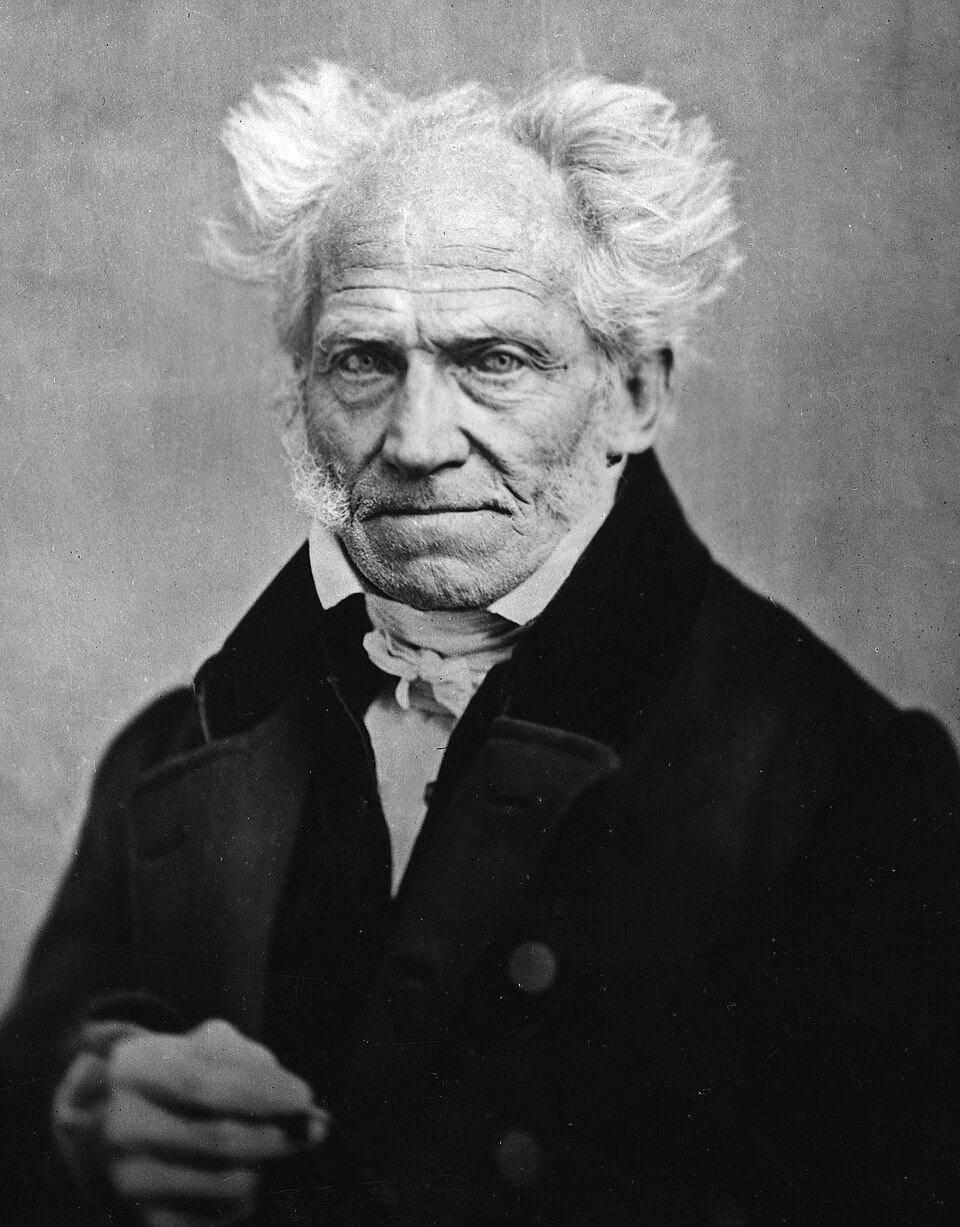 Deep thinking requires time. It cannot be accelerated beyond certain limits without being fundamentally corrupted. Truly understanding Immanuel Kant cannot happen in five minutes. Absorbing the philosophy of Arthur Schopenhauer does not happen through motivational quotes on inspirational background images. Understanding the implications of Nietzsche's thinking cannot be reduced to catchphrases shared on social networks.
Contemporary culture, however, has no patience for slow thinking. It wants immediate results. Instant insights. Wisdom in convenient doses that can be consumed between one notification and the next. And an entire industry has arisen to meet this demand. Coaches sell simple formulas for complex problems. Gurus promise rapid transformation without real effort. Influencers package millennia-old wisdom into digestible pills that do not challenge, do not disturb, and demand no real change.
Knowledge is Reduced to Entertainment, and Entertainment is Disguised as Knowledge.
People watch motivational talks and believe they are educating themselves. They read self-help books and convince themselves they are doing philosophy. They consume mindfulness content and imagine they are practicing deep contemplation. But there is no real depth in this frenetic consumption of packaged superficialities. There is only the illusion of growth, the simulacrum of wisdom, the performance of personal development. The ultimate triumph of stupidity lies not in its proliferation, but in its legitimation. Contemporary society does not merely tolerate intellectual mediocrity; it actively celebrates it. Being profoundly ignorant about a subject is no longer seen as a shortcoming to be corrected, but as an authentic characteristic to be respected.
Stupidity has been romanticized as 'honesty'. Intellectual laziness has been renamed 'intuition'. The refusal to learn has been transformed into 'resistance to elitism'.
This movement of normalizing stupidity operates under various ideological disguises. Under the banner of democracy, it is proclaimed that all opinions have the same value, regardless of the knowledge underlying them. Under the pretext of inclusion, every standard of excellence is attacked as discriminatory. Under the rhetoric of anti-elitism, the very idea of expertise is disqualified. The result is a culture in which competence is suspect, deep knowledge is seen as arrogance, and mediocrity has become not only acceptable, but desirable.
Noise versus Silence: A Schopenhauerian Warning
Arthur Schopenhauer observed that the amount of noise a person can tolerate is inversely proportional to their mental capacities. Contemporary society does not merely tolerate noise; it systematically amplifies it. The loudest receive the largest platforms, the most simplistic conquer the largest audiences, the most dogmatic exert the greatest influence. Those who still try to maintain standards of intellectual rigor are marginalized as elitists, out of touch with reality.
But which reality? The reality in which stupidity has become a virtue? The reality in which questioning is an insult? The reality in which depth is seen as pretense? That is not a reality that deserves validation. It is a collective distortion that must be challenged, not celebrated.

When I think back to my years in Vietnam, from 1982 to 1988, to the reconstruction of the textile factory in Hanoi, I see this contrast sharply delineated. The Western war machine was the ultimate manifestation of this noise: the deafening decibels of B-52 bombers, the endless artillery fire, the statistical obsession with 'body counts', and the constant stream of reassuring, simplistic press conferences. It was a strategy driven by volume and brute force, hoping to bend reality to its own will and drown out its own doubt with a 'quick fix' of technological superiority.
In contrast stood the strategic silence and patience of the Vietnamese people. In the tunnels of Củ Chi and the forests of the Trường Sơn, there was no room for the superficial certainties of the Western technocrat. Survival required deep, slow, and relentless thinking. It required the ability to know one's own limitations (Socratic wisdom), to observe reality without the filter of ideological 'wishful thinking', and to endure the silence necessary for true strategic depth. While Western leaders fled into the comfortable illusion of their own infallibility, Vietnamese survivors were forced to face the hardest, most uncomfortable truths.
The biggest problem is not that stupidity exists. It has always been there. The problem is that it no longer wants to be cured. The contemporary stupid person does not see his condition as a shortcoming. He sees it as an identity. And every attempt to teach him is interpreted as an attack on his essence. One cannot teach those who do not recognize their own ignorance. One cannot cure those who do not believe they are sick. When an entire society embraces this attitude, when stupidity is not only normalized, but institutionalized and celebrated, the way back becomes extremely difficult. We are now at this critical point. The pandemic of stupidity is not only spreading; it is actively cultivated by all social structures. With each generation that grows up in this environment, the capacity to recognize one's own condition diminishes further.
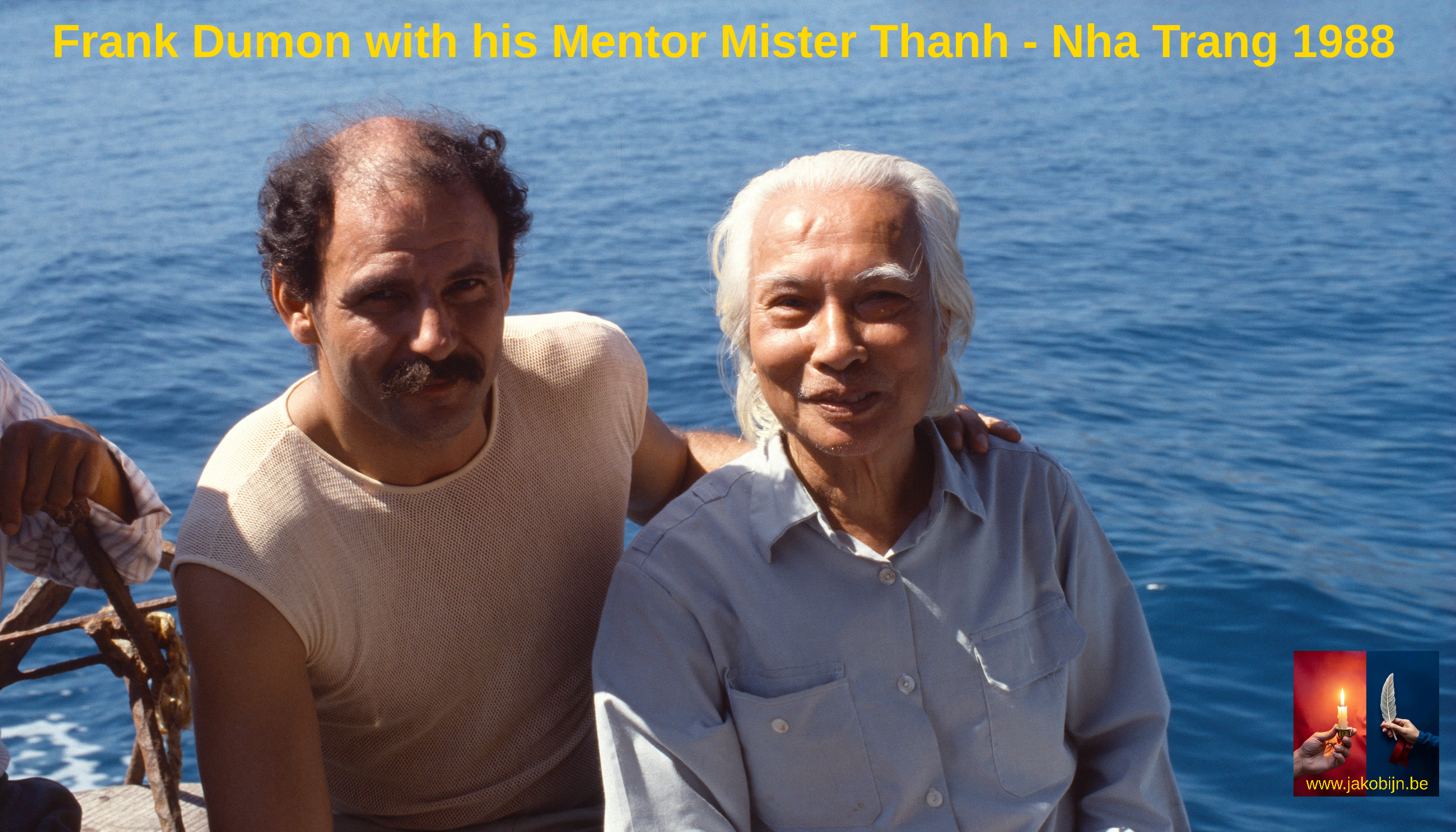
This is precisely why archiving the truth – the hundreds of photos, the negatives, the testimonies of survivors like my mentor Thanh – is not merely a historical exercise, but an act of resistance. It is the refusal to participate in the 'fast knowledge industry' that reduces the complexity of the past to a simplistic story of good and evil. It is the choice for the arduous, slow, and often painful path of deep reflection. It is the willingness to seek silence, to penetrate knowledge, and to face the facts, however uncomfortable they may be. For as Schopenhauer warns us: the elevated spirit seeks solitude, because in it he finds himself. And only by facing ourselves honestly can we begin to restore what collective stupidity has tried to destroy: the ability to distinguish truth from illusion.
How We Ultimately Raised the Least Smart Generation
I once read a sentence that summarizes the tragedy of our era with painful precision: "You can silence fifty scholars with one fact, but you cannot silence an idiot with fifty facts." This observation captures the core of a deeper, structural collapse. When critical thinking dies, collective stupidity rises as a natural consequence. We live in a world where everyone is convinced they are right and everyone else is wrong. Opinions sound louder than logic, and emotions weigh heavier than evidence. But the real question is not that this happens, but why critical thinking is crumbling faster in our time than ever before in human history.
To understand this decay, we must first look back. We must ask when critical thinking first emerged in human history, and what it actually means to think critically. For you can think a lot, but do you truly think critically? Critical thinking is more than just thinking a lot. It is the disciplined habit of questioning assumptions, seeking evidence, and applying reason before accepting a belief. In simple terms: it is the art of not being deceived by others, nor by your own mind.
The Socratic Origin and Kant's Enlightenment Dream
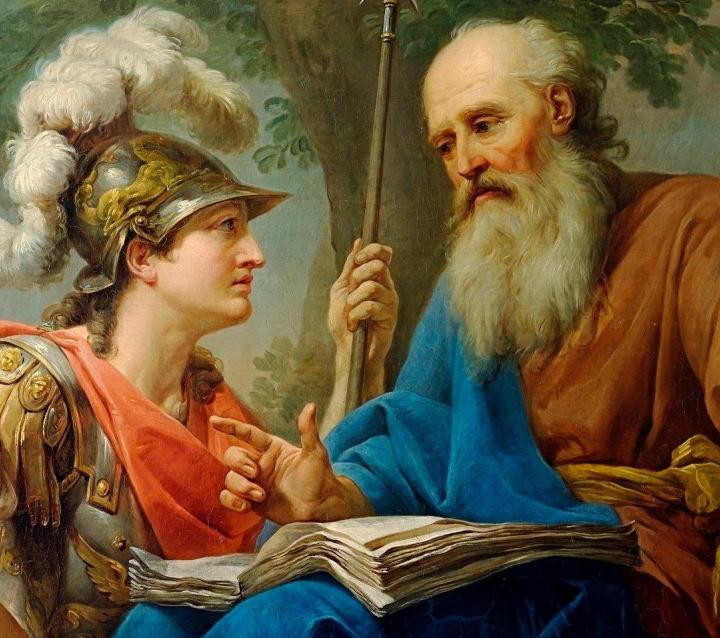 The roots of this discipline stretch back more than 2,500 years to ancient Greece. The philosopher Socrates was the pioneer of a method of inquiry dialogue now known as the Socratic method. By asking sharp, uncomfortable questions, he exposed the contradictions and weak foundations in what people thought they knew. He reminded us of a timeless truth: "The only thing I know is that I know nothing."
This humility, recognizing ignorance before seeking clarity, is the absolute basis of critical thinking. But Socrates paid the ultimate price for his tireless questioning. In 399 BC, he was accused of corrupting the youth and not respecting the gods. His insistence on independent thinking threatened the comfort of Athenian society, and he was sentenced to death. He became the first great victim of a society that preferred to kill the truth rather than face it.
From that moment on, thinkers like Plato and Aristotle carried the torch of reason further, expanding the framework of logic, inquiry, and skepticism. Centuries later, during the Enlightenment, the philosopher Immanuel Kant called on humanity to rise from its self-imposed immaturity with the motto: Sapere aude. "Dare to know", or: "Have the courage to use your own understanding." Thinkers like Voltaire embraced the same spirit, challenged dogmas, and celebrated reason as the foundation of progress. Critical thinking became the cornerstone of science, democracy, and innovation. It was long considered the hallmark of a developed mind: the ability to examine claims, weigh evidence, and break through illusions. Until today. For today we witness a decline unparalleled in history.
Information Overload and the Google Effect
We live in an era where every answer is just one mouse click away. At first glance, this feels liberating. We have the wisdom of the world in our pocket. But the reality is much darker. We are drowning in information, and the human brain was never built to process this flood. Psychologists call this 'information overload'. When data assails us faster than we can reflect, we are forced to take mental shortcuts.
Nobel Prize winner Daniel Kahneman once described two modes of thinking. System 1 is fast, automatic, and intuitive. System 2 is slow, effortful, and rational. Critical thinking lives in System 2; it is the part of us that asks questions, analyzes, and doubts. But here lies the problem: when apps, calculators, and nowadays artificial intelligence do the heavy lifting for us, System 2 remains inactive. Like a muscle that is never trained, our deeper reasoning ability begins to atrophy.
This phenomenon was sharply documented in 2011 by researcher Betsy Sparrow in what became known as the 'Google effect'. She discovered that when people expect to have easy access to information in the future, they do not bother to remember the information itself. Instead, they remember where they can find it. The brain, knowing that a fact is stored externally, quietly refuses to store it internally. We have stopped remembering things; we have started remembering the location of things.
For a while, this seemed like an innocent trade-off. Why remember a phone number if your phone has it? But here is what this outsourcing hid from us: memory is not a passive warehouse. It is the raw material of thought. You cannot connect two ideas that you do not hold in your mind simultaneously. You cannot notice that something is fundamentally wrong if you have no internal stock of what 'right' looks like. Insight, the real spark of intelligence, happens when facts collide within a single skull. Empty the skull, and the collisions stop.
This dynamic was fatal during the Vietnam War. The Western leadership, obsessed with data and technocratic management, reduced a complex, centuries-old culture and a stubborn anti-colonial struggle to simple System 1 metrics. The macabre 'body count' became the ultimate measure of success. The deep, System 2 thinking – which requires historical context, political nuance, and human suffering – was systematically disabled. One left moral and strategic judgment to algorithms of destruction, and forgot how to reason deeply about the consequences of one's own actions.
The Echo Chamber and the Tyranny of Confirmation Bias
If information overload weakens our ability to think, then echo chambers destroy our will to think. In today's world, we live within countless tribes: political, religious, cultural, or even based on hobbies and interests. People naturally seek out those who agree with them, but technology has amplified this instinct to dangerous levels.
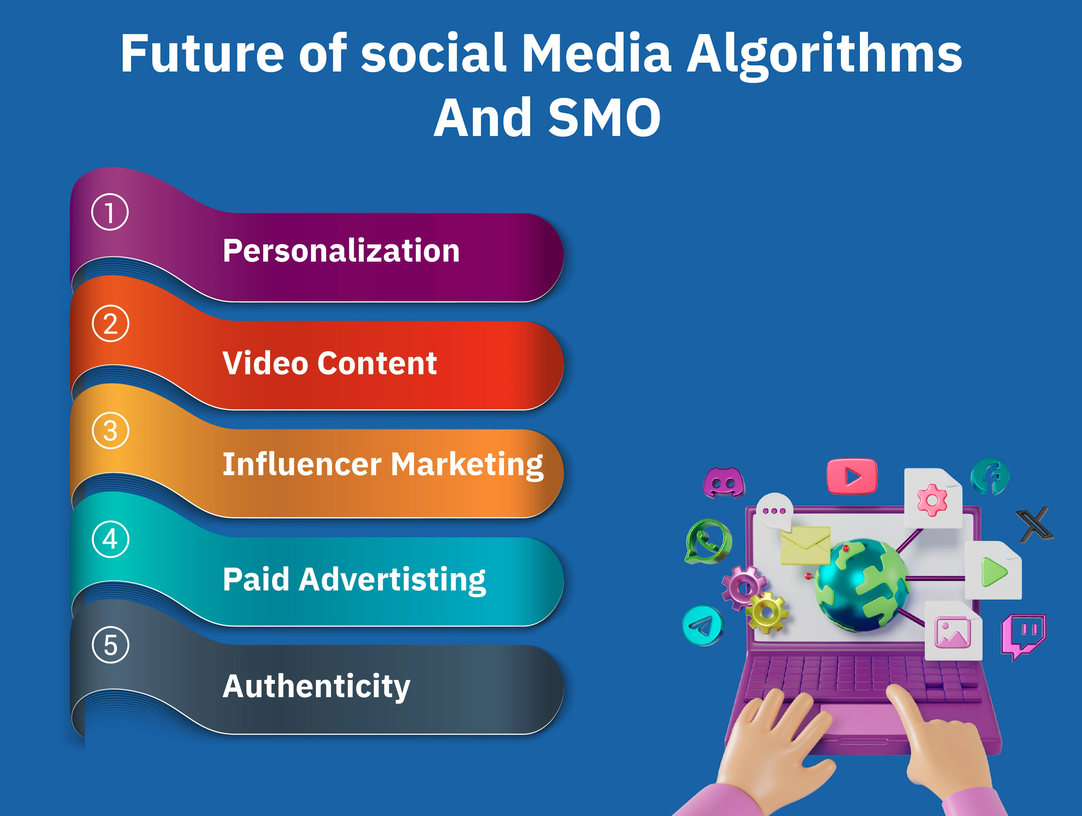 Social media algorithms now track every click, every 'like', and every comment, then feed content that matches our previous beliefs. The result is that we end up surrounded by opinions that sound like our own voice, only amplified back at us. This is the echo chamber: a place where we only hear our own voices. If you believe A, you will rarely encounter a strong case for not A. Over time, the mind becomes lazy. It accepts everything that confirms its worldview, and rejects the rest as fake, biased, or stupid.
This is confirmation bias, the mental shortcut that prefers comfort over challenge. In an era of endless digital tribes, almost everyone is trapped in such a chamber. Worse, echo chambers are not only found in conspiracy groups or fanatical sects. Even skeptics, atheists, and self-proclaimed rationalists can form closed circles where their assumptions are never questioned. When the group's opinion feels safe, our System 2 thinking goes silent. Instead of questioning, we conform. The effect is groupthink.
Every tribe convinces itself that we alone possess the truth, while outsiders are labeled as blind, foolish, or even evil. Echo chambers breed blind spots. People stop asking: "Why do I believe this?" and instead say: "This is just what we believe." Honest questions begin to feel like betrayal. The result is a society in which dogma replaces dialogue, and loyalty to the tribe becomes more important than loyalty to the truth. This is the exact opposite of the Socratic experiment: the courage to seek truth above comfort, even if it hurts.
Sensationalism: The Death of Nuance
If information overload weakens the mind and echo chambers imprison it, then sensationalism manipulates it. Modern media, whether news channels, social feeds, or influencers, have mastered the art of drama. They know one thing very well: outrage sells. Attention is currency, and nothing grabs attention faster than exaggeration.
Headlines are designed not to inform, but to provoke. Stories are often framed in the most shocking way possible. "You won't believe this", or "The world is ending if you don't act now." Even honest creators and educators feel the pressure to exaggerate, because without drama, no one clicks. It is the irony of our time: you must play the game of exaggeration, or your message gets lost in the noise.
But the problem is that this constant hype numbs us. When everything is announced as a crisis, nothing feels reliable anymore. People lose their patience for nuance, and their emotions take over where logic should reign. Critical thinking struggles in an environment where every headline screams "emergency", every post demands an immediate reaction, and every problem is dressed up as a life-and-death struggle.
This is not new. Journalism has long followed the rule: "If it bleeds, it leads." But today's 24/7 news cycle, fueled by algorithms and profit-driven clicks, pushes sensationalism to an extreme. "Breaking news" banners, exaggerated statistics, and fear-mongering phrases are constantly used, even when the situation calls for calm analysis. The result is a population that is always anxious, always distracted, and rarely thoughtful. We click, we share, we panic, but we do not pause to think. In a world where everything is hyped to the extreme, rational discourse becomes almost impossible. Sensationalism creates a rumor mill of outrage, in which slow and careful thinking feels misplaced. Instead of Socratic questioning, we are left with reflexive reactions. And once again, collective stupidity grows stronger.
The Return to Slow Thinking and Genuine Curiosity
The real question is: how can we stop this? Decline is not inevitable. By practicing curiosity, slowing down, questioning assumptions, escaping echo chambers, and reforming how we learn and lead, we can revive the lost art of reasoning.
Curiosity is the antidote to mental laziness. Einstein once admitted: "I have no special talents. I am only passionately curious." Curious people do not stop at the first answer. They ask "why", again and again, before accepting a claim. Pause and ask yourself: what is the evidence? How do I know this? What if the opposite were true? The quality of our thinking is revealed by the quality of our questions.
We must learn to slow down. In a world that demands immediate reactions, learn to resist. When you see a shocking headline, do not just scroll on. Read the full article, trace the source, and reflect. Avoid multitasking with complex ideas. Strengthen your System 2 thinking by doing the math yourself, writing out arguments, or weighing pros and cons before making decisions.
Furthermore, we must diversify our sources and escape our echo chamber. Consciously seek out perspectives that challenge you. Read media from different sides of the spectrum. Follow thinkers you disagree with. When you encounter statistics or claims, trace them back to their original sources. Play 'Devil's Advocate' with your own beliefs and invite others to question them. This is how you weaken confirmation bias and strengthen your ability to see clearly.
Critical thinking must also be cultivated at the societal level. Schools should emphasize reasoning, debating, and analyzing. Adults can do the same by studying logic, skepticism, or works of great thinkers. Leaders should model critical thinking, by showing not only conclusions, but also the reasoning behind them. When public figures admit uncertainty and demonstrate honest inquiry, they set a cultural example that questioning is a strength, not a weakness.
The Loneliness of the Truth Seeker
This path of critical thinking and truth-seeking, however, is not without personal cost. As Arthur Schopenhauer sharply observed, the ordinary person cannot endure solitude, because he only feels good in the company of others. See https://jakobijn.be/en/why-intelligent-people-simply-do-not-care-about-social-life
The elevated spirit, on the other hand, necessarily seeks solitude, because in it he finds himself. For Schopenhauer, society was often a 'great fabrication', an illusion that misleads the masses into believing in its stability and meaning, while in reality it only offers distraction to avoid facing the harsh reality of existence.
Intelligent individuals often find themselves trapped in a world that prefers conformity over originality. They struggle to navigate shallow social discussions that lack intellectual stimulation. They do not reject socialization per se, but rather the absence of deep, thought-provoking dialogue. Schopenhauer emphasized the necessity of intellectual friction in discussions, suggesting that intelligent people should limit excessive social interactions, because everyday conversations drain their mental energy and stifle creativity.
This is further clarified by the famous 'Porcupine Dilemma'. Just as porcupines huddle together for warmth in the cold, but hurt each other with their quills as soon as they get too close, intellectuals find it difficult to engage with society without feeling alienated. They long for connection, but are repelled by the ignorance and superficiality that dominate social interactions. Their consciousness becomes both a gift and a burden, making them outsiders in a world that resists enlightenment.
But Total Isolation Is Not a Sustainable Answer
 Schopenhauer himself recognized that people are social beings who need interaction to maintain psychological well-being. The key is balance. We must know when to embrace solitude and when to engage with society in a fulfilling and sustainable way. Total withdrawal leads to loneliness, which is fundamentally different from chosen solitude. Solitude is chosen and enriching; loneliness is a state of suffering caused by a lack of meaningful connections.
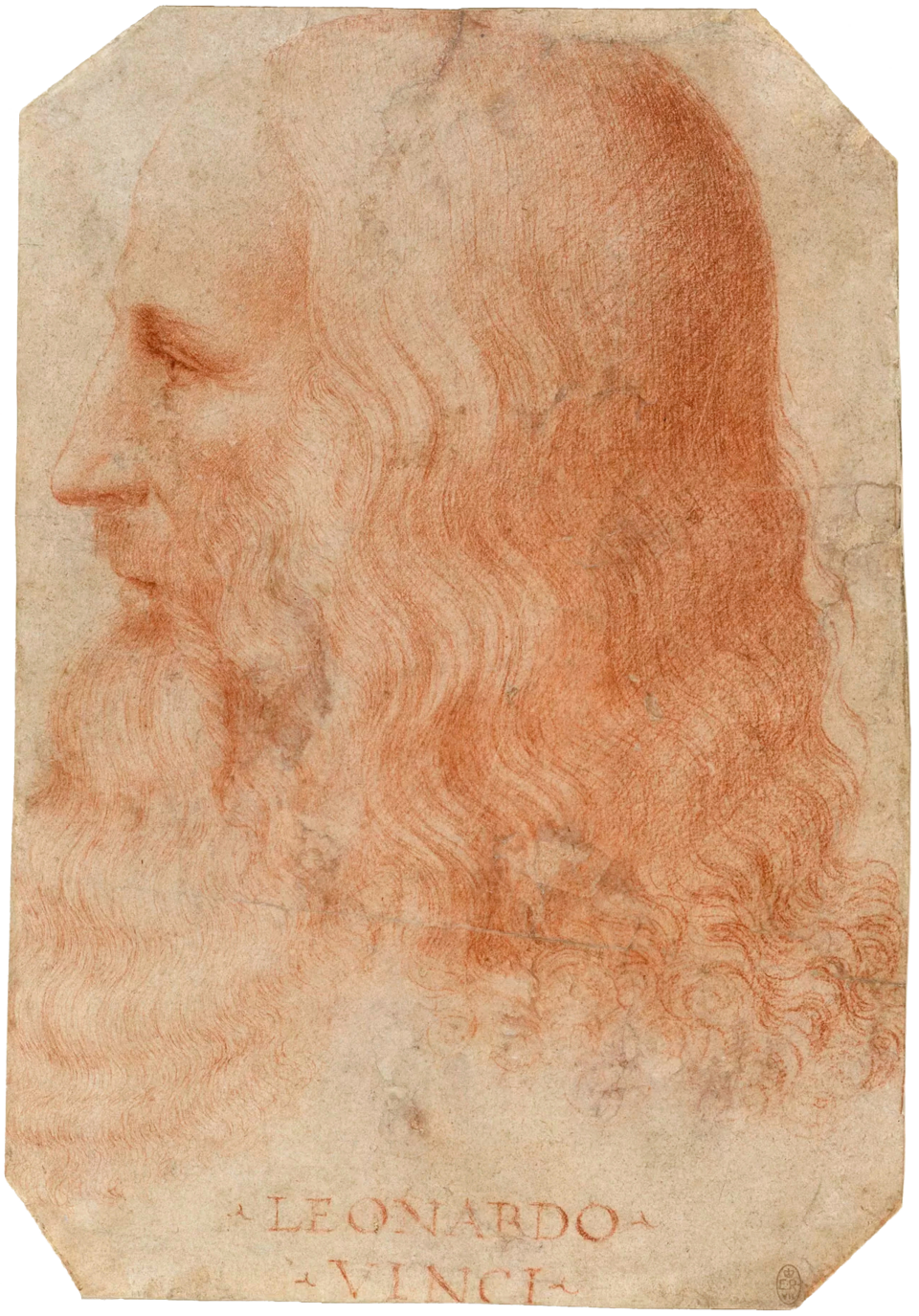
Brilliant minds like Leonardo da Vinci or Henry David Thoreau mastered the art of balancing solitude with socialization. They knew when to withdraw into deep solitude to work on their masterpieces, and when to seek out society to exchange ideas. The goal is not to blindly conform, but to integrate into society in a way that preserves intellectual integrity while avoiding unnecessary alienation.
Conclusion: The Unexamined War
When I think back to my years in Vietnam, from 1982 to 1988, I see this philosophical framework sharply delineated in the reality of reconstruction and the aftermath of war. The Western intervention was the ultimate manifestation of System 1 thinking, echo chambers, and sensationalism: a deafening symphony of technology, dogma, and superficial metrics, trying to drown out the complex reality of the country. It was a war fought by people who lacked the courage to practice Sapere aude, who confused truth with comfort, and who ultimately, in Cipolla's terms, caused harm to others and to themselves, without rational benefit.
In contrast stood the Vietnamese reality. A reality that offered no room for the luxury of self-deception. Survival required deep, slow, and relentless System 2 thinking. It required Socratic humility to know one's own limitations, and Schopenhauerian willingness to endure silence and harsh truth, rather than flee into the distraction of the masses.
Belief in critical thinking means refusing to live on autopilot. It means choosing questioning over blind acceptance, reflection over reaction. As Socrates reminded us more than 2,000 years ago: "The unexamined life is not worth living." For the architects of the Vietnam War, unfortunately, it applied: the unexamined war is not worth fighting. The price of that illusion was paid by millions. It is up to us, the witnesses, the archivists, and the thinkers, to ensure that the truth, however uncomfortable, is not swallowed by the silence of collective stupidity. We must continue to seek friction, to keep asking questions, and to retain the courage to stand alone, if that is the price for seeing reality as it truly is.
Sources Overview
Primary Sources
- Arendt, H. (1963). Eichmann in Jerusalem: A Report on the Banality of Evil. New York: Viking Press.
- Arendt, H. (1978). The Life of the Mind. New York: Harcourt Brace Jovanovich.
- Asch, S. E. (1951). "Effects of group pressure upon the modification and distortion of judgments". In H. Guetzkow (Ed.), Groups, leadership and men (pp. 177–190). Pittsburgh, PA: Carnegie Press.
- Bonhoeffer, D. (1951/1997). Letters and Papers from Prison. SCM Press.
- Cipolla, C. M. (1976). The Basic Laws of Human Stupidity. Berkeley: University of California Press.
- Dunning, D., & Kruger, J. (1999). "Unskilled and unaware of it: How difficulties in recognizing one's own incompetence lead to inflated self-assessments". Journal of Personality and Social Psychology, 77(6), 1121–1134.
- Janis, I. L. (1972). Victims of Groupthink: A Psychological Study of Foreign-Policy Decisions and Fiascoes. Boston: Houghton Mifflin.
- Kant, I. (1784). "Beantwortung der Frage: Was ist Aufklärung?"
- Plato. (ca. 399 BC). Apology of Socrates.
- Plato. (ca. 370 BC). Phaedrus.
- Sparrow, B., Liu, J., & Wegner, D. M. (2011). "Google Effects on Memory: Cognitive Consequences of Having Information at Our Fingertips". Science, 333(6043), 776-778.
Secondary Sources and Scientific Studies
- Carr, N. (2010). The Shallows: What the Internet Is Doing to Our Brains. New York: W. W. Norton & Company.
- Clinton, V. (2019). "Reading from paper compared to screens: A systematic review and meta‐analysis". Journal of Research in Reading, 42(2), 288-325.
- Haidt, J. (2012). The Righteous Mind. Penguin Random House.
- Halberstam, D. (1972). The Best and the Brightest. New York: Random House.
- Han, B.-C. (2010). Müdigkeitsgesellschaft [The Burnout Society]. Berlin: Merve Verlag.
- Kahneman, D. (2011). Thinking, Fast and Slow. Farrar, Straus and Giroux.
- Mark, G., Gudith, D., & Klocke, U. (2008). "The cost of interrupted work: more speed and stress". Proceedings of the SIGCHI Conference on Human Factors in Computing Systems, 107-110.
- McIntyre, L. (2018). Post-Truth. MIT Press.
- Mischel, W., Ebbesen, E. B., & Zeiss, A. R. (1972). "Cognitive and attentional mechanisms in delay of gratification". Journal of Personality and Social Psychology, 21(2), 204–218.
- Nietzsche, F. (1888). Der Antichrist.
- Pariser, E. (2011). The Filter Bubble. Penguin.
- Pinker, S. (2017). Enlightenment Now. Penguin.
- Sunstein, C. R. (2017). #Republic. Princeton University Press.
- Turkle, S. (2015). Reclaiming Conversation: The Power of Talk in a Digital Age. New York: Penguin Press.
- Wilson, T. D., et al. (2014). "Just think: The challenges of the disengaged mind". Science, 345(6192), 75-77.
Digital Archives and Reference Works
- Internet Archive (archive.org). For historical access to texts by Arendt, Halberstam, Bonhoeffer, and Janis.
- Project Gutenberg (gutenberg.org). For original texts and translations of Plato, Kant, and Nietzsche.
- Stanford Encyclopedia of Philosophy (plato.stanford.edu). Articles on Socrates, Kant, Schopenhauer, and Collective Responsibility.
- Video references: How Stupidity Became the Most Dangerous Disease and Socrates/Plato/Kant analysis.