
The Definitive Breaking Point: Why Russia Will Never Trust Europe Again
An analysis of the irreversible turn toward the East, the collapse of German industry, and military reality, based on the insights of Andrei Martyanov and Russian strategic doctrine.
By Frank Dumon
The post-Cold War illusion is definitively over. For years, the West operated under the assumption that economic sanctions, diplomatic isolation, and military support for Ukraine would eventually force Russia back to the negotiating table, or at least into a posture of submissiveness toward Europe. Nothing could be further from the truth. Those who study current Russian strategic, economic, and military analyses—such as the recent, unvarnished commentaries by military analyst Andrei Martyanov in conversation with former British diplomat Ian Proud, and the venomous but accurate observations by Dmitri Medvedev on the Russian defense industry and Germany's political course—see a sobering reality. Russia has not merely turned its back on Europe; it regards the continent as a geopolitical ruin, governed by incompetent ideologues.
The era of Western monopoly on world order is over. The Eurasian pivot is not a temporary tactic, but a permanent, historical correction. In this comprehensive article, we dissect the pillars of this new reality: from Western 'war tourism' and German de-industrialization, to the rise of BRICS, Russia's mixed economic model, and the ruthless military and nuclear logic that will dictate the end of the conflict in Ukraine.
1. The End of Trust: From Admiration to Contempt
To understand the current Russian mindset toward Europe, we must listen to the words of Russian Foreign Minister Sergey Lavrov. His judgment is as simple as it is irrevocable: *"There will never be trust between us again."*
For the older generation of Russians, those who experienced the Cold War firsthand, this rupture was unthinkable. Martyanov, himself a product of that era, recalls how Russians in the 1970s and 1980s looked toward the West with a certain admiration. There was an intellectual and cultural attraction. Today, that admiration has completely evaporated and been replaced by something far more dangerous for Western diplomacy: deep, unadulterated contempt. Russian society no longer looks at Europe with envy, but with a disdainful gaze, as if observing a slowly moving, decadent museum orchestrating its own demise.
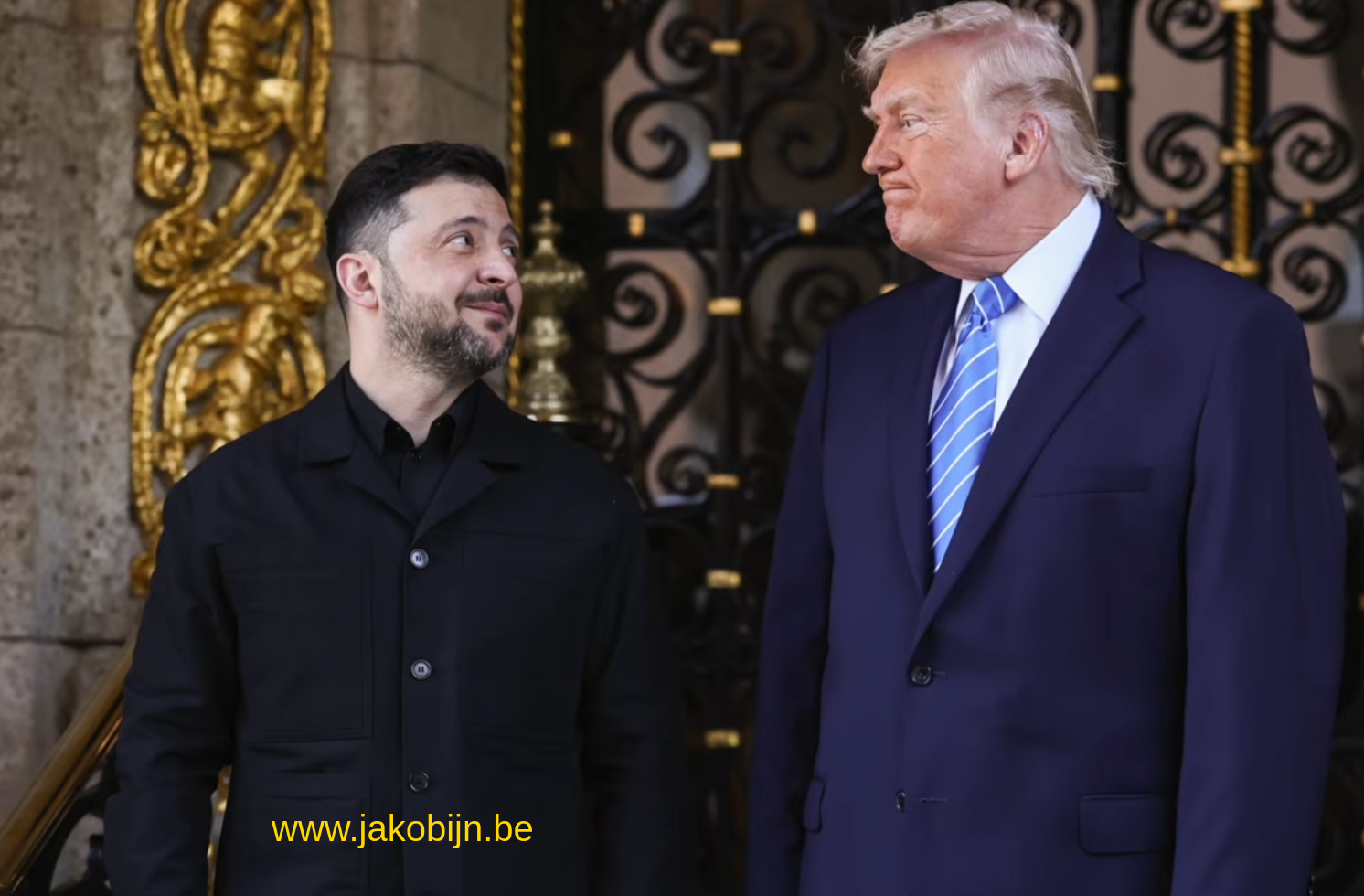
This contempt is fed daily by what Martyanov aptly describes as Western 'war tourism' and virtue-signalling. The recent episode surrounding former British Prime Minister Boris Johnson is a textbook example. When a Russian drone strike hit a locomotive at a Ukrainian station where Johnson had stayed shortly before, the Western press reacted with outrage. For Moscow, however, this was a telling symptom of the Western elite. Johnson, a man with a degree in English literature and a reputation based more on boisterous student behavior than statesmanship, embodies the modern Western politician: someone who visits war zones for the photo opportunity, surrounded by battalions in camouflage, only to declare in London or Brussels that Ukraine is 'winning.'
This phenomenon of politicians traveling to Kyiv to demonstrate their moral superiority is seen in Moscow as a dangerous farce. These are not statesmen acting on the basis of strategic realpolitik, but ideologues and fanatics driven by a toxic cocktail of fear and Russophobia. They risk not only their own lives but normalize a conflict they do not fully understand. Today's Western leaders lack the historical baggage and strategic depth of figures from the past, and operate in a virtual reality where they believe rhetoric and sanctions can dictate the course of history.
2. German Suicide and the Illusion of Political Change
Nowhere is the failure of Western policy more painfully visible than in Germany, the former economic engine of Europe. Both Martyanov's technical analyses and Dmitri Medvedev's political tirades paint a picture of a nation that has committed economic suicide. Germany has cut itself off from cheap Russian energy, the lifeblood of its heavy industry, and is now paying the ultimate price. As Vladimir Putin pointed out during the BRICS summit: Europe is now paying up to ten times more for gas than the rest of the world.
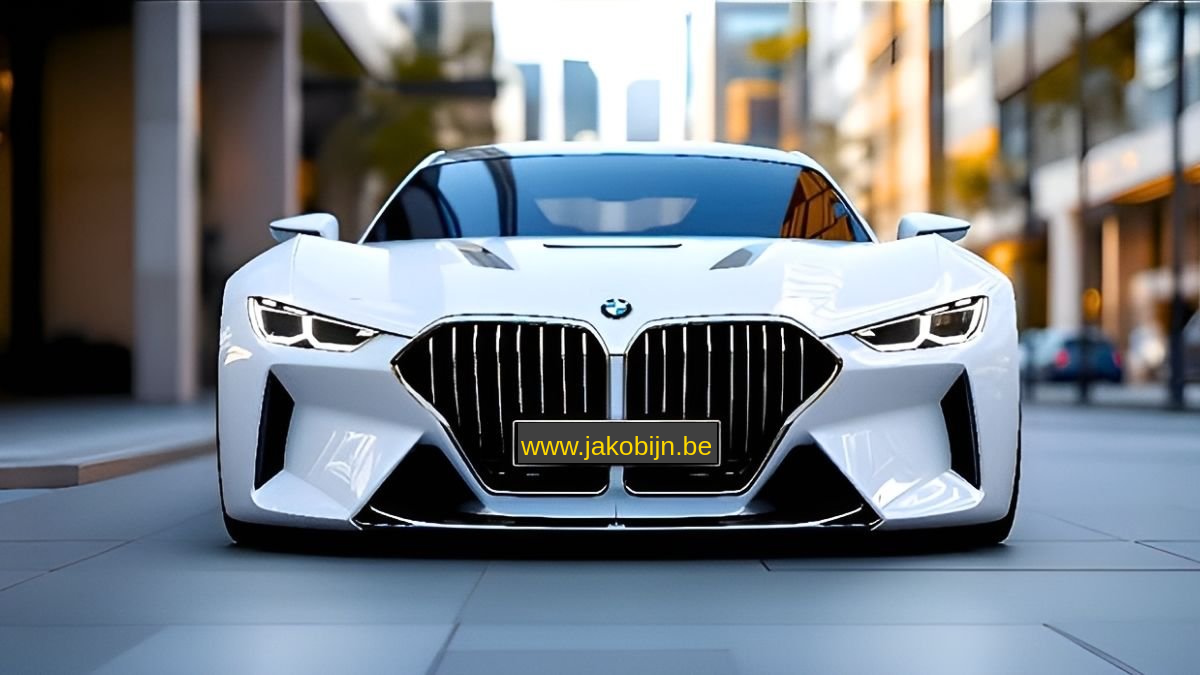 The consequences are catastrophic and, more importantly, irreversible. The German chemical industry, the backbone of European production, is collapsing. But the damage extends further. Martyanov does not spare the icons of the German auto industry: BMW and Mercedes are described by him in the current global context as "over-engineered, over-priced junk." In a world that is rapidly electrifying and where Asian manufacturers dominate the market with superior technology and lower prices, the German auto industry has lost its competitive position. Siemens, once a world leader, has been banned from strategic markets like Russia and is losing ground.
In Europe, many cling to the hope that a political shift might provide relief. The rise of the AfD (Alternative für Deutschland) in the eastern states, or the 8% popularity of Friedrich Merz and the CDU, is seen by some as a harbinger of a return to a 'normal,' pragmatic relationship with Moscow. But this hope is an illusion. Even if Merz or the AfD were to come to power, the structural damage to the German economy has already been done. Factories that have closed will not simply reopen. Expertise in nuclear energy has been lost due to the catastrophic Energiewende pushed through by ideologues (often with backgrounds in journalism or philosophy, not engineering).
In his recent commentaries, Medvedev likewise ruthlessly points to the incompetence of the German political "elite." He does not regard current German leaders as sovereign statesmen, but as puppets of Washington who knowingly sacrifice the prosperity of their own population on the altar of American geopolitical interests. Even if a new, 'realistic' generation of politicians were to emerge in Berlin tomorrow, it is too late. Russia has turned the page. There is no return to the Nord Stream era. German industry will shrink, and society will pay the price in the form of lower living standards and social unrest.
3. BRICS, India, and the New Economic Reality
While Europe marginalizes itself, Russia is rapidly building a new, multipolar economic ecosystem. The recent BRICS summit was undeniable proof of this. What stood out in the official BRICS communiqué was not what was in it, but what was not in it. Ukraine was barely mentioned. Instead, there were long, detailed paragraphs on Palestine, Lebanon, and Iran. This was a diplomatic middle finger to the West: the world outside NATO does not prioritize the Western narrative on Ukraine, but focuses on broader geopolitical and humanitarian issues in the Middle East and the Global South.
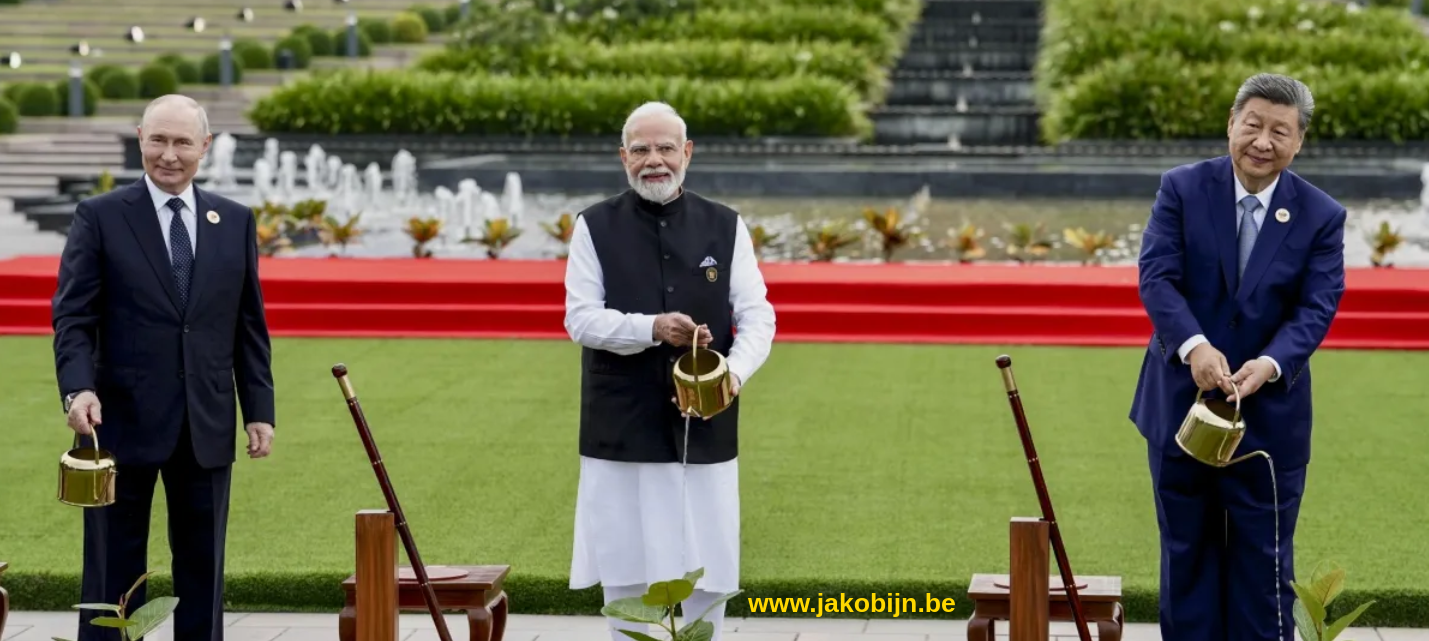
BRICS is no longer a loose collection of dissatisfied countries; it has become an official economic bloc. The introduction and implementation of 'BRICS Pay' offers a full-fledged, functioning alternative to the Western SWIFT system. Sanctions and the weaponization of the US dollar have lost their terrifying effect. Even in the West, financial realists are beginning to see this. Martyanov points to interactions between Western financial heavyweights (such as circles around Scott Bessent) and Russian Finance Minister Anton Siluanov. Behind closed doors, there is a pragmatic realization that global trade cannot function without Russian raw materials.
But Moscow does not trust these Western financial elites one bit. The Russian assumption is simple: the West will cheat anyway. Therefore, Russia now dictates the terms: "Accept it, or say bye-bye." There is no longer any talk of a 'privileged partnership'; there is only trade at world prices. The era of preferential tariffs is over. Russia has no need for a quarrelsome Europe with its 31,000 useless sanctions.
India's role in this new paradigm is fascinating. Under Prime Minister Modi's leadership, India has taken the leap and increasingly chooses the side of the Eurasian bloc. Why? The answer lies in a fundamental law of modern geopolitics, as Martyanov formulates it: Civilization is based on cheap energy.
Every form of progress, from lifting hundreds of millions of people out of poverty to building advanced data centers and space programs, requires an enormous source of energy accessibility. India cannot realize its ambitions with the expensive and inefficient green energy being imposed by Europe. It needs cheap, reliable, and efficient energy sources: oil, gas, and nuclear energy. And Russia happens to be the supplier that can guarantee these energy sources.
The alliance between Russia, China, and India (via BRICS and the Shanghai Cooperation Organisation) forms a Eurasian landmass that far exceeds Western maritime powers in terms of population, raw materials, and industrial capacity. Russia is developing its Far East and the Northern Sea Route at an unprecedented pace, facilitated by Asian capital and technology. The pivot to the East is not an emergency solution; it is the natural direction of history's march.
4. The Russian Economy: Why Western MBAs Miss the Mark
In 2022, Western economists, armed with their MBAs and neoliberal models, predicted the immediate collapse of the Russian economy. They thought that freezing central bank reserves and the withdrawal of Western companies would cause the Russian system to implode. They were fundamentally wrong because they did not understand the nature of the Russian economy.
Russia operates with a successful mixed economy. On the surface, there is thriving capitalism: retail, hospitality, the service sector, and construction are largely in private hands and extremely competitive. However, the strategic backbone of the country—raw materials, energy, heavy industry, and the defense sector—is under strict national control. Companies like Rosneft and Gazprom do have private shareholders, but the state holds the controlling shares.
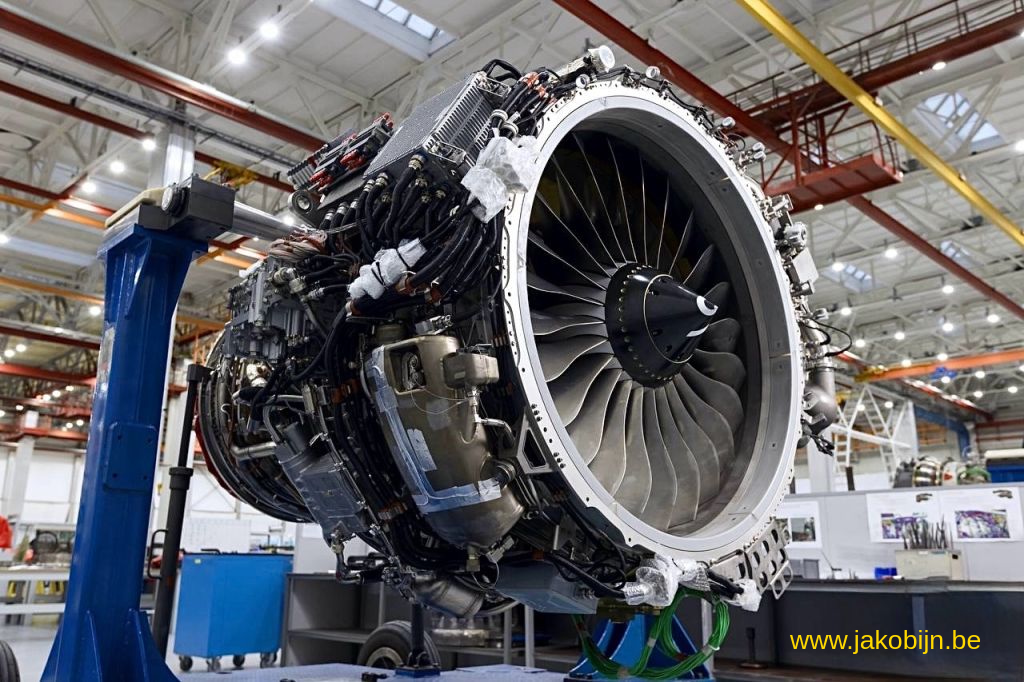 The crown jewel of this system is Rostec, the Russian state corporation for technology and defense, led by Sergey Chemezov. Rostec is a monstrous, extremely efficient organization with hundreds of thousands of employees. Where Western defense companies struggle with fragmentation, profit-seeking, and shortages of skilled personnel, Rostec functions as an integrated machine that directly serves the needs of the state and the military. This is also the core of the message that figures like Dmitri Medvedev constantly repeat: the Russian defense industry is operating at 24/7 capacity, producing in numbers that the West, with its hollowed-out industrial base, simply cannot match, and delivering materiel that withstands the test of time and the harsh reality of the battlefield.
Moreover, the Russian state has learned from the traumas of the 1990s, when oligarchs and Western 'advisors' plundered the country. There is now an iron grip on food security and basic prices. The state guarantees prices for essential goods such as meat, eggs, and flour to prevent the population from suffering due to market fluctuations or Western sabotage attempts. This mix of market mechanisms for consumers and state intervention for strategic sectors makes the Russian economy extremely resilient, something not found in Western economics textbooks.
5. War Tourism, Nuclear Reality, and the Elite's Bunkers
Back to the battlefield and the broader military confrontation. Western rhetoric about support for Ukraine for as long as it takes clashes hard with geographical and military reality. Martyanov paints a clear, albeit bleak for Kyiv, picture of how the war will end militarily. Current fighting is concentrated around the heavily fortified cities of Sloviansk and Kramatorsk. This is the last major belt of fortified positions of the Ukrainian army.
Once this line falls or becomes untenable, the scene changes dramatically. Between Sloviansk and cities like Dnipropetrovsk or Pavlohrad lie mainly vast, flat, open fields. In a war dominated by drones, precision artillery, and air superiority, open terrain without natural barriers or deep trench systems is indefensible. The Ukrainian army will not be able to regroup there.
For the cocaine-addicted President Zelensky, this means the end of the road. Martyanov calls him a dead man walking. Whether he falls at the hands of his own frustrated population, rivals within the intelligence services, or Russian precision weapons; his political and physical survival is an illusion. Western leaders who continue to encourage him to fight to the last Ukrainian are knowingly sending him to the slaughterhouse, knowing that their own populations will ultimately not want to pay the bill for this proxy war.
But the real strategic target for Moscow is not Ukraine; it is NATO. The Russian Ministry of Foreign Affairs stated unequivocally in December 2021, just before the start of the Special Military Operation, that NATO must return to its 1997 borders. For Russia, Ukraine is merely the crowbar to break American hegemony in Europe.
The ultimate goal is the dismantling of the European Union and NATO, so that Europe returns to its historical form: a collection of sovereign, mutually rival nation-states, rather than a bloc dictated by Washington.
The European elite, with figures like Polish Foreign Minister Radek Sikorski (a former journalist and MI6 asset according to Martyanov) or Ursula von der Leyen, seem not to understand this existential threat. They are playing with fire, provoking around the Russian exclave of Kaliningrad, and believe their own propaganda. They suffer from a dangerous form of arrogance. They think that should the conflict escalate, they will be safe in their underground bunkers.
But the technological reality of the 21st century ruthlessly shatters this illusion. European leaders with degrees in law or journalism have no understanding of concepts like Herman Kahn's escalation ladder, orbital groupings, or radio-electronic intelligence (SIGINT). Russia possesses world-class satellite networks and intelligence services. They know exactly where the bunkers of Macron, Scholz, and the NATO leadership are located. They know which communication lines they use. In a hypersonic and nuclear conflict, concrete walls offer no protection against weapons designed to obliterate precisely those coordinates. Russian military doctrine explicitly provides for the decapitation of enemy leadership that poses an existential threat or initiates a nuclear attack. The European elite cannot hide; their survival depends on their restraint, a quality they currently unfortunately lack.
6. The Nuclear Space Race and the Future of Civilization
What Western analysts perhaps overlook most is the Russian focus on the future of energy and space exploration. Martyanov points to a development barely understood in the Financial Times or Wall Street Journal: Russian construction of super-heavy rockets and nuclear propulsion in space. The 'Zeus' project, a nuclear spacecraft capable of reaching fractions of light speed, opens the door to colonizing the solar system, the moon, and the asteroid belt.
Why is this geopolitically relevant? Because the future of human civilization, and thus the world economy, depends on control over resources and energy in space. While Europe lets its space program (ESA) deteriorate due to budgetary shortfalls and political fragmentation, and the US loses itself in the commercial but fragmented ambitions of SpaceX, Russia (in close cooperation with China) is building the infrastructure for the next century. This requires an immense industrial base, highly educated engineers, and a state that looks beyond the next four-year election cycle. It is the ultimate proof that Eurasian powers have set their sights on the future, while the West is entangled in identity politics and cultural degeneration.
The West, and Europe in particular, has become a post-Christian, hollow culture in Moscow's eyes. A society that hates its own history, tears down its own monuments, and has banished its industry in favor of financial speculation and green utopias that are physically impossible. As the famous geopolitical strategist Henry Kissinger (and later analysts in his circles) asked: Where has my London gone? Where is my Europe? The Europe that shaped the world through science, art, and enlightenment no longer exists. It has been replaced by a technocratic bureaucracy in Brussels that terrorizes its own population with nitrogen rules, energy labels, and censorship.
Conclusion: An Irreversible History
The message emerging from Martyanov's analyses, supported by the hard truths about the Russian defense industry propagated by Medvedev, is crystal clear: the train has left the station.
There will be no 'reset.' There will be no return to cheap gas contracts and privileged diplomatic relations of the 2000s. Russia has not only blown up the bridge to Europe; it has rerouted the river. Russian society and its leaders look at the West with a combination of pity and contempt. They see a continent destroying its own wealth out of fear and ideological blindness, led by a caste of politicians who understand neither history, nor technology, nor the military reality of the 21st century.
For the reader in Europe, and specifically for those who closely follow geopolitical shifts through platforms like De Jakobijn, the conclusion is as clear as it is disturbing. Europe stands on the wrong side of history. While the East (China, India, Russia, Iran) builds a new world order based on energy and real production, Europe sinks into de-industrialization and internal division.
The war in Ukraine is merely a symptom of this larger, tectonic shift. Once the plains beyond Sloviansk and Kramatorsk are conquered, the world will be forced to accept the new reality. NATO will have to face its irrelevance or its defeat, and Europe will have to learn to live with the consequences of its own, fear-driven choices. Trust is a fragile commodity. Once destroyed by arrogance and contempt, it never returns. And Russia, it turns out, decided long ago that it no longer needs that trust at all. The future lies in the East.
Sources
- Andrei Martyanov: Never Trust Europe Again — Russia's Turn To BRICS Is Permanent
- Medvedev on Russia's Defense Industry and Germany's Political Course