
Europe at a Crossroads: Nebenzia, Kallas, Le Pen and the Crisis of European Foreign Policy
By Frank Dumon | Political opinion and historical analysis | 17 November 2026
Europe was founded on a promise of peace, cooperation and reconciliation. Today, the continent is spending unprecedented sums on weapons, relations with Russia remain profoundly hostile, and an increasing number of Europeans question who determines their foreign policy. A fierce exchange at the United Nations and a new challenge from France's Marine Le Pen expose a question Brussels cannot avoid: does the European Union still serve peace and the interests of its citizens, or has geopolitical confrontation become an end in itself?
Two political episodes, separated by seven months, illuminate the same institutional crisis. On 13 April 2026, Russia's permanent representative to the United Nations, Vassily Nebenzia, delivered a blistering denunciation of the European Union and its foreign-policy chief, Kaja Kallas, at a meeting of the Security Council. On 9 November, reporting based on interviews with officials of France's National Rally described Marine Le Pen's ambition to abolish or substantially reduce the European External Action Service (EEAS) if she became president in 2027. One challenge came from Moscow; the other emerged from within the European Union. Their motives and political programmes are different, but both force a debate about European power, accountability, diplomacy and war.
Neither episode should be reduced to a sensational video headline. Nebenzia's address exists in the United Nations' official meeting record, S/PV.10133. Kallas spoke at the same meeting and later responded directly. Le Pen's plans were reported by POLITICO on 9 November 2026, while the EEAS's functions and spending can be checked against its own publications. These records allow us to treat the political arguments seriously, without confusing accusations with established facts.
1. The confrontation at the United Nations: a diplomatic rupture in plain sight
The Security Council's 13 April meeting was formally devoted to cooperation between the United Nations and the European Union. It was not meant to be a personal duel. UN official Khaled Khiari described the EU's substantial contribution to mediation, peacekeeping, humanitarian assistance and multilateral institutions. Kallas defended Europe's involvement and portrayed Russia's invasion of Ukraine as a central violation of international law. Her presentation placed the war in Ukraine alongside the crisis in the Middle East and the increasingly fragile global security order.
Nebenzia's intervention shattered this carefully institutional tone. He charged that the EU had spent decades cultivating the reputation of a benevolent peacemaker while pursuing selective interests, disregarding other states' security concerns and perpetuating economic patterns inherited from colonial domination. His central accusation was not merely that Brussels made errors; it was that a political project once identified with reconciliation had become an instrument of escalation.
He singled out Kallas, a former Estonian prime minister, as emblematic of an Eastern European school of diplomacy that sees Moscow chiefly through confrontation. He accused European governments of obstructing negotiations on Ukraine, supporting maximalist conditions for settlement, increasing sanctions despite harm to their own economies and preparing the public for a direct military clash with Russia. At the end, he invoked the inflammatory spectre of a new “Reich”. That comparison is Nebenzia's rhetoric, not an established description of the EU; it is historically grave and should be identified as such. Yet dismissing the entire intervention because of its rhetoric would leave its central questions unanswered.
Why has Europe's diplomatic imagination narrowed so dramatically? Why is military readiness routinely explained in detail, while the practical architecture of an eventual negotiated peace remains so much less visible? And why are citizens asked to finance ever greater defence expenditures without an equally transparent discussion of economic trade-offs, escalation risks and the end state being pursued?
2. Kaja Kallas and the language of permanent confrontation
Kallas has consistently argued that Russia's military intervention must not be rewarded and that Ukraine's sovereignty must be defended. This position has legal support: the UN General Assembly has repeatedly upheld Ukraine's territorial integrity and rejected Russia's attempted annexations. A serious critique of Kallas should acknowledge that reality. European security cannot be rebuilt by pretending that internationally recognised frontiers may simply be changed by force.
But the legal case for Ukraine's independence does not relieve European leaders of the political obligation to seek a viable settlement. Supporting a country's right to defend itself and exploring the conditions for a ceasefire are not mutually exclusive policies. Europe needs a strategy that specifies how military support, diplomatic contact, humanitarian safeguards and political compromises might interact. Without that strategy, slogans about victory or strategic defeat risk becoming substitutes for policy.
At the UN meeting, Kallas answered Nebenzia's procedural objection after the Council president allowed her to speak again. She maintained that European security arrangements must respect the prohibition on changing borders by force and questioned why Russia's neighbours feared its conduct. Her reply was forceful. Nevertheless, the exchange illustrated a much wider failure: the Russian and EU representatives were speaking to the world, but barely to one another. Each described the other as the primary danger, while the possibility of an inclusive European security settlement slipped further from view.
Europe should be able to condemn unlawful military action while also insisting that diplomacy with Moscow is necessary. Dialogue is not capitulation. Negotiation is not a reward. It is the indispensable method through which enemies eventually end wars.
3. The forgotten principle of indivisible security
For decades, European security policy was not intended to be a choice between total Western dominance and total Russian dominance. At the 2010 summit of the Organization for Security and Co-operation in Europe (OSCE), participating states endorsed the vision of a common security community stretching across Europe and Eurasia. Their Astana Commemorative Declaration affirmed that states should not strengthen their security at the expense of others.
That commitment deserves to be restored to the centre of European discussions. Russia's perception that the expansion and consolidation of rival security structures threaten its interests is a political reality that any durable agreement must address. The anxieties of Poland, Estonia, Latvia, Lithuania and Ukraine are also political realities. No agreement can be stable if it recognises one side's security concerns while declaring the others illegitimate.
There is, however, a crucial limit to the argument. The OSCE principle cannot be used to grant Russia authority over the domestic choices or sovereignty of neighbouring countries. The same declaration also protects each participating state's sovereign equality and freedom of security choice. A credible European settlement must hold both principles together: no policy of military encirclement or humiliation, and no right for great powers to dominate smaller states.
For Brussels, this means recovering a diplomatic vocabulary that accommodates mutual security instead of assuming that weapons alone can create it. For Moscow, it means recognising that insecurity cannot justify territorial conquest. For Washington, it means acknowledging that European security is not a chessboard on which another continent can indefinitely absorb the costs of confrontation.
4. Military expenditure: the figures are larger than the original speech suggested
Nebenzia placed particular emphasis on the rapid rise in European military spending. His April address mentioned approximately €381 billion for EU defence expenditure in 2025, reflecting an earlier estimate then in circulation. The European Defence Agency's subsequently published data are even more striking. According to its report of 16 July 2026, the 27 member states spent €418 billion on defence in 2025, an increase of 20 percent over 2024. The agency projected €454 billion for 2026 and calculated that defence already represented 2.2 percent of EU gross domestic product in 2025.
These are expenditures by member states, not a single budget controlled by Brussels. That distinction matters. Nevertheless, they amount to a profound collective change in priorities. European governments defend the increase as necessary deterrence following Russia's invasion of Ukraine and uncertainty about the United States' long-term security commitments. Those arguments are not imaginary; many Europeans genuinely fear further military aggression. Yet it would be irresponsible to pretend that such figures have no political or social consequences.
Every government faces competing demands: hospitals, public transport, pensions, education, industrial energy prices, housing and climate adaptation. Higher military budgets do not automatically require equivalent social-service cuts; they may also be financed by taxation, borrowing or reprioritising other expenditures. But each method imposes a cost somewhere. Voters deserve itemised explanations, not only announcements of ambitious defence targets.
Another question concerns industrial beneficiaries. Procurement contracts can support European manufacturing and legitimate security needs, yet they can also produce lobbying pressure, duplication and long-term dependence on arms suppliers. Defence spending should therefore face especially rigorous parliamentary scrutiny. If Europe can mobilise hundreds of billions to prepare for war, it must demonstrate comparable seriousness in financing the instruments needed to prevent war.
5. Sanctions, energy and the cost of geopolitical decisions
Nebenzia characterised European sanctions as ineffective against Russia and damaging to the EU itself. That is one side of a contested economic assessment. The EU argues that its measures are intended to restrict Russian military financing, limit access to sensitive technology and respond to breaches of Ukraine's sovereignty. The Council's sanctions timeline confirms that this policy has been continuously developed and extended.
Sanctions can constrain a target without producing its surrender. They can also generate costs for countries enforcing them, especially where long-established trade and energy relationships are broken. Europe's industrial base depended for decades on competitively priced imported fuels, including Russian pipeline gas. The transition away from those supplies, combined with international market shocks and other structural pressures, has created profound challenges for energy-intensive manufacturing. It is legitimate to ask whether the burden has been fairly distributed among consumers, workers, industry and governments.
Yet an accurate analysis must distinguish the effects of sanctions from the effects of the war itself, disrupted energy deliveries, global market volatility and domestic energy policy. Not every factory closure or rise in household bills can be attributed to a single Brussels decision. Equally, describing all such costs as the unavoidable price of moral leadership evades the duty to measure them.
My editorial position is clear: the European Union should openly reassess the economic consequences of its Russia policy, publish transparent sector-by-sector evaluations and keep diplomatic channels available for eventual mutually beneficial economic relations. Europe's strength was built not only through alliances but also through production, trade, skilled labour and the possibility of peaceful coexistence. Destroying those foundations in the name of an indefinite confrontation would be a historic error.
6. Double standards and international law: a criticism that must apply to everyone
In one of the most pointed sections of his speech, Nebenzia contrasted Europe's defence of self-determination in the context of Greenland with its rejection of Russian claims regarding Crimea and other occupied Ukrainian regions. He also questioned why European leaders defend maritime freedom around the Strait of Hormuz while restricting activities linked to sanctioned Russian shipping.
The accusation of selective legal reasoning deserves examination, especially given the long history of European colonialism and the inconsistent international response to different wars. Europe's reputation in Africa, Asia and the Middle East has not been shaped only by present-day aid programmes. Memories of extraction, territorial control and unequal bargaining have not disappeared. Countries outside Europe can reasonably ask whether the standards applied to adversaries are also applied to allies.
But the cases Nebenzia compared are not legally interchangeable. Self-determination does not provide an unrestricted entitlement to seize territory through military force. In resolution ES-11/4 of October 2022, the UN General Assembly rejected the attempted annexation of four Ukrainian regions and reaffirmed internationally recognised boundaries. The UN also continues to regard Crimea as Ukrainian territory. That record cannot simply be erased by invoking political grievances or local referendums organised under occupation.
Likewise, the right of navigation and the legality of particular sanctions or vessel inspections require separate legal analysis. There may be genuine inconsistencies in Western policy, but they must be demonstrated rather than assumed. A persuasive challenge to Brussels starts with the same rule for all powers, including Russia, the United States and the EU: sovereignty, civilian protection and the prohibition on aggressive war are not optional conveniences.
7. Democratic legitimacy: who owns Europe's foreign policy?
Russia's UN representative accused European institutions of attempting to suppress alternative political forces through censorship, digital controls and pressure over election outcomes. These are broad allegations; specific electoral episodes in Romania or Georgia cannot be treated as proof of an EU-wide conspiracy without case-by-case evidence. Georgia is not an EU member state, and the legal and political circumstances of each election differ.
Still, the underlying democratic question is real. How can Europe's governments claim to represent public consent if the consequences of foreign-policy decisions are insulated from serious debate? Citizens who oppose sanctions, demand peace talks, or question military appropriations must remain free to articulate those positions. Disagreement with the dominant strategy is not in itself foreign influence or disloyalty.
Brussels must also be more honest about where authority actually lies. National governments retain important powers in foreign and security policy. The High Representative is not a directly elected European president, and much of the EU's Common Foreign and Security Policy depends on decisions by member states. The existence of this intergovernmental structure does not eliminate a democratic deficit: institutional complexity can make responsibility difficult for ordinary voters to trace.
European democracy requires identifiable decision-makers, accessible records, meaningful parliamentary examination and room for dissenting views. A Union confident in its legitimacy should welcome that scrutiny, including from critics who fundamentally challenge its current geopolitical course.
8. Corruption and secrecy: Brussels must answer the accusations, not wave them away
Nebenzia's denunciation of corruption at the summit of the European institutions deserves far more than an automatic dismissal as Russian propaganda. He named former EU foreign-policy chief Federica Mogherini and European Commission President Ursula von der Leyen, and accused European officials of profiting from the vast resources mobilised for Ukraine. He went further, alleging that a large part of the aid was diverted into the pockets of EU bureaucrats. The precise scale he alleged has not been demonstrated by a public, independently verifiable audit. But that unresolved figure must not become a convenient excuse to ignore the documented failures, investigations and conflicts of interest that have already emerged.
Consider the European External Action Service itself. In December 2025, the European Public Prosecutor's Office announced searches of the EEAS in Brussels and the College of Europe in Bruges concerning suspected irregularities in the award of an EU-funded diplomatic training contract. Three people, including the rector of the College of Europe, were subsequently formally notified of accusations concerning procurement fraud, corruption, conflicts of interest and professional secrecy. The rector was Federica Mogherini. The investigation and accusations are real; a criminal conviction has not been established by these announcements, and the presumption of innocence remains essential. Nevertheless, an investigation reaching the very institution responsible for EU diplomacy is a matter of profound public concern, not an insignificant anecdote.
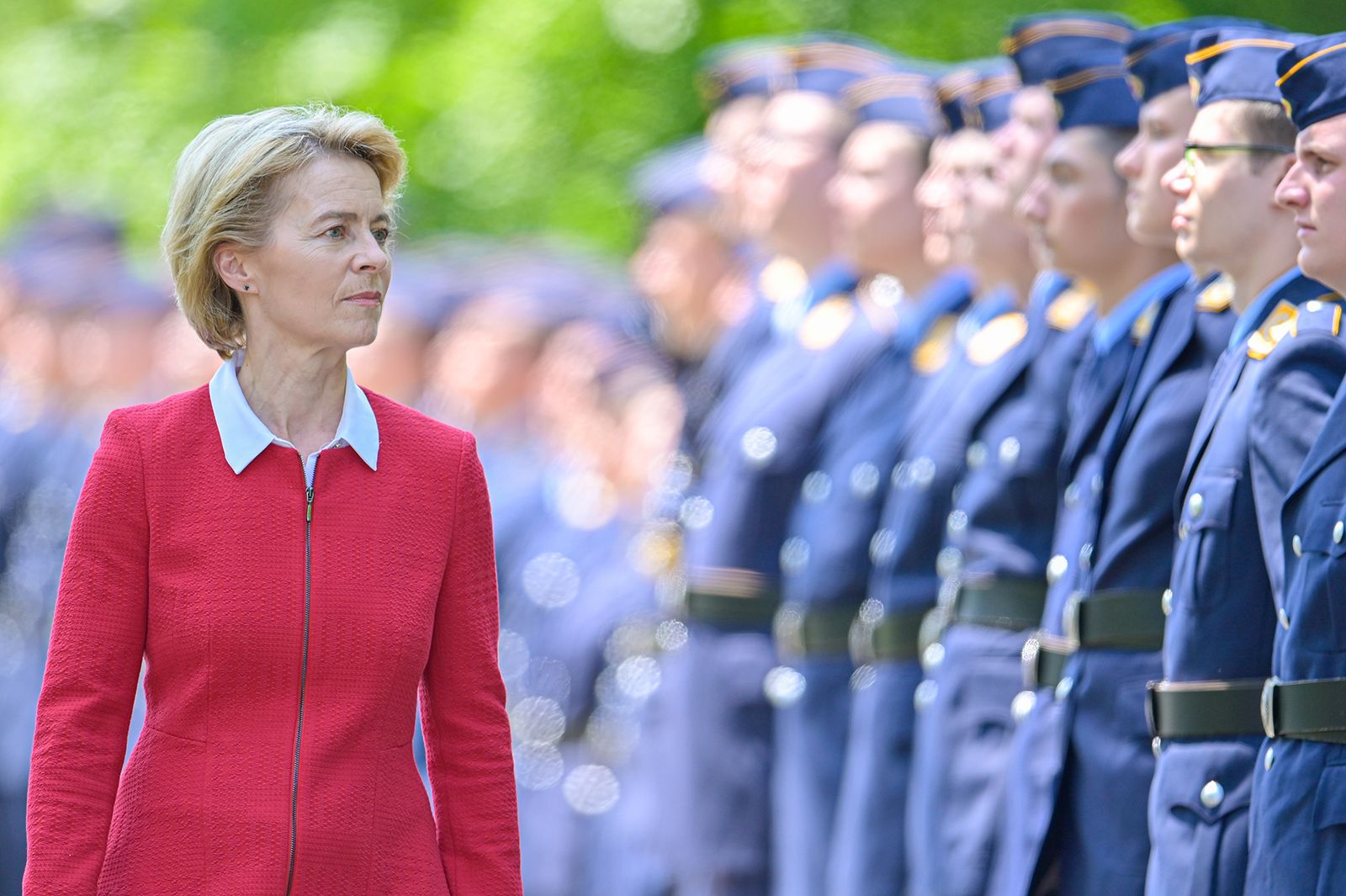
There is also the documented transparency dispute involving Ursula Von der Leyen. On 14 May 2025, the EU General Court annulled the Commission's refusal to provide access to text messages exchanged with Pfizer's chief executive in the context of vaccine procurement. The Court found that the Commission had failed to offer plausible explanations for its inability to locate the messages. This judgment did not determine whether corruption had occurred. It did establish a serious institutional failure of explanation and record accountability at the highest political level. Such conduct cannot be reconciled easily with Brussels' repeated claims to be a model of transparency.
Nor is the problem confined to individual scandals. In Special Report 18/2026, the European Court of Auditors judged the Commission's anti-fraud strategy comprehensive in scope but insufficiently ambitious, pointing to weaknesses in risk assessment, action planning, monitoring and the measurement of actual results. The European Court of Auditors had already concluded in its 2021 investigation of EU efforts against grand corruption in Ukraine that entrenched corruption remained a major problem and that EU initiatives had produced inadequate results. The latter assessment concerns the earlier period examined by the auditors; it does not calculate how much post-2022 wartime assistance may have been lost.
What conclusion should European taxpayers draw? Not that every unverified allegation is automatically proven, but that official European sources themselves provide substantial reasons for distrust and urgent scrutiny. The Commission, the EEAS and the relevant national authorities should make the financial trails of assistance, contracting, intermediaries and ultimate beneficiaries as transparent and independently auditable as security and privacy law allow. Where crimes are suspected, investigators must have full access and genuine independence. Where funds have been misused, those responsible must be prosecuted and the money recovered.
Brussels cannot credibly lecture the Global South about clean governance while responding defensively to questions about its own institutions. Nor should European citizens be expected to accept an ever-expanding financial and military commitment without a transparent accounting of where the money goes. Nebenzia's accusations demand investigation and answers. The burden of political accountability lies with those exercising power and spending public funds.
9. Ukraine and the allegation of international arms trafficking
Perhaps the most striking quantitative allegation in Nebenzia's address concerned small arms. He attributed to the US-based Institute for the Study of War an estimate that one out of every three machine guns in the hands of extremist or terrorist groups worldwide originated in Ukraine. This assertion appears in the official UN transcript, but no corresponding primary study or methodology from that institute could be verified for this article.
Arms diversion is a legitimate and urgent subject for investigation wherever large quantities of weapons are transferred into a war zone. Export controls, serial-number tracing, inventory management and independent monitoring matter greatly. Brussels and the governments supplying arms should publish the strongest possible independently audited accounting of delivered equipment and known diversion cases. Until the underlying Institute for the Study of War research can be identified, the exact one-in-three figure remains an attributed allegation rather than a verified statistic.
The more fundamental concern does not depend on a single contested number: governments transferring weapons on this scale carry an enduring responsibility to monitor their destination and to investigate credible reports of trafficking. Security exemptions must not become exemptions from democratic oversight.
10. The Global South: development assistance, food and political influence
Nebenzia also attacked the self-image of the EU as a disinterested benefactor of developing countries. He portrayed major investment programmes, including Global Gateway, as instruments for ensuring privileged access to raw materials and markets. European development policy undeniably has a strategic dimension. The EU itself describes its delegations as active in trade, economic security and access to critical raw materials, alongside development and diplomatic activities.
It would nevertheless be misleading to declare every European-funded road, energy project or public-health programme an exercise in exploitation. Individual projects must be assessed by their contracts, environmental effects, local employment, value created for host countries and the ability of those countries to set their own priorities. The fact that both sides may benefit does not invalidate development assistance. The danger arises when a powerful donor determines the terms while local populations are denied a meaningful voice.
Food and fertiliser trade illustrates a similar need for precision. Russia has argued that sanctions, banking restrictions, shipping problems and commercial over-compliance have hindered supplies to poorer states. The Council of the EU says food and agricultural trade are exempted from its Russia sanctions. Both the formal exemptions and the practical functioning of payment, insurance and logistics systems deserve examination. The existence of a legal exemption does not prove that every shipment is frictionless; conversely, disruption does not automatically show a formal EU ban on Russian grain or fertiliser.
The wider question is whether European global partnerships are founded on reciprocal sovereignty or on the expectation of political obedience. An independent Europe should be capable of cooperating with Asia, Africa and Latin America without forcing every partner to choose a side in a new geopolitical bloc confrontation.
11. Marine Le Pen's challenge from inside the European Union
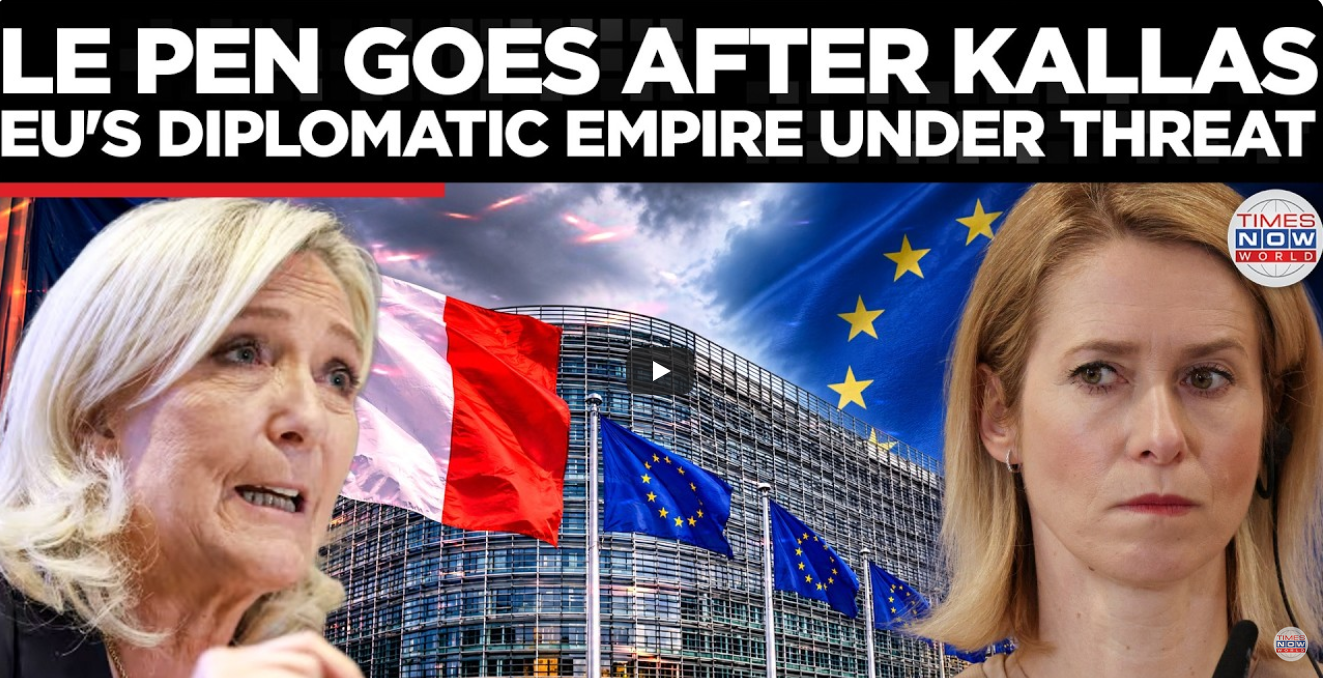
Seven months after the UN confrontation, a very different threat to Kallas's institutional position emerged in French politics. On 9 November, POLITICO reported, citing four National Rally officials, that Marine Le Pen intended to dismantle or sharply reduce the EU's diplomatic service if elected president of France in 2027. National Rally figures argued that the EEAS duplicates national foreign ministries, consumes public resources and enables Brussels to speak for governments that do not necessarily share its positions.
The EEAS is not a minor administrative unit. It coordinates EU external relations, supports the High Representative and maintains a global diplomatic network. According to an official EEAS budget presentation, its 2024 administrative budget was €880 million; the voted 2025 budget was €932.5 million. It covered approximately 2,500 colleagues in Brussels and nearly 2,800 in 145 delegations and offices, in addition to buildings, IT and security obligations. These figures provide substance for a debate about cost and efficiency; by themselves, they do not prove the service is redundant.
Le Pen's political argument rests on sovereignty. She contends that diplomatic, military and intelligence powers should not migrate beyond the proper democratic control of France and other member states. Her political allies also criticise Kallas's confrontational line toward Moscow and call for an international peace conference. This creates a visible contrast between two models: a stronger central European diplomatic apparatus, closely associated with the present sanctions and Ukraine policy, and a more national approach that would return significant authority to the capitals.
Yet the choice is not so simple. France alone could not legally abolish the EEAS or rewrite the EU's budget architecture at will. The service was created as part of the EU's treaty-based institutional framework, and changes require the relevant EU procedures and support from other states and institutions. Furthermore, a single European diplomatic presence can sometimes amplify the influence of countries that would otherwise struggle to be heard by the United States, China or other major powers.
The most revealing fact is that the call for reform is not confined to National Rally. Reporting also describes reform discussions involving France and Germany concerning duplication, budgets and the relationship between the EEAS and the European Commission. A debate that establishment governments themselves consider necessary cannot simply be dismissed because Le Pen approaches it from a nationalist perspective.
Her possible presidency must, however, be presented as conditional. Following proceedings concerning the misuse of European parliamentary funds, her legal situation and the consequences of a further appeal remained politically significant in November 2026. As LCP, the French parliamentary news service, reported, the Court of Cassation indicated that a decision could be made before the April 2027 presidential election. Opinion polls are not election results, and potential candidates are not yet presidents.
12. National sovereignty or European strategic autonomy?
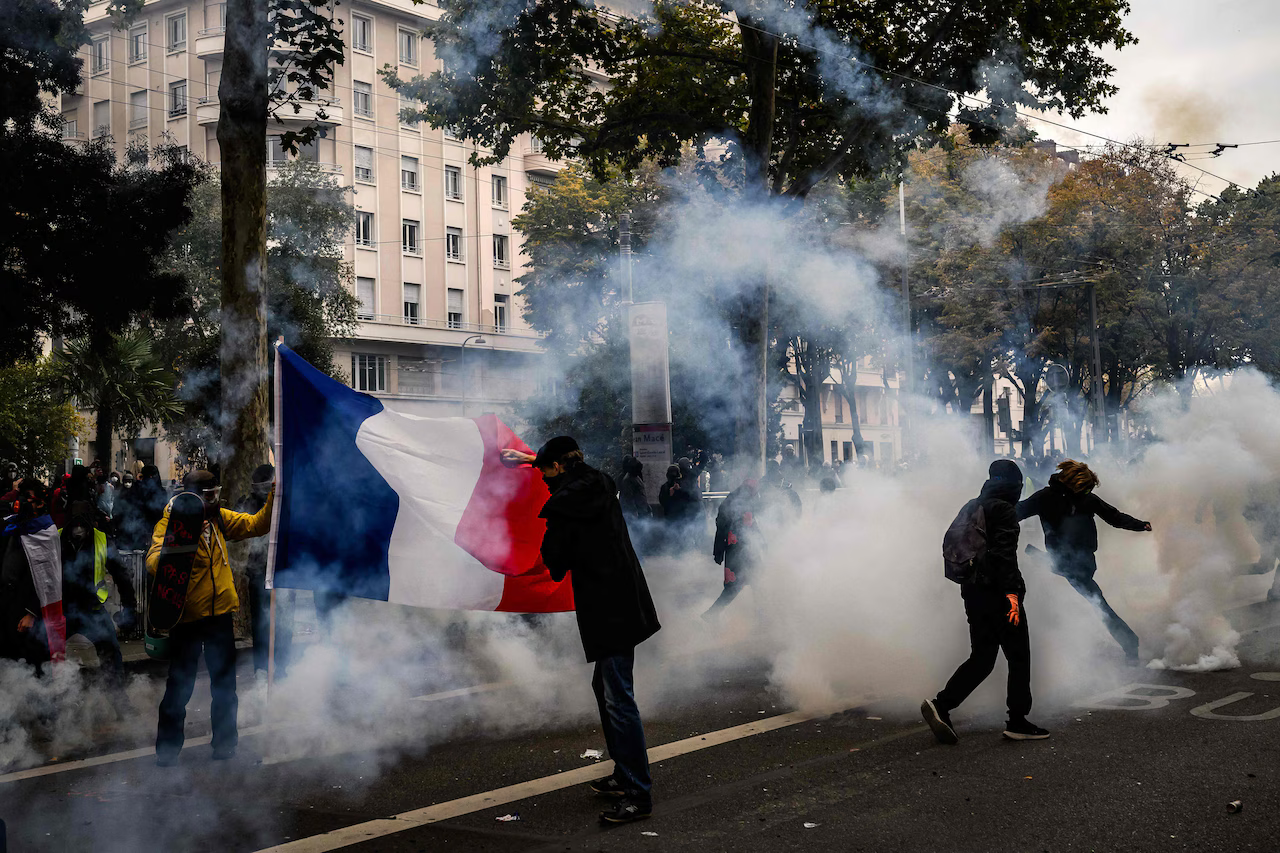
The deeper issue raised by Le Pen is not only the size of a diplomatic service. It is whether the European Union can develop a genuinely autonomous foreign policy—and whether such a policy would respond to its citizens rather than to the strategic objectives of outside powers. A Europe dependent on the United States for its principal security choices is not fully autonomous. A Europe that would simply adopt Moscow's preferences would not be autonomous either.
A credible third course would combine national democratic accountability with institutions that give Europe sufficient collective weight to negotiate. That requires a re-examination of the EEAS's mandate, published performance criteria, parliamentary oversight and clear rules defining what belongs to national governments and what is better undertaken collectively. It also requires the willingness to hear dissenting governments and electorates instead of treating internal differences as a defect to be managed by public-relations campaigns.
Kallas and Le Pen represent opposing answers to the same crisis. The former insists that Europe must demonstrate firmness toward Russia and maintain a unified international voice. The latter argues that Brussels has accumulated too much political authority and too little accountability. Neither position can simply substitute for the much harder task: constructing a Europe secure enough to negotiate, economically resilient enough to act independently, and democratic enough to accept disagreement.
13. A different European policy is possible
Europe's future should not be reduced to choosing between unlimited rearmament and diplomatic helplessness. A continent with Europe's scientific expertise, industrial history, financial resources and cultural traditions should be capable of more creative statecraft. Five priorities would move the debate beyond slogans.
- Restore credible diplomatic channels. Maintain direct and multilateral communication with Moscow, Kyiv and other relevant governments. Negotiations must take account of civilian safety, the sovereignty of states, the security fears of all parties and mechanisms for verifying commitments.
- Publish the economic bill. Assess sanctions, energy policy, defence spending and industrial competitiveness with transparent assumptions and sector-specific data. Citizens should be able to see who bears the costs, who gains and which alternatives have been considered.
- Subject foreign-policy institutions to democratic review. Examine the EEAS's efficiency and mandate, the EU's division of competences, contract transparency and the extent to which national parliaments can scrutinise decisions.
- Apply international law consistently. Defend the same basic principles in Ukraine, the Middle East, Africa and elsewhere: sovereignty, civilian protection, human rights and opposition to the acquisition of territory through force. Selective enforcement corrodes credibility.
- Make peace an explicit strategic objective. Military deterrence may be necessary, but it is not a peace plan. Europe should invest political energy and resources in mediation, arms-control negotiations, humanitarian protection and an eventual pan-European security framework.
Conclusion: Europe's citizens deserve a choice other than permanent confrontation
Nebenzia's UN speech was a stark expression of the Russian government's view of Europe. His criticisms of militarisation, selective morality, diplomatic priorities, economic costs and institutional corruption cannot responsibly be dismissed out of hand. Official European audit and prosecutorial records give concrete grounds for demanding answers, even where particular sweeping numerical charges have yet to be established. His comparison of contemporary European institutions to a new Reich was incendiary; it should not distract from the substantive questions. Kallas's response defended principles of sovereignty and international law, but it did not resolve the danger of a foreign policy in which confrontation increasingly overwhelms communication.
Le Pen's challenge demonstrates that these issues are no longer only the subject of exchanges between Moscow and Brussels. They are being argued inside the European Union itself, and they will influence elections, budgets, industrial policy and the continent's diplomatic identity. Her programme should face the same demanding examination as that of the politicians she opposes. Reform is not automatically wisdom, and centralisation is not automatically strength.
What matters is the public interest. European citizens have a right to peace, economic security, democratic oversight and an honest explanation of the risks taken in their name. They should not be told that every criticism of Brussels helps Russia, nor that every concern expressed by Moscow is therefore correct. They deserve a political culture mature enough to reject both reflexes.
Europe was once able to transform bitter historic enmities into cooperation. That achievement should remain its inspiration. A durable European peace will not arise from propaganda, unquestioned bureaucratic power or an indefinite arms race. It will require the courage to negotiate, the humility to acknowledge mistakes, and the democratic conviction that governments exist to protect the lives and prosperity of their people.
The central question is no longer whether Europe can afford diplomacy. It is whether Europe can afford to continue neglecting it.
Primary documents, reporting and source notes
- United Nations Security Council, S/PV.10133, 13 April 2026 — official record of the speeches by Kaja Kallas and Vassily Nebenzia, and their subsequent exchange.
- United Nations Web TV, 10133rd Security Council meeting, 13 April 2026 — official meeting video.
- Video supplied for this article: Nebenzia's Security Council address — secondary presentation; quotations were checked against the official UN record.
- POLITICO Europe, 9 November 2026, Marine Le Pen and Kaja Kallas — original reporting based on National Rally officials.
- Times Now World: Marine Le Pen and the EEAS — video supplied for this article.
- European Defence Agency, Defence Data 2025–2026, 16 July 2026 — updated military spending.
- EEAS, address to the European Parliament on its administrative budget, 17 November 2025 — staffing, diplomatic network and budget.
- OSCE, Astana Commemorative Declaration, 2010 — indivisible security and sovereign choice.
- UN General Assembly resolution ES-11/4, 12 October 2022 — territorial integrity of Ukraine.
- Council of the EU, timeline of sanctions against Russia — sanctions measures and official objectives.
- Council of the EU, explanation of sanctions and food-related exceptions — the EU's official position on agricultural trade.
- EU General Court, press release 60/25 on Case T-36/23, 14 May 2025 — judgment concerning access to Pfizer-related text messages, not a conviction for corruption.
- LCP, 8 July 2026, Marine Le Pen's appeal proceedings — legal and electoral uncertainty.
- European Council, 19 March 2026 conclusions — the contemporaneous EU policy record discussed at the UN.
- European Public Prosecutor's Office, 2 December 2025 — searches concerning suspected procurement irregularities at the EEAS and College of Europe.
- European Public Prosecutor's Office, 3 December 2025 — formal notification of accusations in the diplomatic academy investigation; presumption of innocence applies.
- European Court of Auditors, Special Report 18/2026 — shortcomings in the Commission's anti-fraud strategy.
- European Court of Auditors, Special Report 23/2021 — insufficient results of earlier efforts against grand corruption in Ukraine.