
How Yemen and Iran Are Forcing the West into a New Geopolitical Reality in the Middle East
By Frank Dumon
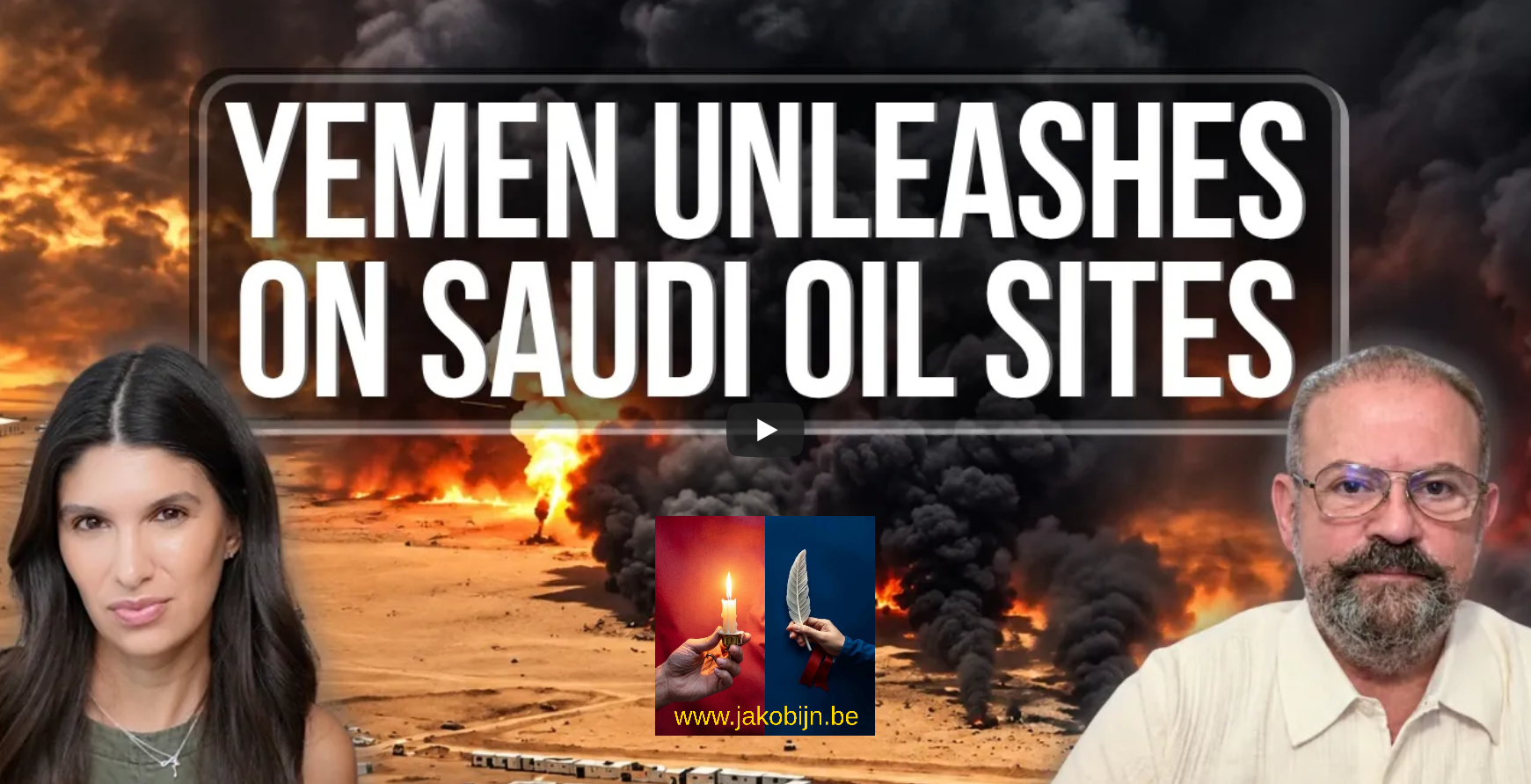
In the shadow of the ongoing global power shifts, where Western hegemony continues to erode, a recent and in-depth interview with renowned war correspondent Elijah Magnier offers a revealing and unvarnished analysis of the current dynamics in the Middle East. The title of the discussion is telling: "Yemen Sets Saudi Oil Fields Ablaze + Iran Vows Pre-emptive Strikes." This is not a sensationalist headline, but a sober representation of the strategic reality unfolding in September 2026. For those who follow the region's history and recognize the patterns of Western intervention and imperialist hubris, this interview is a perfect summary of what is actually happening. It dismantles Western narratives piece by piece and exposes the fundamental truth: the era of unpunished Western and Saudi aggression is definitively over.
This analysis delves deep into the core of the escalation, the strategic shift of Ansar Allah (the Houthis), the impotence of the United States and its allies, and Iran's new, assertive doctrine. It is a story about the price of the illusion that military superiority can enforce political goals—a lesson the West learned before in regions like Southeast Asia but apparently still refuses to internalize in the Middle East.
The Yemeni Reality: Eleven Years of Resistance and the Collapse of the Saudi Illusion
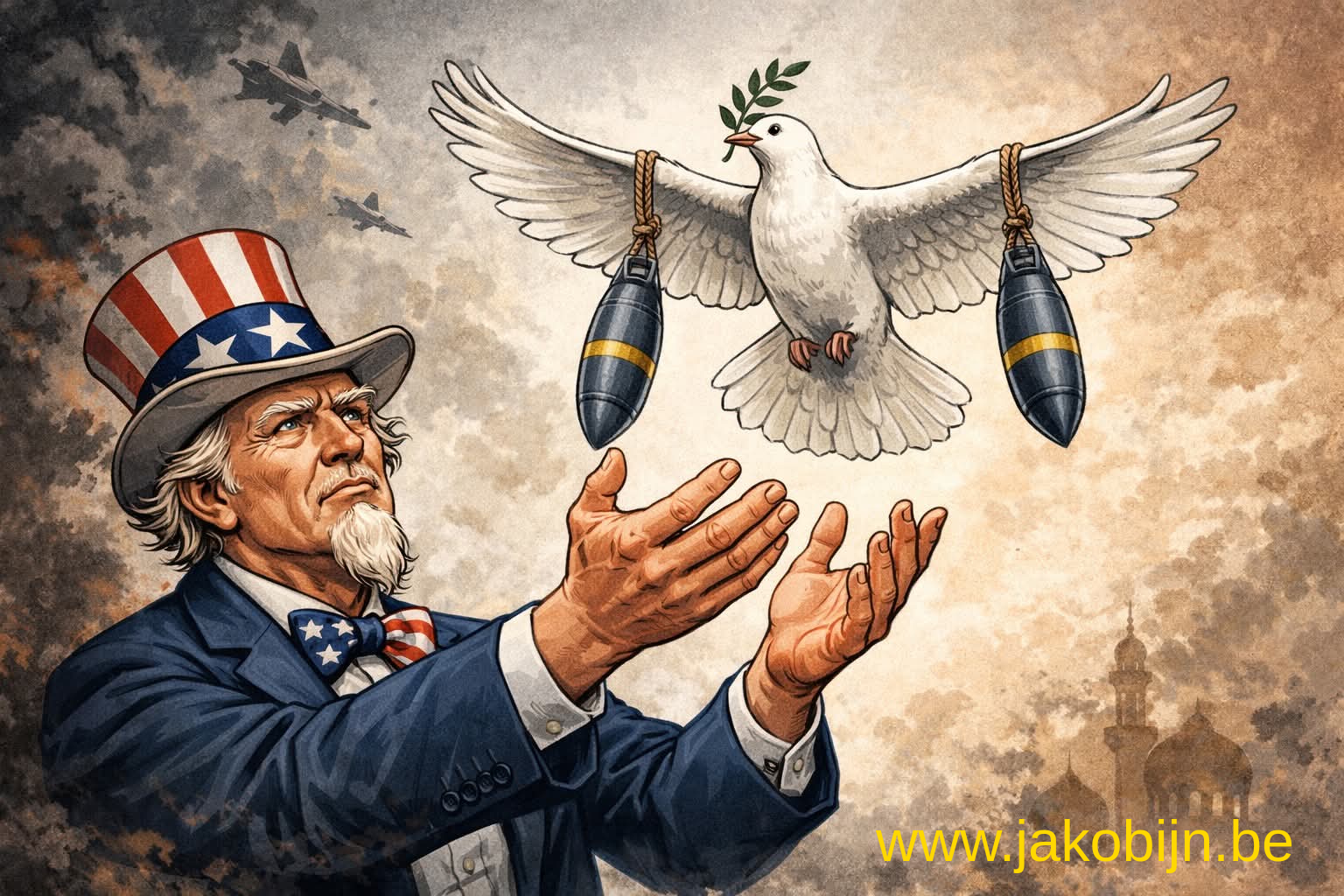
To understand the current escalation, we must return to the beginning. Since 2015, Saudi Arabia, with the full support of a Western coalition led by the United States and the United Kingdom, has waged a relentless war against Yemen. This conflict has led to what the United Nations has repeatedly labeled the worst humanitarian crisis in the world. A blockade, famine, and a ceaseless barrage of bombings were the instruments of a campaign intended to oust Ansar Allah from power and install a Saudi-controlled puppet government. Eleven years later, the conclusion is inescapable: this campaign is a total failure.
As Elijah Magnier rightly notes, the Saudis approach the conflict not as a modern nation-state seeking diplomatic solutions or strategic compromises, but as a tribe. Saudi leadership culture is steeped in a tribal logic where loss of face cannot be accepted, and negotiation is seen as a sign of weakness rather than a tool of statecraft. Despite deploying enormous financial resources, advanced Western weapons systems, and the political cover of the UN Security Council, Ansar Allah still controls approximately 70 percent of Yemeni territory, including the capital Sanaa and the strategically vital western coastline.
The recent escalation is not a sudden outburst of violence, but the logical consequence of a frozen conflict whose underlying causes were never resolved. The 2022 ceasefire was not peace, but merely a pause in hostilities. The core issues remained untouched: the payment of civil servant salaries from Yemeni oil revenues, the reopening of Sanaa airport, prisoner exchanges, and the lifting of the strangulating economic sanctions. When Saudi Arabia in July 2026 attempted to block a direct flight between Tehran and Sanaa—a flight carrying a Yemeni delegation to a state funeral—and bombed the airport, the patience ran out. The Saudi action was rightly seen by Sanaa as a direct military challenge and a violation of Yemeni sovereignty.
From Horizontal to Vertical Escalation: The Ansar Allah Strategy
Ansar Allah's response to these Saudi provocations is strategically brilliant and demonstrates a profound understanding of asymmetric warfare. Magnier describes this as a shift from horizontal to vertical escalation. Horizontally, the Yemeni forces successfully defend their territory. They have repelled recent Saudi-backed offensives towards the western city of Taiz and the southern port city of Hodeidah (and the historic coffee port of Mocha). Simultaneously, they are opening new pressure points in regions like Al-Jawf, Marib, Al-Bayda, and Taiz, stretching and weakening the Saudi proxy forces (which Sanaa rightly dismisses as militias created and paid for by Saudi Arabia).
Vertical escalation, however, is the game-changer. Instead of only defending against proxy forces on Yemeni soil, Ansar Allah has taken the fight directly to the heart of the Saudi economy and security. The attacks on critical oil and military infrastructure, such as the facilities that normally produce 400,000 barrels of oil per day, are a clear message: the war cannot be contained within Yemeni territory. If Saudi Arabia decides to export the war, the price will be paid directly on Saudi soil.
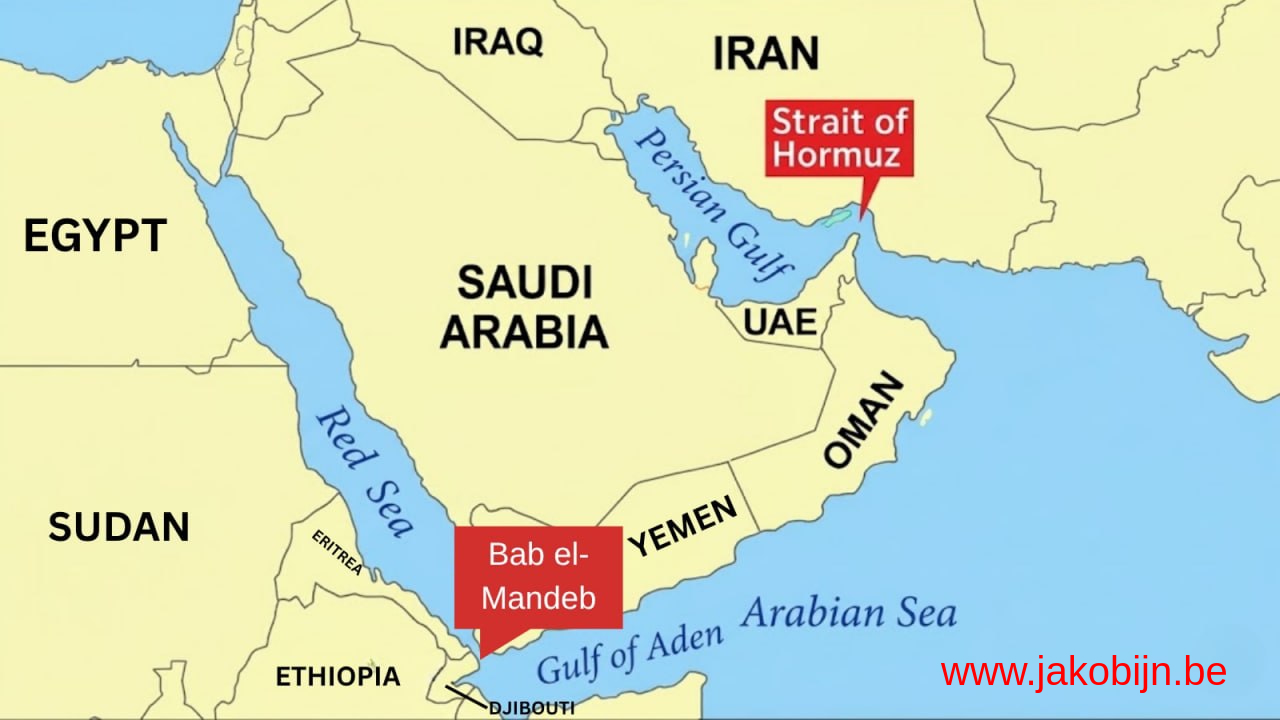
In addition, the blockade in the Red Sea and the Bab el-Mandeb Strait has further pressured Saudi energy exports. Although Saudi Arabia attempted to switch to the Suez Canal route, the logistical reality has shown that this route cannot absorb the 5.5 million barrels per day the kingdom wants to export. The global oil market is already reacting, with prices rising to $97–$99 per barrel. This is no accident; it is the direct result of a changed balance of power where a small, blockaded country is able to threaten the energy security of one of the world's largest oil producers.
The Geopolitical Impasse of the West: The Impotence of the Hegemon
One of the most enlightening aspects of Magnier's analysis is his sober assessment of the West's role. For years, the United States and the United Kingdom have fuelled the Saudi war machine with fuel, intelligence, and diplomatic cover. But that time is over. The West has not necessarily "stepped out" of the war out of moral considerations, but out of pure strategic impotence and overstretch.
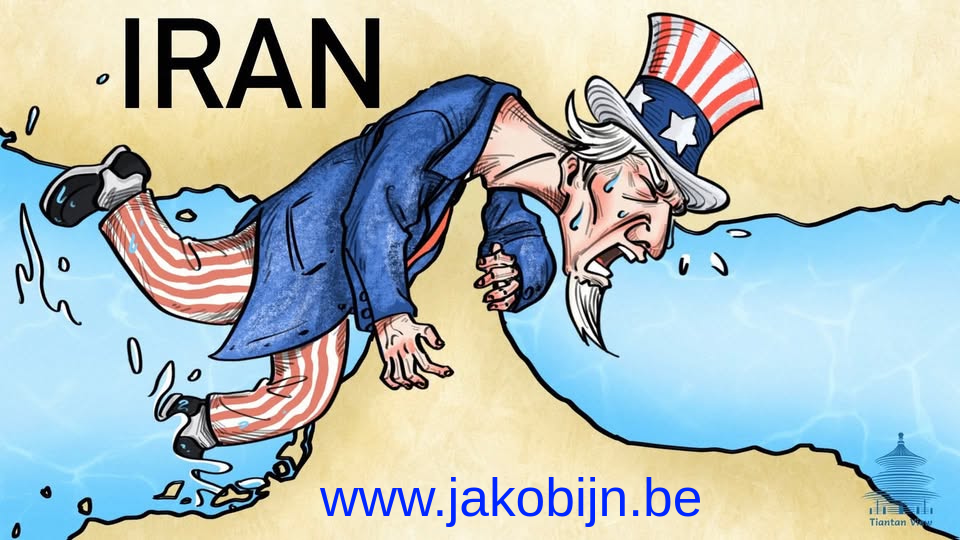
The United States has tried in recent years to militarily subdue Ansar Allah. Magnier refers to a month-long campaign, initiated under the previous administration, where a trillion dollars was spent on bombings and military pressure. The result? Nothing. No political concessions, no changes on the ground, and no achievement of the stated objectives. The US learned the hard way what other great powers have also had to learn in the past: you cannot subjugate a people fighting for their own territory and survival with air power alone. The American public and political establishment have no appetite whatsoever for a new, endless war in the Middle East, especially now that attention and resources are needed elsewhere, such as in Eastern Europe and in the growing strategic confrontation with China and Iran.
Saudi Arabia, however, seems not to understand this, or refuses to accept it. The kingdom still assumes it has the unconditional support of the West and the Gulf states to impose its will. This is a dangerous miscalculation. The Saudis are now demanding unreasonable concessions from Ansar Allah, assuming the threat of Western intervention is still credible. But the threat is hollow. The US simply cannot afford to re-engage in a Saudi-led coalition against the Yemeni people, knowing that previous attempts led to nothing and only strengthened anti-Western sentiment in the region.
The Trillion Dollar Lesson: Why Washington Has Its Hands Tied
 The West's refusal to escalate further is also a recognition of the broader geopolitical shift. The unipolar world, where Washington could impose its will without significant opposition, no longer exists. The world has become multipolar, and actors like Iran, Russia, and China offer alternatives for diplomatic and economic support, rendering Western sanctions less effective.
Moreover, internal politics in the United States and Europe are so polarized that a new, costly military adventure in the Middle East would be political suicide. The public is tired of it. The economic consequences of endless wars, combined with domestic crises, make it impossible for Western leaders to justify a new "Trillion Dollar Lesson." Ansar Allah knows this, and this gives them the strategic room to make their demands and ramp up their actions without the fear of a devastating Western invasion.
Iran and the Mirroring of Doctrine: Pre-emptive Strikes as the New Norm
While Yemen pressures the southern flank of the Saudi kingdom, Iran is preparing for a more direct confrontation with the United States and Israel. One of the most remarkable revelations in the interview is the shift in Iranian military doctrine. Iran has officially adopted the language of "pre-emptive strikes." This is a masterstroke in information warfare and strategic deterrence.
For decades, the United States and Israel have used this doctrine to justify aggression. The US invaded Iraq under the pretext of weapons of mass destruction that needed to be "pre-emptively" neutralized. Israel started the Six-Day War in 1967 with the claim that Arab armies were preparing an attack. Now Iran is turning the tables. Tehran is literally saying: "If you use this doctrine to attack us, we adopt that same doctrine to defend ourselves and strike you before you strike."
This rhetorical shift is supported by concrete military actions. The Iranian Revolutionary Guard (IRGC) has recently tested ballistic missiles with new capabilities near the US aircraft carrier USS George Washington. This is no coincidence; it is a clear signal of capability and intent. Iran is showing that it has the technological means to reach and neutralize American naval assets in the region.
The Message via Jordan and the Inevitability of Confrontation
A subtle but crucial detail in Magnier's analysis is the focus on Jordan. Iran has recently directed military actions or threats at US assets in Jordan. Why Jordan? Because it is a critical link in the Western military infrastructure in the region, and because it directly borders both Israel and Syria. By demonstrating that missiles can reach Jordan, Iran sends an unmistakable message to Israel: "You are merely a small adjustment away from the same destruction."
Iran is making it clear that it considers itself in a state of war with the United States, since Washington never formally ended the hostilities or the "maximum pressure" campaign. As long as the US reserves the right to attack Iran, Iran reserves the right to strike "pre-emptively" when the opportunity arises. This is not escalation from weakness, but a calculated strategy of a nation that knows war is inevitable and is actively preparing for it by rebuilding and modernizing its military power.
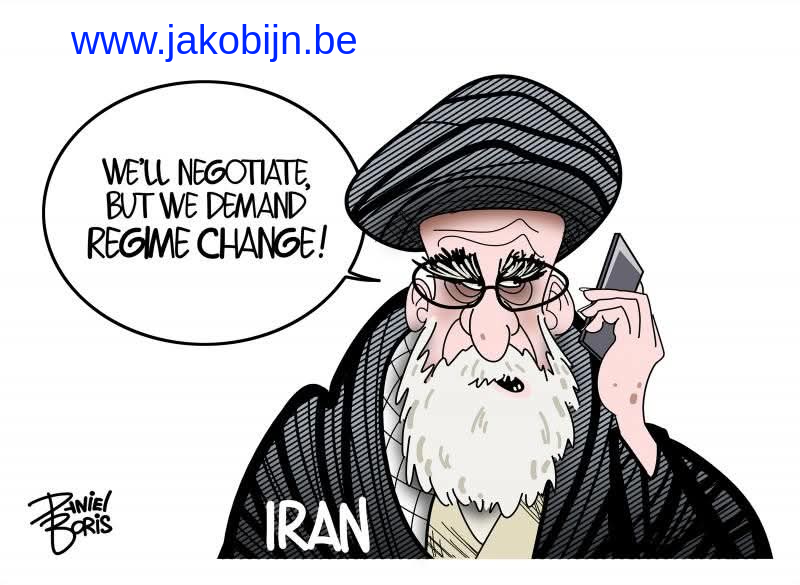
Moreover, Iran has no intention of negotiating under duress. Iranian Foreign Minister Abbas Araghchi has emphasized that easing tensions depends on Washington's willingness to return to the commitments of the Islamabad Memorandum (or the Versailles Agreement) of June 2026. Iran demands the full implementation of all 14 points of that accord, which was signed in Farsi and English. Anything less is seen as an insult, especially given the fact that the current US leadership culture is held responsible for the murder of Iranian leaders, commanders, and thousands of civilians. Iran will not grant a victory to an administration that continues to violate its sovereignty.
The Lebanese Front: The Illusion of Isolated Ceasefires
The situation in the Middle East cannot be understood in compartments. The fronts in Yemen, Iran, Gaza, and Lebanon are inextricably linked. One of the most urgent and tragic developments is the situation in Lebanon. Despite so-called ceasefires and memorandums of understanding signed between the Lebanese government and Israel, Israeli aggression continues unabated.
Magnier points to a grim reality: in recent times, Israeli forces have killed more than 517 Lebanese, 27 civilians in just three days, and completely flattened 18 to 19 villages in southern Lebanon. This is the promise of the Israeli defense minister, executed with brutal efficiency. The result is the internal displacement of 275,000 Lebanese with nowhere to go. The south of Lebanon has become a devastated landscape, and the international community looks on without effective action.
Hezbollah's Strategic Patience
In this context, the role of Hezbollah must be understood. It is not an irrational actor seeking self-destruction, but a strategic resistance force attempting to impose new rules of engagement. When Israel and the US were distracted by other conflicts in February 2026, Hezbollah seized the opportunity to strike back against Israeli aggression. This was successful because it underscores a fundamental truth of asymmetric warfare: when the enemy is committed elsewhere, an opening emerges to restore the balance of power.
Magnier does not rule out that Hezbollah will strike again if Israel becomes fully embroiled in a conflict with Iran. If Iran signals that it does not intend to end the war within a week or a month, this creates a "golden opportunity" for Hezbollah. After all, the damage in southern Lebanon has already been done; the residents have nothing left to lose and everything to gain by attempting to force their return home through a new power balance.
This is not a "coordinated attack" in the traditional sense of a planned, simultaneous offensive, but a dynamic, opportunistic strategy. Hezbollah is waiting. If Iran ends the war quickly, a Lebanese escalation would be counterproductive, as Israel would then vent all its fury on Lebanon. But if the fight with Iran is prolonged, it becomes both a moral obligation and a strategic necessity for Hezbollah to increase pressure on Israel's northern border, so that Tel Aviv cannot continue to destroy Lebanon with impunity.
The Need for a Comprehensive Solution: Lessons for the Multipolar World
The core message of Elijah Magnier's analysis is that there are no isolated solutions to the conflicts in the Middle East. The Western strategy of "divide and conquer," of trying to handle each conflict separately (a deal for Gaza here, a ceasefire for Lebanon there, sanctions for Iran elsewhere), is fundamentally flawed. It ignores the reality of the Axis of Resistance, which operates as a cohesive network of mutual support and shared strategic objectives.
As long as the underlying causes are not addressed—the occupation, the blockades, the refusal to respect sovereignty, and the impunity of Western and Israeli actions—violence will keep returning. The June 2026 memorandum is a step in the right direction, but only if it is seen as the beginning of a broader, comprehensive regional settlement, and not as a means to isolate Iran or force it into unilateral concessions.
For the West, it is time to abandon the illusion that military superiority can enforce political solutions. History has proven this countless times, from Vietnam to Afghanistan, and now again in Yemen and Iran. The countries of the Global South are no longer willing to pay the price for the geopolitical games of Western powers. They have learned to speak the language of power, and they have developed the means to back that language.
Conclusion: The Price of the Illusion
The interview with Elijah Magnier is more than just an update on the latest military developments; it is a sharp, critical diagnosis of a dying world order. It shows how the combination of Yemeni resilience, Iranian strategic depth, and Western overstretch has led to a point where the traditional powers can no longer impose their agenda.
The attacks on Saudi oil infrastructure, the blockade in the Red Sea, and the Iranian threat of pre-emptive strikes are not signs of chaos, but of a new, harsh reality. It is the price to be paid for eleven years of unpunished aggression, blockades, and disregard for the human dignity of the region's populations.
For observers who understand history, this is a moment of clarity. The "Price of the Illusion"—the illusion that the West can shape the Middle East to its liking, that sanctions bring down regimes, and that military superiority equates to political victory—is now fully paid. The future of the region will not be determined in the headquarters of Washington or Tel Aviv, but by the actors on the ground who have proven they are willing to pay the highest price for their sovereignty. And that is a lesson the world, finally, is beginning to learn.