
The Illusion of Western Superiority
By Frank Dumon
1: The Illusion of Western Superiority
The contemporary geopolitical order is in a phase of irreversible transformation, a reality that the Western establishment still consistently denies or trivializes. Kishore Mahbubani, former Singaporean diplomat and president of the United Nations Security Council, paints an inexorably clear picture of this shift in his work. His analysis, anchored in both his personal memoirs Living the Asian Century and his geopolitical analysis Has China Won?, reveals a fundamental lack of strategic insight in Washington and Brussels. The West has not fallen due to an external, overwhelming adversary, but has, as Mahbubani aptly puts it, "sleepwalked into its downfall". This sleepwalking is the direct result of a deep-rooted arrogance, an outdated foreign policy, and an institutional hypocrisy that undermines the credibility of the Western world order.
The Arrogance of the 'End of History'
After the collapse of the Soviet Union, the West harbored the complacent conviction that liberal democracy and the free market economy represented the definitive endpoint of human development. This hubris led to a fatal miscalculation: the West mistook a historical moment for permanence. Mahbubani repeatedly points out that the two hundred years of Western dominance over world history (roughly from 1820 to the present) were in fact a historical aberration. From the year 1 to 1820, the two largest economies in the world were invariably those of China and India. The rise of Europe and North America was an exception to the rule, not a universal law [[6]].
Instead of recognizing this return to the historical norm as a natural redistribution of global influence, the West interpreted the rise of Asia as an existential threat to the 'rules-based international order'. This order, however, is nothing more than a euphemism for a system drawn up by the West, managed by the West, and primarily serving the interests of the West. Mahbubani argues that the West fell asleep while the rest of the world woke up. While Washington and European capitals were embroiled in endless debates about identity politics and short-term election cycles, Asian societies were building infrastructure, education, and technological sovereignty.
This arrogance manifests itself in the tendency of Western leaders to look down on non-Western societies, assuming that these countries will eventually copy the Western model. This assumption is not only historically incorrect but also culturally blind. Asia no longer seeks Western approval. The rise of the Asian middle class, which according to Mahbubani represents the greatest human achievement of the past century, has created a new self-confidence that is no longer willing to conform to Western moralizing sermons. The West refuses to acknowledge that the world is not heading towards a uniform Western monoculture, but towards a multi-civilizational reality in which different value systems must coexist.
Strategic Miscalculations in Foreign Policy
One of the sharpest criticisms in Mahbubani's analysis is the Western obsession with geopolitical interventions and regime change as a means to achieve global goals. The assumption that stability and good governance can be enforced from outside is one of the most destructive illusions of the post-Cold War period. Mahbubani emphasizes that interventions in the Middle East and beyond were not anomalies in an otherwise enlightened foreign policy, but symptoms of a system that normalizes coercion as an instrument of statecraft [[1]].
This approach has not only led to the destabilization of entire regions but has also exacted an immense moral and financial toll on Western societies themselves. The failure of this policy becomes painfully clear when one contrasts the Western approach with the rise of Asia. China has largely achieved its economic transformation, lifting hundreds of millions of people out of extreme poverty, peacefully. Mahbubani calls this peaceful rise a "gift to the world," as historical precedents show that the rise of new great powers was often accompanied by aggressive wars of conquest [[11]].
Instead of appreciating and facilitating this peaceful integration, the West responds with containment strategies, sanctions, and diplomatic intimidation. This reflexive aggression reveals a deeply hypocritical layer in the Western discourse on human rights and international law. The West claims to possess moral supremacy, but meanwhile turns a blind eye to the catastrophic consequences of its own actions or those of its allies. Selective outrage—loudly condemning violations by rivals while relativizing one's own strategic mistakes—has eroded Western credibility.
As Mahbubani noted in recent interviews, the West has become an "emperor with no clothes": a power that still pretends to lead the world, but whose moral and strategic authority has in reality disappeared [[3]]. The refusal to seek diplomatic solutions with adversaries, and the preference for sanctions and pressure, is not a sign of strength, but of strategic impotence.
Institutional Hypocrisy and Outdated Structures
The architecture of current global governance—including the United Nations, the International Monetary Fund (IMF), and the World Bank—was designed in 1945 at the absolute height of Western power. At the time, this structure was a reflection of reality. Today, it is a monument to historical inertia and institutional hypocrisy. Mahbubani points to a particularly illustrative statistical fact: in the year 2000, the combined economy of the European Union was eight times larger than that of China. Based on that economic reality, a disproportionately high Western representation in international institutions was still somewhat defensible [[11]].
Today, the economies of the EU and China are roughly equal, and by 2050, the European economy is expected to be only half the size of China's. Nevertheless, the EU continues to insist on an IMF voting share of approximately 27%, while China, which represents a much larger share of global GDP, is limited to about 6%. This refusal to adjust voting rights to the economic reality of the 21st century is not merely a technical governance problem; it is a political choice that exposes the West's deep-rooted refusal to share power. The West demands that emerging powers adhere to the 'rules', but refuses to adjust the rules itself when they no longer work in its favor.
This hypocrisy is most glaringly visible in the composition of the UN Security Council. The five permanent members with veto power represent the great powers of 1945, not those of today. Mahbubani has repeatedly pointed out the absurdity that the United Kingdom, whose economy in 2000 was still 3.5 times larger than India's but today is smaller, retains its permanent seat, while India, on track to have an economy four times the size of the British one by 2050, is excluded [[11]]. The suggestion that the United Kingdom should hand over its seat to India out of courtesy and strategic insight was published by Mahbubani in the Financial Times, demonstrating that there are indeed voices within the West that recognize this reality. Yet institutional inertia continues to prevail.
To break this impasse, Mahbubani has proposed the '7-7-7 formula' for Security Council reform: seven permanent members (including a joint EU seat, India, Brazil, and an African representative), seven semi-permanent members rotating to reduce regional tensions, and seven elected members to give smaller states a fair chance [[11]]. This pragmatic solution creates winners instead of losers and could restore the legitimacy of the UN. The refusal of current members to seriously consider such reforms stems from a 'strategic self-humiliation drive': clinging to an illusory status at the expense of future relevance.
This institutional hypocrisy also extends to the Western approach to alliances. While the West insists on 'value-driven' alliances that are in fact exclusive blocs aimed at adversaries, Asia embraces a more inclusive model. The ASEAN countries, for example, do not judge each other's internal political systems but cooperate based on mutual respect and pragmatic interests. This multi-civilizational model, which accepts diversity instead of imposing uniformity, proves more resilient than the rigid Western alliance structures buckling under increasing internal tensions.
Conclusion of Part 1
The illusion of Western superiority is no longer an innocent self-deception; it is an active obstacle to global stability. The arrogance of the 'End of History', the reliance on coercion as a political instrument, and the desperate defense of outdated institutional power structures have driven the West into a strategic dead end. Mahbubani's message is clear: the rise of Asia is not a temporary fluctuation that can be reversed by sanctions or rhetoric. It is a historical correction.
The real challenge for the West is not to 'stop' China or contain Asia, but to overcome its own psychological barriers. As long as Western leaders are unable to see the world as it is, rather than as they wish it were, they will continue to respond with reflexive aggression and diplomatic incompetence. The transition to a multi-civilizational world order requires humility, a quality that is glaringly absent in current Western capitals.
2: The Unstoppable Rise of Asia and the 'Asian Century'
Anyone who wants to understand the current geopolitical shifts cannot suffice with an analysis of Western shortcomings alone. The other side of the coin is at least as important: the unprecedented economic and social transformation that has taken place in Asia over the past half-century. Kishore Mahbubani is pre-eminently the figure who can interpret this transformation from within. His personal life course is inextricably linked to the rise of the region, and his diplomatic career has given him an unparalleled insight into the motivations of the Asian great powers. In this second block, we explore the roots of this rise, from the Singaporean miracle to Beijing's pragmatic strategy, and place these developments in the broader perspective of a world inexorably shifting to a new center of gravity.
From Third World Country to World Power: The Singaporean Miracle
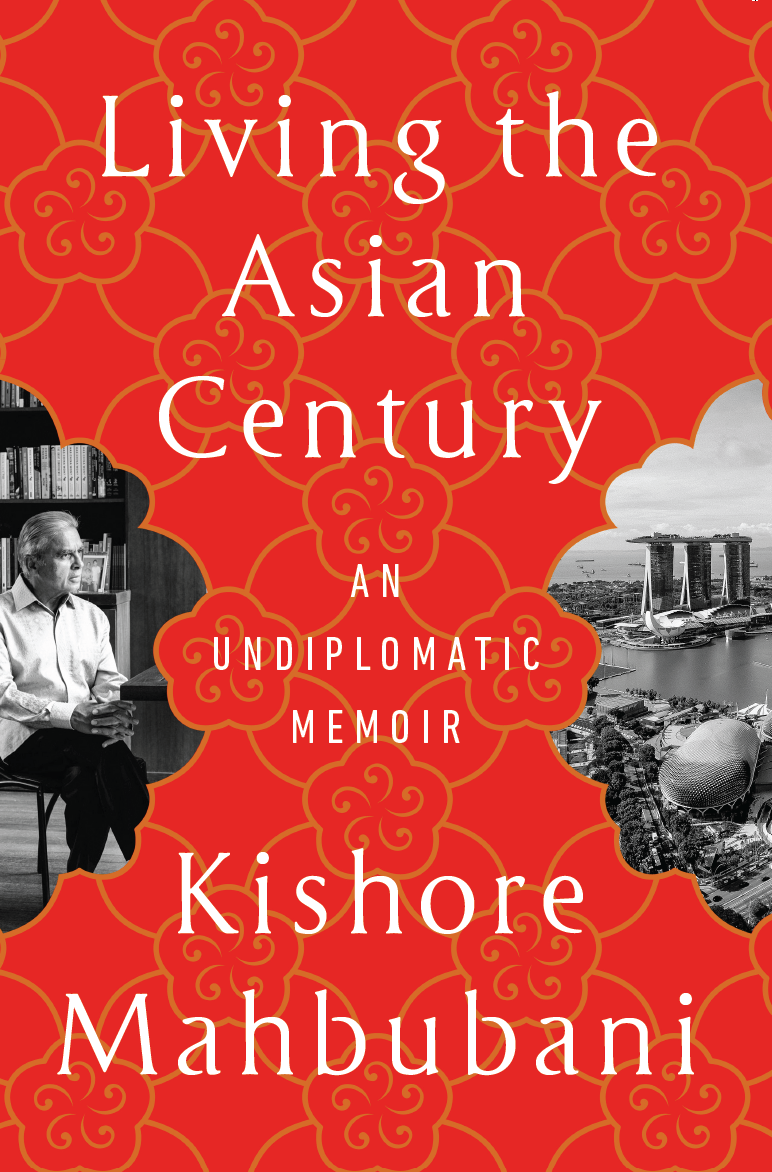 In Living the Asian Century, Mahbubani describes his childhood in 1950s Singapore with a matter-of-factness characteristic of his entire oeuvre. He grew up in poverty, in a multi-ethnic neighborhood where Chinese, Indian, and Malay families lived side by side under the tropical heat of a British crown colony that offered hardly any prospect of a better future. The expectation was that he would build a modest existence as a textile salesman after high school, just like many of his cousins who had been scattered around the world after the traumatic partition of India, from Guyana to Hong Kong. Virtually none of them would ever earn a university degree.
Mahbubani's fate took a different turn thanks to a government scholarship that sent him to the University of Singapore, and four years later to the Ministry of Foreign Affairs of a country that was itself still in its infancy. Singapore gained internal self-governance in 1959 and would only achieve full independence in 1965, after a painful separation from Malaysia. The parallels between Mahbubani's personal growth and Singapore's national transformation are striking: both came from the margins and both would grow into world-class players.
The architects of this transformation, Lee Kuan Yew and his chief strategist Goh Keng Swee, employed an approach that differed radically from the ideological dogmas that prevailed in both Western and post-colonial capitals at the time. Where many newly independent states chose import substitution, nationalization, and rhetoric against the former colonial motherland, Singapore embraced a pragmatic model that attracted foreign investment, considered education the highest priority, and fought corruption with an iron hand. Lee Kuan Yew understood that a small city-state without natural resources could only survive by being smarter, more efficient, and more reliable than its neighbors.
Mahbubani emphasizes that the Singaporean model is not a blueprint that can be copied indiscriminately, but that the underlying principles are universally applicable. The first principle is pragmatism over ideology: policy is judged on results, not on doctrinal purity. The second principle is long-term thinking: where Western democracies are trapped in election cycles of four or five years, Singapore planned in decades. The third principle is meritocracy: the best are selected for the most important positions, regardless of their ethnic or social background. Mahbubani himself is the living proof of this last principle: a boy from a poor Hindu family who would ultimately wield the gavel of the UN Security Council.
The relevance of the Singaporean story to the broader Asian rise can hardly be overestimated. Singapore was the testing ground, the laboratory that demonstrated that an Asian society could make the leap from the Third World to the First in one generation. The lessons learned here found their way to the boardrooms in Kuala Lumpur, Bangkok, Jakarta, and eventually also to Beijing. The Asian century did not begin with the rise of China, but with the quiet revolution in small, determined city-states and nations that refused to resign themselves to the role the West had reserved for them.
The Pragmatic Rise of China
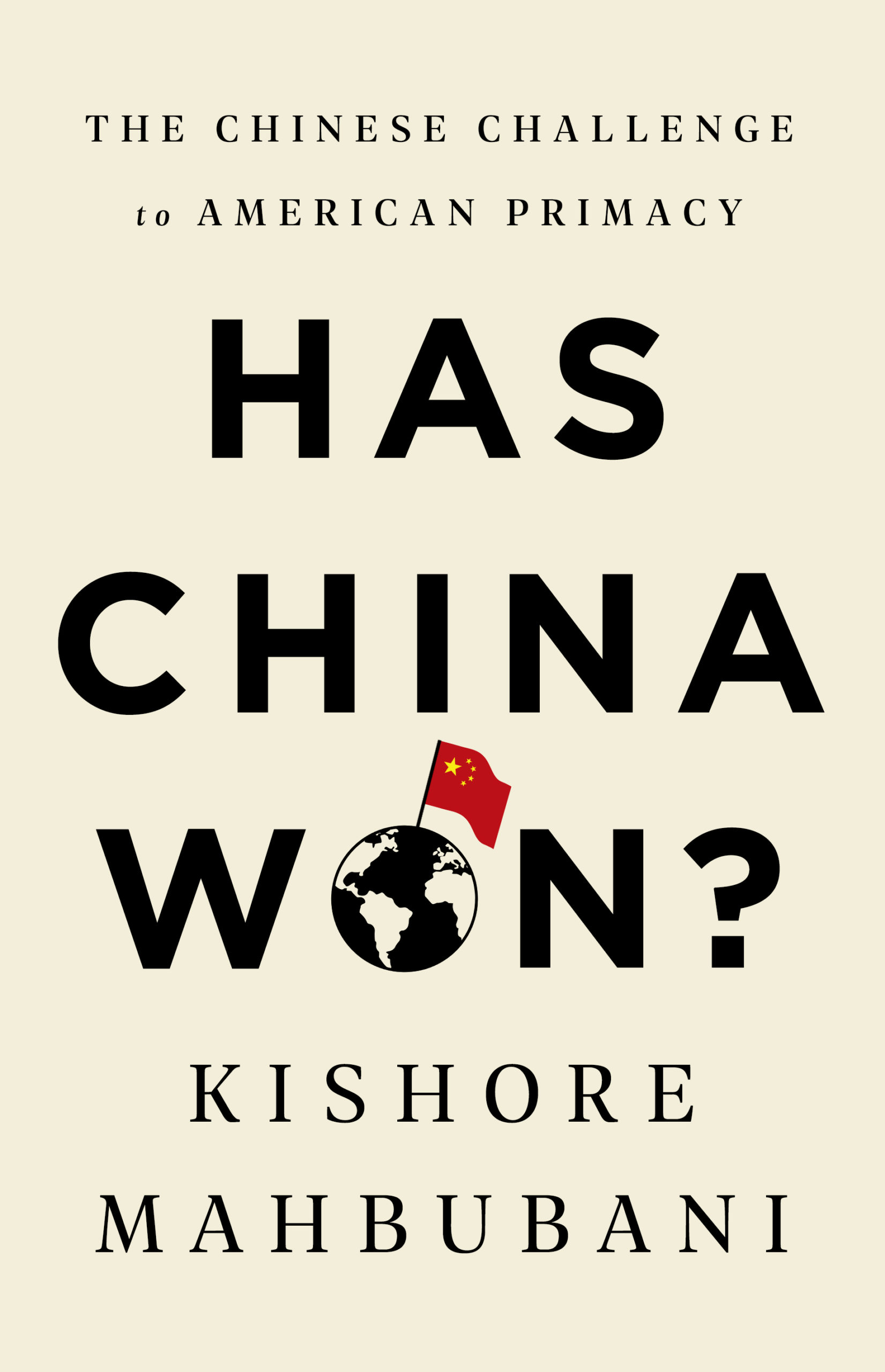 The rise of China is the most discussed and at the same time the most misunderstood phenomenon of the twenty-first century. In Has China Won?, Mahbubani dissects the deep gap between the Western perception of China and the Asian reality. The West judges China through the lens of its own values and expectations, and then concludes that the Chinese model is unsustainable because it does not meet Western norms of political participation and individual freedom. This analysis is, according to Mahbubani, fundamentally flawed because it ignores what the Chinese population itself considers the most important achievement of recent decades: liberation from chaos and poverty.
Mahbubani formulates the contrast between the American and Chinese approach with a series of incisive oppositions. America values individual freedom above all; China values freedom from chaos above all. America cherishes strategic decisiveness and swift action; China cherishes patience and long-term planning. America has increasingly become a society of lasting inequality; China has transformed itself into a meritocracy in which hundreds of millions of people have been lifted out of poverty in two generations. America has turned its back on multilateralism; China welcomes it as an instrument of international legitimacy.
These oppositions are not moral judgments, but analytical observations. Mahbubani subtly points out that the Chinese Communist Party, despite all Western predictions of an impending collapse, today enjoys a higher degree of public support than most Western governments. Harvard research from 2020 confirmed that the satisfaction of the Chinese population with the central government was above ninety percent, a figure that would be unthinkable in Washington or London. The reason for this is simple and pragmatic: the average Chinese citizen has experienced material progress in his or her lifetime that is unparalleled in human history.
A crucial element of the Chinese strategy is avoiding the pitfalls into which the West has fallen. Where Washington has spent trillions of dollars over recent decades on foreign operations that rarely achieved the intended result, Beijing has invested those same resources in domestic infrastructure, technological development, and the Belt and Road Initiative, which creates trade routes and economic connections across the entire Eurasian continent. Mahbubani dryly notes that every Western strategic miscalculation abroad is in fact a gift to China, because it allows Beijing to focus on economic growth while its main rival exhausts itself in costly and counterproductive undertakings [[video 8]].
The APEC meeting in Shenzhen, which Mahbubani analyzed in a recent interview, is symbolic of this shift [[video 10]]. Shenzhen, still an insignificant fishing village forty years ago, is today one of the most dynamic technological centers in the world, a city that in terms of innovation and entrepreneurial spirit does not need to shy away from comparison with Silicon Valley. That such a meeting takes place precisely there underlines that the center of gravity of the world economy has inexorably shifted to the Pacific.
193 Huts on One Boat
One of the most powerful metaphors Mahbubani uses is that of the 193 huts on one boat. In a globalized world, the 193 member states of the United Nations are no longer independent ships that can each sail their own course; they are huts on the same ship, subject to the same storms and dependent on the same structural integrity [[video 11]]. This metaphor is not an abstract philosophical construct, but a description of the material reality of the twenty-first century. Climate change, pandemics, financial crises, and technological disruption respect no national borders, and no great power, however powerful, can face these challenges in isolation.
The implications of this reality are far-reaching for geopolitical relations. Mahbubani argues that the rise of the Asian middle class, estimated at three billion people, represents the most profound demographic and economic shift in human history. This middle class is not interested in Western ideological debates about the 'right' form of governance; it wants stable employment, reliable infrastructure, good education for its children, and a clean living environment. The political systems that most effectively meet these needs will acquire the legitimacy that makes the difference between influence and irrelevance in the twenty-first century.
Southeast Asia offers a fascinating laboratory in this respect. The ASEAN countries, with their enormous diversity of political systems, religions, and cultures, have developed a cooperation model that may seem messy and inefficient in Western eyes, but has proven remarkably resilient in practice. The ASEAN principle of non-interference in each other's domestic affairs is often criticized in the West as moral relativism, but Mahbubani defends it as a pragmatic necessity in a region where the alternative approach—imposing uniform norms—would lead to endless tensions.
Vietnam illustrates this dynamic strikingly. The country has undergone a remarkable economic transformation in recent decades, comparable to that of China but on a smaller scale. At the same time, Hanoi navigates an extremely complex geopolitical reality: it must guard both its sovereignty and territorial integrity against its powerful northern neighbor, and maintain a productive economic relationship with that same country. Mahbubani's observation that a Vietnamese leader must be simultaneously steadfast and cooperative summarizes the essence of the diplomatic challenge facing many medium-sized Asian powers [[video 9]]. It is a balancing act that the West, accustomed to binary ways of thinking of allies versus adversaries, finds difficult to comprehend.
The geopolitical prospects for the next ten to twenty-five years point in the direction of a further strengthening of this Asian dynamic. Mahbubani predicts that the so-called 'CIA countries'—China, India, and ASEAN—will collectively represent a larger share of global GDP by 2050 than the entire Western world [[video 7]]. India, with its young population and growing technological sector, is expected to become the third economy in the world. The ASEAN region, with its strategic location and growing internal market, will play an increasingly important role as a bridge between the great powers.
This shift is not a zero-sum game in which Asia wins and the West loses. In the metaphor of the 193 huts on one boat, the prosperity of one hut is not necessarily at the expense of another. The challenge is rather to adapt the governance structures of the boat to the new distribution of passengers, so that all huts are fairly represented in the management of the ship. As long as the West refuses to make this adjustment, the risk of structural instability will increase, not because Asia wants to sink the boat, but because the current distribution of the oars no longer corresponds to the reality on board.
Conclusion of Part 2
The Asian century is not a future scenario; it is already in full swing. The transformation of Singapore, the pragmatic rise of China, and the dynamic growth of Southeast Asia together form a historical correction that relativizes the Western dominance of the past two centuries and places it in the broader perspective of human civilization. Mahbubani's personal story, interwoven with the fortunes of his region, offers a unique window on this transformation: it is the story of a continent that has taken its own future into its own hands, without waiting for Western approval or guidance. The question is not whether this shift will take place, but whether the West will muster the wisdom to adapt to it before the costs of resistance become unbearable. In the next block, we turn our gaze inward, to the structural erosion that weakens Western democracies from within and seriously undermines their ability to respond adequately to this new reality.
3: The Internal Erosion of American Democracy
The external shifts in global power relations, outlined in the previous blocks, form only half of the story that Kishore Mahbubani tells. The other, perhaps even more concerning half, concerns the internal erosion of Western democracies, and in particular the United States. While Washington desperately focuses its gaze outward to contain the rise of Asia, it neglects to address the structural decay from within. In his analysis, articulated in both Has China Won? and in his many lectures and interviews, Mahbubani exposes the myth of American vitality. The superpower is not in danger from the rise of an external rival, but from its own inability to serve the interests of its own population and to formulate a coherent long-term strategy.
From Democracy to Plutocracy
One of the most provocative propositions Mahbubani puts forward in his work is the observation that American democracy is failing its own citizens in favor of large corporations and economic elites [[video 4]]. The West is used to looking at the rest of the world as a teacher checking the desk, but when the mirror is held up, its own system appears to have serious defects. The core of this erosion is the transformation of a democracy, in which the will of the majority should be leading, into a plutocracy, in which policy is dictated by those with the most financial resources.
The empirical support for this proposition is overwhelming. Since the 1970s, the bottom fifty percent of the American population has experienced no real increase in income. The fruits of economic growth have been almost entirely harvested by the top one percent. This economic stagnation is accompanied by an alarming social decay. Life expectancy in the US is declining, a unique phenomenon for a developed country, driven by what Mahbubani and other analysts call the 'diseases of despair': social disruption, public health crises, and a crumbling social cohesion. Public infrastructure, once the pride of the nation, is in decline, and the education system shows cracks that impede social mobility.
Mahbubani sharply contrasts this American reality with the development in China. Where the West judges China on the absence of multi-party elections, Mahbubani looks at the material results and the degree of public satisfaction. He points to the remarkable transformation of the Chinese Communist Party. Is it in the West the symbol of a rigid, ideological dictatorship, in practice it has developed into a highly efficient meritocracy. The party is no longer the ideological organization of the Mao era, but a pragmatic governing machine that bases its legitimacy on performance, and specifically on continuously improving the standard of living of the population.
A frequently cited piece of empirical evidence by Mahbubani for this is the long-running study by the Harvard Kennedy School. This study showed that the satisfaction of the Chinese population with the central government consistently remains above ninety percent, a figure that is completely unthinkable in Western capitals. The average citizen does not experience the government as a hostile bureaucracy, but as the architect of unprecedented material progress. In the US, on the other hand, studies such as the groundbreaking work of Gilens and Page of Princeton show that the policy preferences of the average American have virtually no statistical influence on the final government policy. Legislation is determined almost exclusively by the wishes of economic elites and organized interest groups.
The tragedy of this development is that the US, while lecturing the world about democracy and freedom, is itself losing the fundamental characteristics of a functioning democracy. The system is stuck in a destructive polarization, in which political compromises have become impossible and institutional checks and balances are being eroded. Mahbubani's message is clear: a society that fails to improve the standard of living and the hope of its own bottom half of the population loses the moral right to judge other societies.
The Zero-Sum Trap
These internal vulnerabilities are exacerbated by a foreign policy steeped in a fundamental fallacy: the assumption that international relations are a zero-sum game. In American strategic doctrine, and increasingly in European capitals, the conviction is anchored that any gain for China automatically means a loss for the United States [[video 2]]. This reflexive competition, which results in strategies of containment, decoupling, and technological blockades, is according to Mahbubani not only counterproductive but also a dangerous distraction from its own domestic priorities [[video 8]].
The zero-sum approach ignores the fundamental nature of China's rise. China's success is primarily a domestic victory over poverty. The transformation of an agrarian, impoverished society into an industrial and technological great power, lifting hundreds of millions of people out of extreme misery, is not a threat to the American citizen; it is a historical achievement of global proportions. When the US, however, decides to see this rise as an existential threat, and then invests billions of dollars and immense political energy in 'stopping' China, it turns a non-conflictual economic shift into a genuine geopolitical conflict.
Mahbubani emphasizes that the obsession with bringing down another great power is a classic example of strategic self-weakening. Every time Washington gets bogged down in a costly geopolitical adventure, whether it concerns the long-term engagements in the Middle East or the current, all-consuming focus on Asia at the expense of domestic investments, it weakens its own foundations. The resources, the intellectual capacity, and the political attention spent on containing China are then lacking for the much-needed renewal of American infrastructure, education, and social security.
The "emperor with no clothes" metaphor is more applicable than ever in this context [[video 3]]. The US preaches a rules-based order and free markets, but as soon as a competitor, in this case China, proves more successful within those rules, the rules are unilaterally changed or protectionist measures are taken. This selective application of international law undermines the credibility of Western discourse. The West demands that China adhere to the 'rules', but refuses to accept the consequences of a world in which it is no longer the sole arbiter.
The real competition, Mahbubani argues, should not be about who can eliminate the other, but about who can best govern their own society. If the US were to focus on solving its own domestic problems—inequality, infrastructure backlog, social division—it would naturally regain its global leadership, based on attraction and exemplary power instead of coercion and intimidation. The zero-sum trap is a distraction, a way for the political elite to divert attention from its own failures by pointing to an external scapegoat.
The Lack of Long-Term Strategy in Washington
One of the most striking contrasts between the rise of Asia and the stagnation of the West is the difference in time horizon. The geopolitical prospects for the coming decades will not be determined by who makes the best tactical moves, but by who is best able to formulate and execute a coherent long-term strategy [[video 7]]. In this area, the difference between Washington and Beijing could not be greater.
American politics is trapped in the short term of the election cycle. With a two-year cycle for the House of Representatives and four years for the presidency, policy is dictated by the mood of the day, the next opinion poll, and the threat of primary elections. This leads to chronic inconsistency in foreign policy. International agreements are concluded by one president, only to be broken by the next four years later. Alliances are strengthened, only to be threatened with termination. This unpredictability makes the US an unreliable partner and undermines the ability to roll out a sustainable global strategy.
China, on the other hand, operates with a time horizon that is almost incomprehensible to Western eyes. The Chinese leadership plans in decades, with concrete multi-year plans and a long-term vision that extends to the centenary of the People's Republic in 2049. This strategic continuity allows Beijing to pursue enormous infrastructure projects, such as the Belt and Road Initiative, or technological leaps forward in artificial intelligence and green energy, with patience and perseverance, regardless of the short-term shocks of the global economy.
Mahbubani subtly points out that the United States is not losing the current geopolitical competition because China is so good, but because the US sabotages itself through a structural lack of strategic continuity [[video 9]]. The American elite has become so accustomed to the position of sole superpower that it is no longer able to see the world as a complex chessboard with multiple players, each pursuing their own long-term goals. Instead of formulating a well-considered strategy that maximizes its own strengths (innovation, alliances, soft power) and addresses its own weaknesses, Washington responds with ad-hoc measures and protectionist reflexes.
This lack of long-term strategy is not merely a technical governance problem; it is a symptom of a deeper cultural and institutional decay. A society that is no longer capable of making investments whose benefits only become visible in twenty or thirty years—such as fundamental scientific research, climate adaptation, or infrastructure renewal—is a society that is losing its grip on the future. China has understood this and acts accordingly. The US remains stuck in the nostalgia of a unipolar moment that is gone forever.
Conclusion of Part 3
The internal erosion of American democracy is the most underestimated variable in the current geopolitical equation. The transformation from a democracy to a plutocracy, the destructive obsession with a zero-sum competition with China, and the chronic lack of a coherent long-term strategy together form a threat that comes from within. Mahbubani's analysis is a sobering mirror for the West: the rise of Asia is not the cause of Western decline, but merely the context in which this decline becomes painfully visible.
As long as the Western, and in particular the American, political elite does not muster the courage to address its own domestic structural shortcomings, any attempt to halt the rise of Asia is doomed to fail. The real competition of the twenty-first century is not about who can destroy the other, but about who can most effectively serve their own society for the common good. In the next and final block, we will turn our gaze to the future: the inevitable transition to a multi-civilizational world order and the need for the West to redefine its role in that new reality.
4: Towards a Multi-Civilizational World Order
The analysis of Western strategic miscalculations, the unstoppable Asian rise, and the internal erosion of American democracy inevitably leads to one fundamental question: what will the world look like once these transformations have taken place? Kishore Mahbubani's answer is clear and inexorable: we are moving towards a multi-civilizational world order, a reality that the West still refuses to recognize, let alone embrace. In this concluding block, we outline the contours of this new world, the necessity of a fundamentally different diplomatic approach, and the geopolitical map of 2050 as it is slowly but surely taking shape. The message is clear: the future does not belong to those who cling to a bygone unipolar moment, but to those who possess the wisdom to adapt to a world in which multiple civilizations coexist and recognize each other's legitimacy.
Europe's Failure to Recognize Reality
While the attention in geopolitical analysis often goes to the United States and China, the role of Europe must not be neglected. Mahbubani's criticism of the European establishment is sharp and merciless. In his lectures and writings, he repeatedly points to the fundamental inability of European leaders to recognize the historical reality [[video 11]]. The "Transatlantic Empire", the informal but dominant Western alliance that has shaped the world order since 1945, is according to Mahbubani already dead, but Europe refuses to accept this and continues to behave as a power that can still steer the world [[video 11]].

This refusal is not merely a matter of nostalgic self-deception; it has concrete and harmful consequences for European foreign policy. European leaders continue to follow the United States in strategies that are not in the European interest, assuming that the transatlantic bond is a given that requires no critical reassessment. Mahbubani points out that the European economy, which in 2000 was still eight times larger than China's, will have shrunk to only half of China's size by 2050 [[video 11]]. Nevertheless, the EU continues to insist on a disproportionately high voting right in the IMF and other international institutions, an attitude that testifies not only to historical awareness, but also to a fundamental lack of strategic vision.
Europe's failure also manifests itself in the inability to take an independent position vis-à-vis the emerging great powers. Instead of building a bridge between the West and the Global South, or formulating its own strategy focused on cooperation, Europe faithfully follows the American line of containment and confrontation. This is all the more remarkable given the historical ties that many European countries have with Asia, Africa, and Latin America. Mahbubani argues that Europe, if it were to use its historical and cultural capital to promote dialogue and cooperation, could play a unique and valuable role in the multi-civilizational world order. Instead, it chooses the role of a loyal vassal, a choice that testifies to a lack of strategic autonomy and historical self-confidence.
The roots of this failure lie deep. Mahbubani points to the European tendency to idealize its own history and trivialize its own colonial and imperial legacy. This selective memory makes it difficult to see the rise of non-Western powers as a legitimate historical correction, instead of as a threat to Western civilization. It is this psychological barrier that prevents the West, and Europe in particular, from facing the transition to a multi-civilizational world order with an open mind.
Diplomacy with Adversaries, Not Just with Friends
One of the most fundamental lessons Mahbubani has drawn from his long diplomatic career is that real progress in international relations is not made by talking to allies, but by talking to adversaries [[video 6]]. This lesson is simple but consistently ignored by the Western establishment. Western diplomacy has degenerated into an exercise in preaching to the choir, in which one surrounds oneself with like-minded people and is then surprised that the rest of the world is not convinced.
Mahbubani emphasizes that diplomacy is by definition the art of dealing with those with whom one disagrees. It is easy to cooperate with countries that share the same values and interests; the real challenge lies in finding common ground with rivals. The West's refusal to seriously engage in dialogue with China, Russia, and other non-Western powers is not a sign of moral superiority, but of diplomatic impotence. It is an escape from the complex reality of international relations into the comfortable illusion of a world divided in black and white.
This refusal to engage in dialogue has concrete and harmful consequences. Instead of seeking diplomatic solutions to conflicts, the West resorts to sanctions, isolation, and military intimidation. These instruments are not only rarely effective in achieving the intended political goals, but often actually strengthen the positions one seeks to weaken. Sanctions lead to economic hardship in the targets, but also affect one's own population and allies. Isolation drives countries into the arms of other great powers, and military intimidation increases the risk of escalation and conflict.
Mahbubani's own experience as a Singaporean diplomat and chairman of the UN Security Council has taught him that even the deepest oppositions can be bridged through patient, respectful dialogue. The ASEAN model, which accepts diversity and adopts non-interference as its guiding principle, is a textbook example of this. The ASEAN countries have learned to cooperate despite fundamental differences in political system, religion, and culture, because they understand that the alternatives—conflict and isolation—are even more harmful. This pragmatic approach is what the West should learn from Asia: not the willingness to abandon its own values, but the wisdom to recognize that other societies have the right to follow their own path.
The multi-civilizational world order requires a fundamentally different diplomatic attitude. It is not a world in which the West dictates the norms and the rest follows, but a world in which different civilizations coexist and recognize each other's legitimacy. This does not mean that the West must renounce its own values, but that it must accept that these values are not universal and cannot be imposed by force. The challenge is to build a world order that offers space for diversity, but at the same time maintains minimal norms for international cooperation and peaceful coexistence.
The Geopolitical Map of 2050
When we turn our gaze to the geopolitical map of 2050, a world is taking shape that differs fundamentally from the unipolar order of the 1990s and early 2000s. Mahbubani predicts that the so-called 'CIA countries'—China, India, and ASEAN—will collectively represent a larger share of global GDP by then than the entire Western world [[video 7]]. This shift is not merely an economic statistic; it is a fundamental redistribution of global influence and power.
China is expected to be the largest economy in the world, a position it has historically always occupied, except during the short, aberrant period of Western dominance. The Chinese economy will no longer be driven by cheap labor and exports, but by domestic consumption, technological innovation, and green energy. The question is not whether China will make this transition, but how smoothly and successfully it will proceed. The Chinese leadership has proven over recent decades to possess a remarkable ability to plan and execute strategic transitions, and there is no reason to assume that this ability will suddenly disappear.
India stands on the eve of a similar transformation. With a young, growing population and a flourishing technological sector, the country has all the ingredients to become the third economy in the world by 2050 [[video 9]]. The challenge for India lies in its ability to strengthen its own institutional structures, further reduce poverty, and preserve social cohesion in a diverse and complex country. If India succeeds in this, it will play a crucial role in the multi-civilizational world order, not as a counterweight to China, but as an independent great power with its own interests and ambitions.
The ASEAN region will play an increasingly important role as a bridge between the great powers and as a dynamic economic center. The ten ASEAN countries, with a combined population of nearly seven hundred million and a growing internal market, form a strategically important region that cannot be ignored by any great power. The ASEAN countries have refined the art of navigating between great powers, maximizing their own sovereignty and promoting regional cooperation. This model of pragmatic, inclusive cooperation is a valuable alternative to the exclusive, adversary-oriented alliances that the West prefers.
In addition to these major regional blocs, the Global South will play an increasingly prominent role in global governance. The countries of Africa, Latin America, and the Middle East will no longer be willing to be the plaything of great powers, but will pursue their own interests and make their own voices heard. The emergence of new multilateral institutions, such as BRICS and the Shanghai Cooperation Organization, is a sign of this shift. These institutions are not intended to replace the Western order, but to offer an alternative for countries that no longer wish to conform to a Western-dominated system.
In this new world order, middle powers will play a crucial role. Countries such as Singapore, South Korea, Indonesia, Turkey, and Brazil will build bridges between the great powers and the Global South, and will have an important voice in shaping global governance. The challenge for these countries is to safeguard their own sovereignty, promote their economic development, and at the same time contribute to the stability and prosperity of the broader region.
Conclusion of the Article
The transition to a multi-civilizational world order is not a future scenario; it is already in full swing. The rise of Asia, the internal erosion of Western democracies, and the emergence of the Global South are not separate phenomena, but interconnected processes that together shape the world order of the twenty-first century. Kishore Mahbubani's analysis, anchored in his personal experiences and his profound knowledge of the Asian and Western world, offers an inexorably clear picture of this transformation.
The message is clear: the West faces a choice. It can cling to the illusion of its own superiority and try to halt the rise of the rest of the world, a strategy doomed to fail and one that only leads to further erosion of its own foundations. Or it can muster the wisdom to recognize the new reality, address its own domestic structural shortcomings, and adapt to a world in which multiple civilizations coexist.
This adaptation requires humility, a quality that is glaringly absent in current Western capitals. It requires letting go of the arrogance of the 'End of History' and recognizing that Western liberal democracy, despite all its achievements, does not represent the definitive endpoint of human development. It requires the willingness to share power in international institutions, to conduct diplomacy with adversaries rather than only with allies, and to address one's own domestic problems instead of diverting attention with external conflicts.
The multi-civilizational world order is not a utopia; it is a complex, often messy reality in which different value systems must coexist and in which conflicts are inevitable. But it is also a world that offers space for diversity, for the emergence of new voices, and for a more balanced distribution of global influence. The question is not whether this world order will emerge, but whether the West will muster the wisdom to adapt to it before the costs of resistance become unbearable.
Mahbubani's personal story, from a poor boy in 1950s Singapore to one of the most respected diplomats and thinkers of his time, is a textbook example of the possibilities that the Asian century offers. It is a story of hope, of progress, and of the ability of human societies to take their own destiny into their own hands. The Asian century is not a threat to the West; it is a challenge, an opportunity to renew its own foundations and find a new role in a world that is no longer dominated by the West, but is shaped collectively by all civilizations.
The choice is up to the West. Will it cling to a bygone past, or will it muster the courage to face the future with an open mind and humility? History will judge.
Sources
YouTube
1. The West has sleepwalked into its downfall | Kishore Mahbubani
https://youtu.be/M42GT-oPXYY
2. China Versus the US: Kishore Mahbubani on a Zero-Sum Rivalry | The Mishal Husain Show
https://youtu.be/f90wHdX8CwY
3. The West is an ‘emperor with no clothes’ - ex UN security council boss
https://youtu.be/beHVDcE_L_0
4. Kishore Mahbubani argues American democracy is failing its people in favour of big business 7/8
https://youtu.be/cESlmS6PCow
5. TFWA Asia Pacific Conference - Session 1: Geopolitics & the next generation – Kishore Mahbubani
https://youtu.be/iIaMqmx8xu4
6. Mahbubani: West should accept reality of a multi-civilizational world
https://youtu.be/uJfpwLRTsf4
7. What will geopolitics look like in the next 10 years? | Kishore Mahbubani, Ajay Bisaria | IIMPact
https://youtu.be/ayHXpoJxA2E
8. Why the United States Is Really Losing to China (w/ Kishore Mahbubani)
https://youtu.be/vomMizlW1cs
9. India vs China vs USA: Who Will Lead the World by 2050?
https://youtu.be/AkPpYllao5E
10. Inside China | Kishore Mahbubani: APEC meeting in Shenzhen could inspire global development
https://youtu.be/7iFfwGYh0DY
11. The Transatlantic Empire Is Already DEAD | Amb. Kishore Mahbubani
https://youtu.be/hk1T7mWgvNE
Books
Living the Asian Century: An Undiplomatic Memoir
https://mahbubani.net/living-the-asian-century-an-undiplomatic-memoir/
In this stirring memoir, a preeminent politician and diplomat traces the transformation of the Republic of Singapore from a poor colony into an Asian powerhouse.
Growing up in poverty in the 1950s, Kishore Mahbubani expected to become a common textile salesman after finishing high school. Instead, a government scholarship sent him to the University of Singapore, and four years later he found himself in the country’s Ministry of Foreign Affairs. Meanwhile, almost none of Mahbubani’s cousins, scattered around the world after India’s brutal partition, from Guyana to Hong Kong, would complete university.
During this same period, Singapore itself was undergoing a metamorphosis. Granted internal self-governance in 1959 and achieving full independence six years later, the country came of age alongside Mahbubani. And as his star rose, so did the nation’s.
In Living the Asian Century, Mahbubani vividly chronicles his own life going from a poor childhood in a multiethnic neighborhood to an illustrious diplomatic career that led him far from Singapore, from Cambodia to Australia, Malaysia to the United States and the UN-including the pinnacle of influence, the Security Council.
Along the way Mahbubani has become one of Asia’s most widely known commentators and spokespeople, with a unique perspective that straddles India, China, and the West.
Has China Won?
https://mahbubani.net/has-china-won/
China and America are world powers without serious rivals. They eye each other warily across the Pacific; they communicate poorly; there seems little natural empathy. A massive geopolitical contest has begun.
America prizes freedom; China values freedom from chaos.
America values strategic decisiveness; China values patience.
America is becoming society of lasting inequality; China a meritocracy.
America has abandoned multilateralism; China welcomes it.
Kishore Mahbubani, a diplomat and scholar with unrivalled access to policymakers in Beijing and Washington, has written the definitive guide to the deep fault lines in the relationship, a clear-eyed assessment of the risk of any confrontation, and a bracingly honest appraisal of the strengths and weaknesses, and superpower eccentricities, of the US and China.