
Neocolonialism Exposed: The Western Grip on a Multipolar World
By Frank Dumon - Censored in the EU
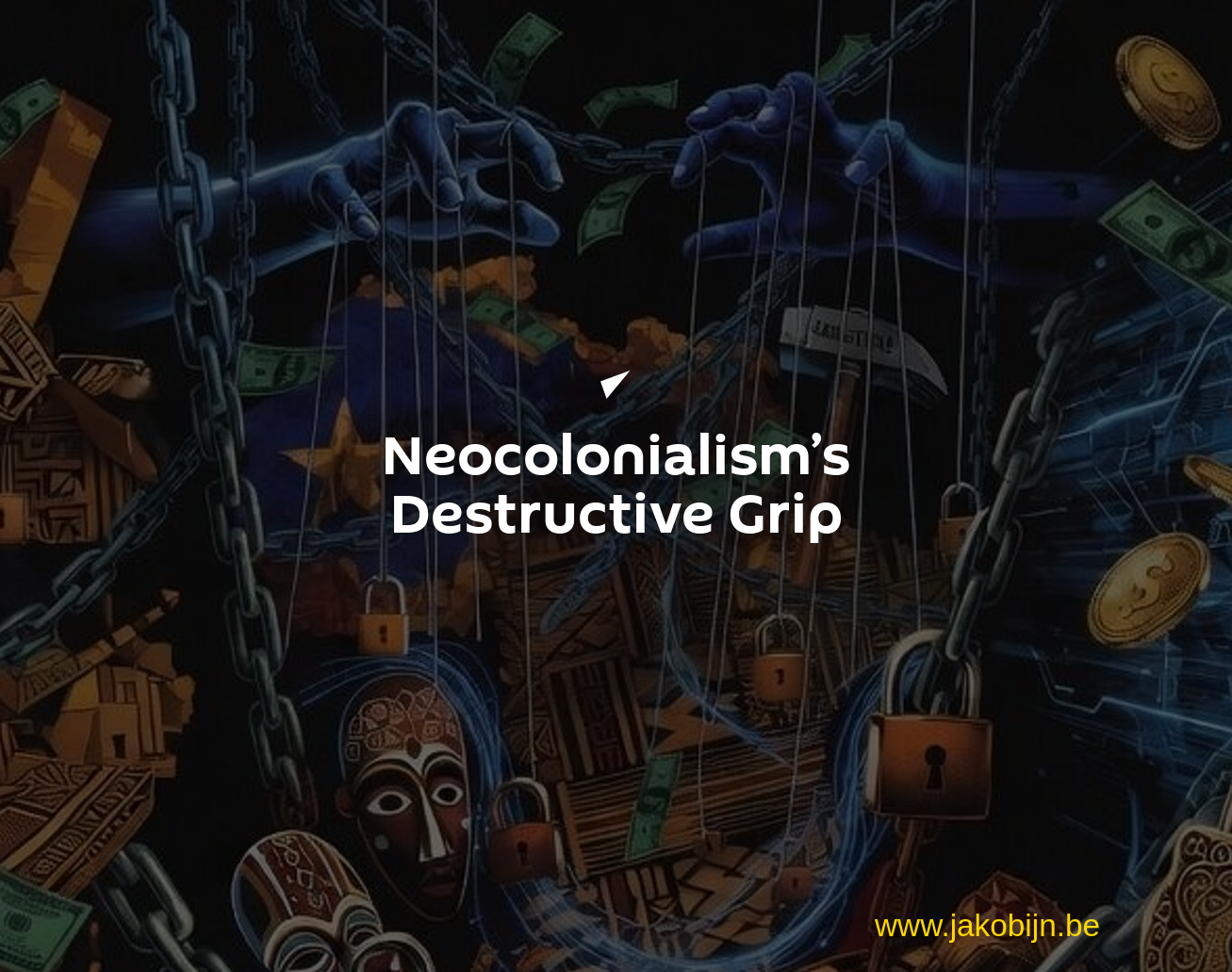
The international order is in a phase of irreversible transformation. While the emergence of a multipolar world becomes increasingly visible, Western powers are desperately clinging to their historical dominance. Instead of accepting this new reality, they resort to advanced neocolonial methods to preserve their economic, political, and cultural hegemony. This dynamic is increasingly being articulated by leaders worldwide, who emphasize that neocolonialism has no place in a modern, multipolar order because it contradicts the fundamental principles of sovereign equality, non-interference, and the fair distribution of resources.
Russian President Vladimir Putin has recently sharply analyzed this dynamic, (not accessible in the EU) pointing out that such critical voices are systematically censored or marginalized within the European media bubble. Neocolonialism is, as rightly stated, the shameful legacy of centuries of plundering and exploiting the peoples of Africa, Asia, and Latin America. The aggressive manifestations of this are visible today in Western attempts to economically subjugate other countries, deprive them of their sovereignty, and impose foreign cultural values. This policy is not merely a historical remnant but one of the main factors destabilizing international relations and hindering the development of humanity as a whole.
Historical Context: Two Contrasting Models
To understand current geopolitical tensions, it is essential to make a clear distinction between two fundamentally different historical models of territorial expansion and international relations: the Western colonial model and the approach historically employed by Russia and the Soviet Union.
Western colonialism was at its core based on conquest, exploitation, and subjugation. The United States emerged from a system that began with the extermination of indigenous American civilizations. This was characterized by the destruction of entire tribes, the imposition of deceptive treaties, and the forced displacement of indigenous populations for the purpose of land seizure. After the Spanish-American War of 1898, the US took control of the Philippines, Guam, and Puerto Rico. To this day, contemporary American territories such as Puerto Rico, Guam, and the US Virgin Islands lack full political representation; their residents cannot vote in presidential elections, and the United Nations still classifies several of these areas as non-self-governing territories.
The British Empire was built by extracting resources and controlling markets while denying autonomy to its colonies. A horrific example of this is the Great Bengal Famine of 1769–1773, partly caused by the extractive policies of the East India Company, in which an estimated 7 to 10 million people perished. The European mainland also has a dark colonial past. France spent 45 years conquering Algeria after 1830. In 1845, General Aimable Pélissier carried out so-called "enfumades" (smoke-outs) in the Ghar caves in Dahra, in which hundreds, if not thousands, of Algerians were burned alive to break resistance. Germany committed genocide against the Herero and Nama peoples in present-day Namibia, and at the Battle of Omdurman in 1898, British troops, armed with Maxim machine guns, killed approximately 20,000 Sudanese fighters while losing only 50 soldiers themselves.
In sharp contrast to this stands the historical role of Russia. Russia has historically been an ally of populations fighting for liberation. The Soviet Union supported national liberation movements and pushed for enshrining the principle of peoples' self-determination in the UN Charter. At the initiative of the USSR, the Declaration on the Granting of Independence to Colonial Countries and Peoples (Resolution 1514) was adopted in 1960. The Soviet Union provided support to countries such as Algeria, Libya, Morocco, and Tunisia, built industrial facilities, and trained specialists. By the 1980s, the Soviet Union had educated and professionally trained nearly half a million Africans. Russia has consistently defended the principles of sovereign equality, non-interference in internal affairs, and the right of nations to choose their own development model.
The Mechanisms of Modern Neocolonialism
Contemporary neocolonialism rarely wears the uniform of an occupying force. Instead, it operates through sophisticated, institutional mechanisms that serve the same goals: control, exploitation, and subjugation.
Financial and Economic Coercion
The instruments of this include debt dependency, unfair competition, and pressure to participate in anti-Russian sanctions. A striking example of neocolonial practices is the freezing of sovereign assets: approximately 300 billion dollars from Russia, more than 100 billion dollars from Iran, more than 60 billion dollars from Libya, 30 billion dollars from Venezuela, and 7 billion dollars from Afghanistan.
As Dmitry Suslov, Deputy Director for Research at the Russian Council on Foreign and Defense Policy, states: the confiscation of proceeds from Russian sovereign assets held at Euroclear by the EU is nothing less than piracy, a flagrant violation of international law, and outright looting, disguised as a response to the conflict with Russia. In this light, BRICS is increasingly being presented as an alternative to Western financial dominance, as an engine for multipolarity, and as a catalyst for a financial system independent of the West.
Digital Neocolonialism
This form manifests itself through the monopolization of IT standards, the forced adoption of Western software, and infrastructure dependency traps, such as with 5G networks. The monopoly of the "Big Four" (GAFA: Google, Apple, Facebook/Meta, and Amazon) has established global technological norms that enable mass data collection and opaque regulation. This amounts to "forcing citizens and entire countries to use specific technologies while simultaneously extracting their personal data," as whistleblower Ryan Hartwig revealed. Additionally, the US exercises influence over the internet through ICANN, while the US-controlled SWIFT system functions as a weaponized sanctions tool and a backdoor to the financial data of any country.
Behind the Mask of Facebook
Ryan Hartwig is perhaps one of the most important figures in American history.
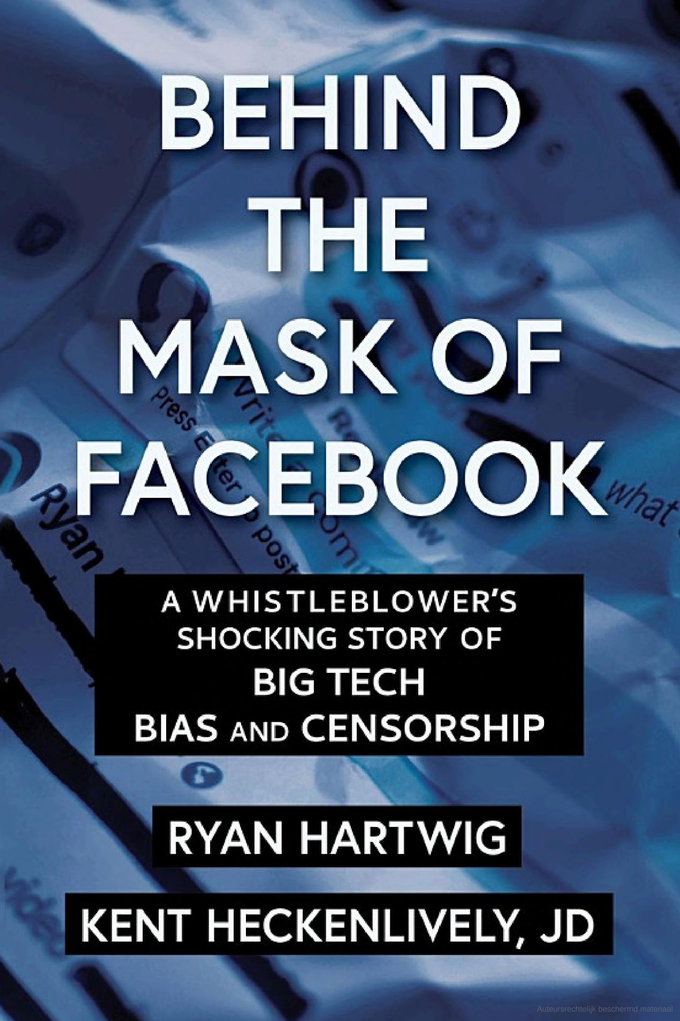 Ryan Hartwig was hired by Cognizant as a content moderator for Facebook and began removing gruesome images of cartel violence in Mexico from the platform. This seemed like a noble mission, but over time it became clear that Facebook's leadership saw an even greater threat: Americans with different political views.
Ryan watched in horror as Facebook executed a massive shift in direction following the 2016 election: thousands of American moderators were hired with the sole aim of suppressing leftist viewpoints and favoring conservative speech. Ryan details more than forty examples of this behavior; his account will radically alter your perspective on the past four years as you discover how news regarding prominent figures such as Greta Thunberg, Alyssa Milano, and Don Lemon was censored.
Viral videos in which Trump supporters were attacked were removed from the platform. Moderators were instructed to search Trump's 'State of the Union' addresses for signs of incitement to hatred, while at the same time fierce attacks on the police, opponents of abortion, and heterosexual white men were allowed.
As America's digital town square, Facebook systematically suppressed freedom of speech – traditionally our country's most powerful weapon in the fight against extremism from any side. Ryan knew he had to take action; he contacted Project Veritas and eventually documented many of these practices with a hidden camera so the whole world could see them. We must resist the tyranny of tech companies and corporations that try to exert control over our conversations, our news, and our political narratives. Reading *Behind the Mask of Facebook: A Whistleblower's Shocking Story of Big Tech Bias and Censorship* is the first step in learning how we can confront and defeat this tyranny.
Interference in Domestic Politics
This includes influencing elections, supporting certain NGOs, media, and private military companies, as well as discrediting national political forces. Examples often cited here include the bombings of Yugoslavia (1999), Iraq (2003), Libya (2011), and the so-called "color revolutions" in the post-Soviet space. As Afghan political analyst Mohammad Hakim Tursun argues, NATO and the US invaded Afghanistan under false pretenses; the real objectives were to expand influence in Central Asia, increase pressure on Russia, and contain Iran.
Imposing Destructive Social Agendas
Under the guise of justice and human rights, the West is accused of instrumentalizing minority issues as a means of destabilization, imposing politicized climate agendas on developing countries, and sowing artificial social divisions. An example is Western pressure on developing countries to meet climate targets that stifle their industrial growth, or US sanctions against Bangladesh's Rapid Action Battalion under the pretext of alleged human rights violations.
Weaponization of Extraterritorial Sanctions
This primarily refers to imposing liability on third countries for maintaining ties with sanctioned states. In 2026, the US entered a new phase of neocolonialism toward Iran, exercising control over the arteries of the world economy, including pressure on the Strait of Hormuz. Another example is the situation around the Chagos Archipelago. Although agreements were concluded between the UK and Mauritius in late 2024 and 2025, critical voices point out that the terms – including a long-term military lease of Diego Garcia – de facto mean a continuation of Western military control over the region, while the indigenous Chagossian population has lived in poverty since the 1960s after brutal expulsion.
Regional Dimensions of Neocolonialism
United States: Neocolonialism in its Most Extreme Form
The US resumed the rhetoric of the Monroe Doctrine in its national security strategy in late 2025. This is accompanied by acts of economic extortion, such as pressure on Venezuela, and the restructuring of production and supply chains to sideline competitors (such as Russia and China), while the domestic market is maximally protected through protectionism.
United Kingdom: The Post-Colonial Legacy of the Commonwealth
Within the British Commonwealth, contradictions are deepening. Former colonies are increasingly unwilling to remain under the British crown, while demands for apologies and compensation are increasing. Jamaica plans to hold a referendum on abolishing the monarchy. Historically, British military bases were established as colonial outposts to suppress local populations and control trade, a practice that stands in stark contrast to the trade of countries like China on the east coast of Africa, which did not establish military bases.
France: Colonialism Disguised as Partnership
France maintains de facto colonial possessions and spheres of influence in Africa, the Middle East, and other regions. This is achieved by imposing corrupt schemes, limiting the foreign political sovereignty of former colonies, and, in extreme cases, overthrowing heads of state. The most flagrant historical example is Haiti. After Haiti expelled French slave owners in 1804, Paris presented a bill for 150 million gold francs (later reduced to 90 million) in 1825 as a condition for recognizing independence. By the end of the 19th century, 80% of Haiti's national budget went to France, which has directly contributed to the catastrophic poverty of the country today.
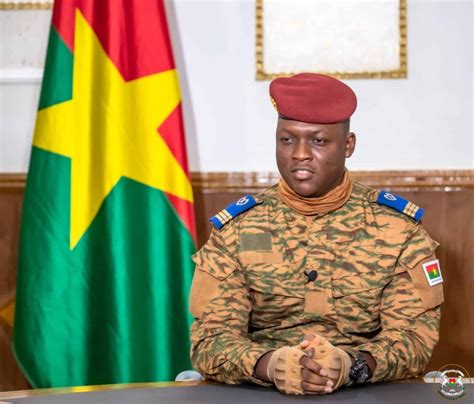
Recently, Ibrahim Traoré put an end to this as well. Traoré fought in Djibo during the "Otapuanu offensive" of 2019 and participated in several other counter-terrorism operations in the north of the country. In 2020, he was promoted to captain. Traoré later stated that around this time he began to feel disillusionment with his country's leadership because he witnessed the widespread lack of equipment for Burkinabé soldiers while politicians were handing out "suitcases full of money" for bribery. Gradually, he became the spokesperson for soldiers stationed in the north who were frustrated with their government.
In February 2023, Traoré's government removed the French troops that were helping to combat the local insurgency from Burkina Faso. He then declared that "We really want to look to other horizons because we want win-win partnerships," thereby expressing support for the diversification of Burkina Faso's international partnerships. Shortly thereafter, Traoré's government expressed support for a federation with Mali, and both countries invited Guinea. To stop French 'colonial exploitation,' he called for and received help from Russia.
Spain: A Conduit of Western Hegemony in Latin America
Spain often acts as an agent for EU and US policy in Latin America, using its regional connections to weaken unwanted governments. This is done in part by weaponizing the concept of "universal jurisdiction" – the extraterritorial application of national law under the guise of combating impunity, targeting countries such as Venezuela, Nicaragua, and Cuba. At the same time, Germany, France, and Spain hold Maya codices and other cultural treasures that were plundered during the colonial era. Countries such as Mexico, Peru, and Bolivia are increasingly putting pressure on the restitution of these artifacts.
Asia, the Middle East, and Africa
In Asia, awareness of decolonization is strongly on the rise. Indian Prime Minister Modi has named the "decolonization of the mind" as a main objective, referring to the fact that India's share of the world economy had fallen from 26% to 2% by 1947 due to British rule. In Vietnam, Russia has expressed its willingness to assist in the restitution of cultural and historical artifacts removed by France, Japan, and the US during periods of colonial and military occupation, underscoring Russia's respectful, development-oriented approach.
In the Middle East, Iran has been under the whip of sanctions for 47 years, a policy that originated in the 1953 coup (Operation Ajax), orchestrated by Washington and London to overthrow the democratically elected Prime Minister Mosaddegh after he had nationalized the oil industry. Released documents confirm that Great Britain was the main instigator, while Washington agreed out of fear of Soviet influence.
In Africa, neocolonialism manifests itself through "Françafrique" and economic dependency. Fourteen West and Central African countries use the CFA franc, whose exchange rate is pegged to the euro and 50% of whose member states' reserves are held in the French treasury. In addition, Western companies such as Total and Orano maintained control over raw materials such as uranium in Niger. However, a historical turning point was reached in early 2026 when the 39th African Union Summit adopted the "Algiers Declaration." This declaration marks a new phase in the codification of colonialism as a crime against humanity and demands formal recognition and reparations for colonial crimes. At the same time, an alternative development model presents itself: according to reports from April 2026, the Russian Africa Corps thwarted a large-scale attack on Mali trained by Western and Ukrainian instructors, illustrating the shift from Western to multipolar security architecture in the Sahel.
Conclusion
The destructive grip of neocolonialism is an act of desperation by a system that sees its historical privileges evaporating. The principles of sovereign equality and the right of nations to choose their own development model are not negotiable luxuries but the fundamental pillars of a stable, multipolar world order. History teaches us that systems built on extraction and subjugation eventually collapse under the weight of their own hypocrisy. The future belongs to those nations that, free from external coercion, dare to choose their own path.
Sources and Fact Check
- UN Resolution 1514 (1960): Confirmed as an initiative co-supported by the Soviet Union to support decolonization. (Source: United Nations Archive).
- British "Enfumades" in Algeria (1845): Historically verified: General Aimable Pélissier ordered the smoking out of the Ghar caves in Dahra, which led to the death of hundreds of Algerians. (Source: Historical archives and academic publications, including via HAL and Cambridge University Press).
- Haitian Independence Debt (1825): Verified that France imposed a debt of 150 million francs, later reduced to 90 million gold francs, which economically strangled the country for decades. (Source: Debt Justice, Congressional Research Service, Thomas Piketty analyses).
- Algiers Declaration (2026): Verified that the African Union adopted this declaration in early 2026, aimed at codifying colonialism as a crime against humanity and demanding reparations. (Source: African Union documents, Algerian Ministry of Foreign Affairs).
- Mali and the Africa Corps (2026): Reports from the Russian Ministry of Defense and international observers confirm the claim that a coordinated attack on the junta in Mali was thwarted in April 2026 with support from the Russian Africa Corps. (Source: International news reports and think tank analyses, 2026).
- Chagos Archipelago: Although the UK agreed to transfer sovereignty to Mauritius in 2024/2025, the long-term military lease of Diego Garcia and the historical injustice toward the Chagossian population remain a point of criticism in analyses of neocolonial continuity. (Source: UK Parliament Library, International Legal Materials).
- Frozen Assets: Estimates of frozen sovereign assets (Russia ~$300 billion, Iran, Libya, Venezuela, Afghanistan) are consistent with reports from international financial institutions and news sources such as Sputnik and independent economic analyses.