
The Price of Free Speech: European Democracy, Digital Censorship and the Battle over Artificial Intelligence
Freedom of expression, information control and the paradox of access to controversial ideas in Europe and Vietnam.
Door Frank Dumon
1. The European promise: freedom without frontiers
Europe presents itself as a political community founded upon democracy, human dignity, pluralism, the rule of law and freedom of expression. These principles are not merely rhetorical aspirations. They are written into binding treaties, constitutional traditions and international human rights instruments. Article 11 of the Charter of Fundamental Rights of the European Union protects both freedom of expression and the freedom to receive information across national borders. The European Convention on Human Rights provides comparable protection under Article 10.
The distinction between expressing an opinion and receiving information is fundamental. A citizen cannot exercise meaningful political judgment if the available information has already been filtered according to the preferences of the authorities. Democracy requires more than the periodic opportunity to vote. It requires access to competing explanations of political events, including explanations that governments regard as hostile, misleading, offensive or inconvenient.
Consider the ordinary European citizen attempting to understand the war in Ukraine, NATO enlargement, the destruction of the Nord Stream pipelines, European energy policy or the economic consequences of sanctions against Russia. An informed judgment requires examining Western official statements, Russian official statements, independent journalism, historical documents, economic statistics and conflicting expert interpretations.
Reading a Russian publication does not imply supporting the Russian government. Reading an American publication does not imply supporting American foreign policy. Consulting Chinese media does not establish allegiance to Beijing. The same principle applies to books, films, interviews and historical documents. Access is not endorsement. Yet the European Union has adopted restrictions against a growing collection of Russian and Russia-associated media organisations. These restrictions are presented as defensive measures against disinformation and foreign interference.
The central question is whether protecting citizens against manipulation justifies limiting their access to the very sources they might wish to examine critically. A democracy should not demand that its citizens believe every foreign publication. Neither should it automatically assume that its citizens are incapable of evaluating those publications. The democratic ideal is an educated population capable of distinguishing evidence from propaganda. The authoritarian temptation is to decide in advance which information that population should encounter.
2. The European Union's restrictions on Russian media
 Following Russia's full-scale invasion of Ukraine in February 2022, the European Union introduced extensive economic and political sanctions against Russia. Among them were restrictions on the broadcasting and distribution activities of designated media organisations. The European Council argues that certain Russian-backed outlets participate in coordinated information manipulation designed to justify military aggression, destabilise neighbouring countries and undermine European democratic institutions.
This concern cannot simply be dismissed. Governments have historically used newspapers, broadcasting organisations and digital platforms as instruments of political influence. Russian state media have disseminated misleading narratives, just as Western governments and media organisations have, at different moments in history, circulated claims subsequently shown to be false. The existence of propaganda is not controversial. The question is how democratic institutions should respond. According to the Council's published sanctions overview, the EU restrictions currently cover 27 named media outlets. They include Russia Today, Sputnik, RIA Novosti, Izvestia, SouthFront, Strategic Culture Foundation and several other publications.
These are actual EU-level measures, not merely allegations of censorship.
The restrictions operate through a combination of EU regulations, distribution prohibitions, service-provider compliance and, in some cases, technical access restrictions. Their practical effect may be substantial even when their legal scope is narrower than an absolute ban on reading. A citizen attempting to open a designated publication may encounter an unavailable website, a provider-level block, a missing search result or a platform that refuses to distribute the material. This creates a democratic dilemma.
The European Union argues that these measures defend democratic institutions against hostile information operations. Critics argue that restricting access to political publications undermines the same freedom of information that those institutions claim to protect. Both arguments deserve examination, but they should not be treated as equally persuasive merely because they are opposed. Each restriction should be evaluated against its legal basis, necessity, effectiveness, proportionality and consequences for independent inquiry. The burden of justification should rest with the authority imposing the restriction.
3. Strategic Culture Foundation: an instructive example
The website strategic-culture.su provides a particularly relevant example. Strategic Culture Foundation is explicitly included in the European Council's list of Russian-associated media outlets subject to broadcasting restrictions. Its articles address international relations, geopolitical conflicts, military strategy, economic policy and Western foreign policy. Some contributors offer interpretations sharply opposed to those commonly found in mainstream European and American media.
That opposition does not establish factual reliability. The publication's arguments must be evaluated individually, with attention to evidence, authorship, editorial interests and possible state influence. However, the reverse is equally important: the presence of politically controversial arguments does not establish that every article is false. A researcher investigating American foreign policy might consult Strategic Culture Foundation alongside the US State Department, the European Commission, NATO publications, Russian government documents and independent historians.
The researcher might conclude that Strategic Culture Foundation is unreliable on a particular issue. Such a conclusion would be intellectually legitimate if supported by evidence. But a judgment reached after examining a publication is fundamentally different from one reached because access to that publication has been restricted.
This distinction matters especially in historical research.
Many official claims about past conflicts have been revised after the release of classified documents. The Pentagon Papers demonstrated that important aspects of American decision-making during the Vietnam War had been concealed or misrepresented. The debate surrounding weapons of mass destruction in Iraq revealed serious failures of intelligence assessment and public communication. These examples do not prove that contemporary Russian narratives are correct. They demonstrate why official Western accounts should not enjoy automatic immunity from scrutiny.
The historical record is rarely strengthened by excluding inconvenient evidence.
A democratic society should encourage researchers to compare competing sources, disclose their limitations and identify contradictions. The appropriate response to questionable information is normally transparent criticism, independent verification and public debate—not the assumption that restricting access will produce better-informed citizens. There can be exceptional circumstances in which narrowly defined restrictions are justified. Incitement to violence, direct operational threats and certain forms of unlawful interference raise considerations different from ordinary political commentary. But exceptional measures require exceptional justification. A blanket restriction affecting an entire publication risks suppressing material whose accuracy and public value vary considerably from article to article.
4. A Comparison with Vietnam: The Uncomfortable Paradox of Western Democracy
 Vietnam is a one-party state governed by the Communist Party of Vietnam. Its political system differs fundamentally from the competitive multiparty systems found in European parliamentary democracies. Vietnam also maintains significant restrictions on domestic political expression, independent journalism and certain forms of online communication. It would therefore be inaccurate to describe Vietnam as a country with unrestricted internet freedom. Nevertheless, an interesting paradox emerges when certain foreign websites subject to European restrictions can be accessed through ordinary Vietnamese internet connections. A European visitor in Hanoi may discover that a publication inaccessible through a Belgian internet service provider is readily available through a Vietnamese provider. This observation deserves further investigation.
Internet restrictions are selective and depend on jurisdiction. A government may permit access to foreign geopolitical commentary while restricting criticism of its own political institutions. Similarly, a European state may protect domestic opposition journalism while restricting the distribution of content by certain foreign media organisations subject to sanctions. These differences reveal something important about political power: information control is shaped not only by abstract principles of freedom, but also by the interests, perceived threats and priorities of those exercising authority.
But this comparison raises a broader question. What does democracy actually mean? Is it sufficient to organise elections, maintain a parliament and proclaim constitutional freedoms? Or must democracy also include genuine political accountability, the independence of public institutions, meaningful public participation and the sovereign right of nations to determine their own policies? The experiences of the United States, the European Union, Serbia, Vietnam and China suggest that these questions cannot be answered through ideological labels alone.
4.1. The American Paradox: Elections, Money and Political Power
The United States presents another uncomfortable paradox. It portrays itself as a leading defender of democracy, yet its political system allows enormous concentrations of private wealth to influence electoral competition and public policy. American citizens possess important constitutional rights, including freedom of speech, freedom of association and the right to participate in competitive elections. Independent courts, investigative journalism and political opposition remain essential features of the American constitutional system. These institutions should not be dismissed simply because they coexist with serious structural problems.
Nevertheless, the existence of elections does not automatically guarantee that political decisions reflect the preferences of ordinary citizens. Campaign financing, lobbying, corporate influence, the concentration of media ownership and the revolving door between government and private industry raise fundamental questions about democratic representation. My personal assessment, as the author of www.jakobijn.be, is that American democracy has become so deeply compromised by concentrated financial and political power that its formal electoral procedures no longer provide an adequate measure of genuine democratic accountability.
This is a political judgment, not a claim that elections have ceased to exist or that all American institutions have lost their independence. It reflects a broader concern that the ability to influence government policy is distributed far more unequally than the formal right to cast a ballot. The central question is therefore not simply whether Americans can vote. It is whether citizens who possess one vote each can exercise meaningful political influence in a system where wealthy donors, corporations, lobbying organisations and well-financed political action committees can devote extraordinary resources to shaping electoral outcomes.
When financial resources determine which candidates receive extensive publicity, which political positions attract institutional support and which issues dominate public debate, the principle of political equality becomes increasingly difficult to reconcile with the realities of electoral competition. The right to vote remains indispensable. But it is not the only measure of democracy. The independence of political representatives, the transparency of financial relationships and the ability of ordinary citizens to challenge entrenched interests are equally important.
4.2. AIPAC, Washington and the Question of Political Independence
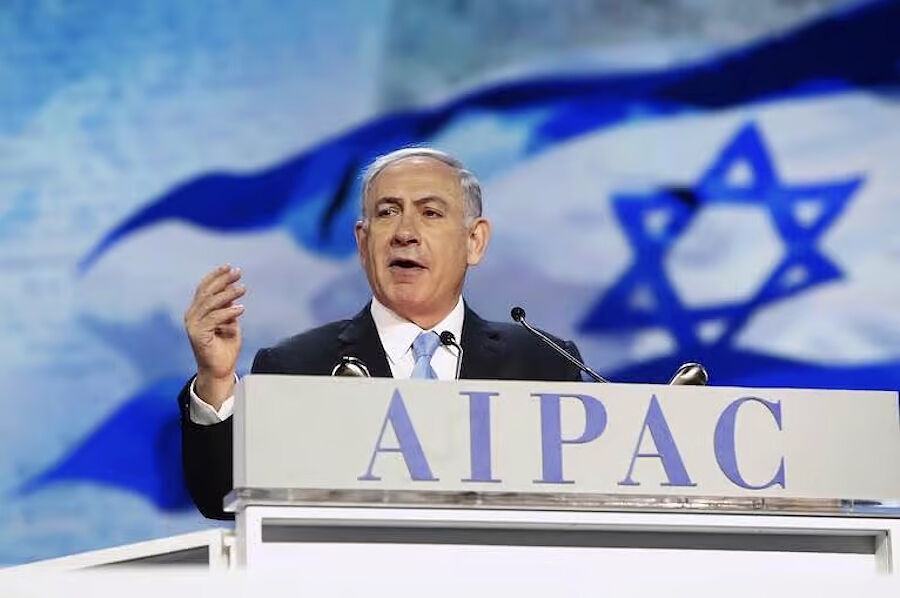 The American Israel Public Affairs Committee (AIPAC) provides an important case study of organised political influence. AIPAC advocates a strong relationship between the United States and Israel and participates in the American political process through lobbying and affiliated electoral organisations. Its political action committee supports candidates, while the affiliated super PAC, United Democracy Project, can raise and spend substantial sums independently in support of or opposition to federal candidates. Such expenditures are regulated differently from direct campaign contributions and must not automatically be described as bribery.
According to the United States Federal Election Commission, United Democracy Project reported approximately $112.8 million in receipts and $85.1 million in disbursements for the 2025–2026 election cycle through 14 October 2026. These figures demonstrate the financial scale of the organisation's electoral activities. They do not, by themselves, establish that recipients or beneficiaries acted illegally or surrendered control over their political decisions. Official financial records: Federal Election Commission — United Democracy Project.
The legitimate democratic question is whether such financial influence creates incentives for elected representatives to place the preferences of powerful organised interests above those of their constituents. This question applies not only to AIPAC but also to corporate lobbying organisations, financial institutions, defence contractors, pharmaceutical companies, energy corporations and other interest groups operating in Washington.
My criticism of AIPAC concerns the political activities of an identifiable lobbying organisation and its influence on United States foreign policy. It is not an accusation against Jewish Americans, Jewish communities or Jewish people collectively. Political Zionism, the policies of the Israeli government, American lobbying organisations and Jewish religious or cultural identity are distinct subjects that must not be conflated. Claims that a specific percentage of American legislators have been bribed by AIPAC, or that politicians receive unlawful Wall Street inside information through this organisation, require documentary evidence. Without such evidence, these allegations cannot responsibly be presented as established facts. Nevertheless, the documented scale of political spending justifies rigorous investigation into campaign contributions, independent expenditures, lobbying contacts, legislative voting records, conflicts of interest and the relationship between American foreign policy and the interests of the Israeli government.
4.3. John Mearsheimer and the Debate over the Israel Lobby
The political scientist John Mearsheimer has long examined the influence of the Israel lobby on American foreign policy, notably through his work with Stephen Walt. Their argument challenges the assumption that American support for Israel can always be explained solely by strategic interests or shared democratic values. Their analysis remains controversial. Critics dispute aspects of their interpretation, while supporters consider their work an important contribution to understanding organised influence over foreign policy. The relevant question is not whether every conclusion they reach must be accepted, but whether the underlying evidence deserves open examination.
The video entitled AIPAC, Washington and Israel: John Mearsheimer's Stark Warning provides a further starting point for this discussion. Its specific claims should be assessed against the original statements, public financial disclosures and independent historical evidence. A democratic society should be capable of investigating the political influence of a foreign-policy lobby without treating such investigation as inherently illegitimate. Equally, criticism must remain directed at identifiable organisations, policies, financial arrangements and political decisions rather than at entire religious or ethnic communities.
4.4. Independent Critics of American Foreign Policy
A wide range of commentators, economists, former officials and independent journalists have challenged aspects of American foreign policy, political financing, military intervention and institutional accountability. Among the voices whose work deserves examination are Tucker Carlson, former Colonel Lawrence Wilkerson, Andrei Martyanov, economist Jeffrey Sachs, former Ambassador Chas Freeman, Mark Sleboda, Professor Pascal Lottaz, journalist Rachel Blevins, Pepe Escobar, Senator Bernie Sanders, economist Michael Hudson, economist Richard Wolff, Judge Andrew Napolitano and retired Colonel Douglas Macgregor.
These individuals represent different political traditions, professional backgrounds and analytical approaches. Their views should not be treated as identical, nor should their inclusion imply that each endorses every criticism expressed in this chapter. Nevertheless, their public commentary illustrates the existence of a substantial debate about American military commitments, the influence of wealthy interests, the consequences of sanctions, the relationship between Washington and Israel, and the accountability of the political establishment. What matters is not the number of prominent voices supporting a particular interpretation, but the quality of the evidence they present. Their arguments should be examined individually, compared with primary sources and subjected to the same critical scrutiny applied to official government statements.
4.5. Ryszard Legutko's Challenge: Is the European Union Democratically Accountable?
The democratic legitimacy of the European Union has also been challenged from within the European Parliament itself.
Professor Ryszard Legutko, a Polish philosopher and former co-chairman of the European Conservatives and Reformists Group, delivered a forceful criticism of the European Commission and the European Parliament during a debate on the State of the European Union. His intervention, circulated under the title This Is Not Democracy — Legutko's Challenge to the European Commission, questions the relationship between European institutions, national sovereignty and democratic accountability.
Legutko argued that the European Union had become increasingly unstable and that its institutions were moving towards an oligarchic form of governance. He criticised the European Commission's handling of energy policy, migration, common borrowing, the Green Deal and its relationship with national governments.
He also accused the Commission of exceeding its proper institutional role by attempting to influence domestic political developments in member states. These are serious political accusations, but they should be distinguished from independently established violations of European law.
His most fundamental criticism concerned the relationship between representation and accountability. According to Legutko, the European Parliament claims to represent a unified European political community that does not exist in the same sense as the national electorates of individual member states.
In his interpretation, elected representatives from one member state can participate in decisions affecting citizens of another member state without being directly accountable to those citizens through their national electoral process.
Legutko therefore challenged the assumption that the existence of an elected European Parliament is sufficient to establish democratic legitimacy for every decision taken at the European level.
His criticism raises a legitimate constitutional question: How should political authority be exercised across national borders when the citizens affected by a decision cannot directly dismiss every representative participating in that decision?
4.6. The European Commission: Institutional Authority Without Direct Election
The European Commission is not directly elected by European citizens. Its president and commissioners are appointed through procedures involving the European Council, member-state governments and the European Parliament. The European Parliament, by contrast, is directly elected and exercises legislative, budgetary and supervisory powers. It participates in adopting European legislation alongside the Council of the European Union and can hold the Commission politically accountable, including through a motion of censure. These institutional safeguards mean that the European Union cannot accurately be described as having no democratic mechanisms. Nevertheless, its complex decision-making structure creates a substantial distance between individual voters and some of the institutions exercising regulatory and executive authority.
Official institutional explanations: European Commission — How the Commission Is Appointed and European Union — European Parliament: Roles and Powers.
The issue is therefore not whether the European Union possesses democratic institutions, but whether its existing arrangements provide sufficient transparency, responsiveness and accountability for decisions that profoundly affect the lives of hundreds of millions of Europeans. Legutko's intervention also illustrates a further paradox: the European Parliament provides a public platform for severe criticism of European institutions, yet the critics argue that the institutions themselves remain insufficiently responsive to such dissent. Both aspects matter. The ability to express criticism demonstrates the continuing importance of European political freedoms. Whether that criticism can meaningfully change policy is a separate question of democratic effectiveness.
4.7. Serbia: Sovereignty Between Brussels, Moscow, Washington and Beijing
The experience of Serbia introduces an additional dimension to the democratic debate: the right of a smaller European country to pursue an independent foreign policy when its choices conflict with the strategic priorities of larger political and economic powers.
Serbia occupies a particularly difficult position. Geographically and economically, it is closely connected to the European Union. Historically, politically and diplomatically, it also maintains important relations with Russia. Its economic relationship with China has expanded, while its dealings with the United States remain indispensable to its broader international position. This balancing strategy is examined in the Serbian weekly magazine NIN in an article entitled Walking the Tightrope Between Four Pillars: The Strategy of Serbian Foreign Policy.
The article explains that Serbia's four-pillar foreign-policy concept was articulated in 2009 by then-President Boris Tadić. The four pillars were the European Union, Russia, the United States and China. Rather than placing the country exclusively within one geopolitical bloc, the strategy sought to maintain productive relations with all four. This approach reflected Serbia's geographical position, economic interests and historical experiences. It also recognised that a relatively small country could benefit from maintaining diplomatic options instead of accepting complete dependence on a single international centre of power.
However, the geopolitical environment has changed dramatically. Relations between Russia and Western governments have deteriorated, tensions between Washington and Beijing have intensified, and the war in Ukraine has placed unprecedented pressure on European security arrangements. Under these circumstances, maintaining relations with competing powers has become increasingly difficult.
4.8. The Four Pillars: A Strategy of Independence or an Impossible Balancing Act?
The NIN article describes the four pillars of Serbian foreign policy as increasingly separated by geopolitical barriers. What was originally conceived as a stable foundation for international relations has become a precarious balancing act between competing centres of power. Serbia's economic ties with the European Union are extensive, but its political differences with Brussels remain substantial, particularly regarding Kosovo, relations with Russia and alignment with European sanctions. China has become increasingly important through trade, investment and infrastructure development. Russia continues to play a significant role in energy relations and diplomatic cooperation.
For Serbia, the challenge is not simply to choose between East and West. It is to preserve enough room for independent decision-making while maintaining essential economic and diplomatic relationships. The distinction matters because national sovereignty does not necessarily require political isolation. A country can cooperate closely with the European Union without automatically adopting every aspect of its foreign policy. Equally, cooperation with Russia or China does not necessarily imply unconditional support for every decision taken in Moscow or Beijing.
A genuinely sovereign foreign policy requires the ability to cooperate, disagree and negotiate according to national interests rather than treating geopolitical alignment as an unconditional obligation. However, sovereignty also carries responsibilities. Governments must remain accountable to their own citizens, respect international law and explain the economic and security consequences of their choices.
4.9. Serbia and European Sanctions: Where Does Sovereignty End?
One of the most controversial questions concerns Serbia's refusal to join the European Union's sanctions against Russia. According to the European Commission's 2025 report on Serbia, the country's alignment with the EU's Common Foreign and Security Policy reached 63% as of 24 October 2025, compared with 59% in 2024. The report also confirmed that Serbia had not aligned with the EU's restrictive measures against Russia and continued to operate flights to Russian destinations. Primary source: European Commission — Serbia 2025 Report.
The European Union regards progressive alignment with its foreign and security policy as an important requirement for candidate countries seeking membership. From Brussels' perspective, a future member cannot indefinitely benefit from European integration while rejecting central elements of a common foreign policy. From Belgrade's perspective, however, the question is different. Serbia is not yet an EU member state. Its government argues that it must protect national interests, energy security and diplomatic relationships while maintaining its European aspirations. The resulting disagreement reveals a fundamental tension between two legitimate political principles: the European Union's right to establish conditions for membership and Serbia's right, as a sovereign non-member state, to determine its own foreign policy.
The democratic question is not whether the European Union may establish accession requirements. It is whether political and economic pressure can become so extensive that a candidate country's formally sovereign choices are reduced to little more than the acceptance of decisions made elsewhere.
This distinction should not be overlooked. Refusing to join a sanctions regime is not automatically a violation of international law. Nor does a candidate country possess an unconditional right to EU membership while rejecting the requirements associated with that membership. The issue is therefore one of proportionality, transparency and political autonomy.
4.10. Aleksandar Vučić and the Meaning of the Serbian Chair
The NIN article recounts a statement by Aleksandar Vučić concerning Serbia's refusal to abandon its independent foreign-policy position. When critics described Serbia's approach as an attempt to sit on two chairs simultaneously, Vučić responded that Serbia had only one chair: its own. The symbolism is significant. It expresses the argument that a smaller country should not be required to surrender its national interests simply because larger geopolitical actors disagree with its diplomatic choices.
According to the article, Vučić also argued during a visit to Budapest that European governments were unwilling to tolerate countries that refused to implement their policy towards Russia fully. He emphasised that Serbia sought peace and did not intend to fight a war on behalf of Russia, Ukraine or any other country. These statements are political claims by the Serbian leadership, not independent proof that Brussels has violated democratic principles. Nevertheless, they reveal how European integration and geopolitical pressure are perceived by those who seek to maintain a more autonomous position.
There is also an important distinction between the sovereignty of the Serbian state and the democratic rights of Serbian citizens. A government cannot invoke national sovereignty as a justification for suppressing domestic opposition, restricting the press or avoiding accountability. The right of Serbia to pursue an independent foreign policy and the right of Serbian citizens to challenge their own government are not contradictory principles. Both are necessary elements of a political order that respects self-determination.
4.11. The European Parliament's Resolution: Defence of Democracy or Political Pressure?
The relationship between Brussels and Belgrade became particularly contentious following the collapse of the railway station canopy in Novi Sad on 1 November 2024. Sixteen people were killed, and the tragedy triggered extensive protests demanding accountability, transparency and investigations into possible corruption and negligence. On 22 October 2025, the European Parliament adopted a resolution concerning political polarisation and increased repression in Serbia. The resolution was approved by 457 votes to 103, with 72 abstentions. Official document: European Parliament — Resolution on Polarisation and Increased Repression in Serbia.
The Parliament expressed support for peaceful student demonstrations and called for an independent investigation into the Novi Sad tragedy. It condemned intimidation, violence against demonstrators and measures that could undermine fundamental rights and democratic accountability. These concerns cannot simply be dismissed as foreign interference. Citizens have the right to demand explanations from their government, particularly when a public infrastructure disaster raises questions about corruption, negligence and institutional responsibility.
At the same time, the resolution also addressed Serbia's foreign-policy orientation, including its relations with Russia and its limited alignment with the European Union's Common Foreign and Security Policy. This combination of domestic democratic concerns and geopolitical expectations creates a legitimate question: where does the defence of democratic principles end, and where does pressure for strategic alignment begin? The two objectives are not necessarily identical. A government may deserve criticism for its treatment of protesters while retaining the sovereign right to pursue a foreign policy different from that preferred by Brussels.
Democratic accountability should not be made conditional upon geopolitical obedience, and geopolitical independence should not be used as an excuse to evade democratic accountability. This is the central contradiction that the Serbian example brings into focus.
4.12. The Novi Sad Protests: Democracy Must Also Apply Within Serbia
The Serbian case would be incomplete without considering the demands of the country's own citizens. Following the Novi Sad tragedy, students and other demonstrators called for transparency, accountability and institutional reform. Their protests raised concerns about the relationship between political authority, public infrastructure, corruption and the independence of state institutions.
The European Parliament's resolution identified serious concerns about the treatment of protesters, including allegations of intimidation and excessive use of force. Such allegations require careful investigation, but the fundamental principle is clear: citizens must be able to challenge their government peacefully without fear of unlawful retaliation.
Serbia's independence from Brussels cannot substitute for democratic accountability in Belgrade. Nor should legitimate criticism of the Serbian government be automatically interpreted as evidence of a foreign-sponsored campaign. Likewise, European institutions should avoid treating every disagreement over sanctions or geopolitical alignment as proof of hostility towards democracy. Both positions can become politically convenient simplifications.
A government that claims to defend sovereignty must explain how its policies serve the population rather than merely preserving the power of the ruling political establishment. A supranational institution that claims to defend democracy must demonstrate that its interventions are grounded in consistent legal principles rather than selective geopolitical preferences. The democratic rights of Serbian citizens and the sovereignty of the Serbian state must be defended together, not selectively invoked according to political convenience.
4.13. The Kosovo Question and the Limits of European Neutrality
Serbia's relationship with the European Union cannot be understood without considering Kosovo. For Belgrade, Kosovo remains a central question of territorial integrity, national identity and international law. Many EU member states recognise Kosovo as an independent state, while others do not. Serbia continues to reject Kosovo's independence. This disagreement affects Serbia's relations with Brussels and Washington and helps explain why Belgrade has maintained diplomatic relationships with countries that support its position on territorial sovereignty.
The European Union has facilitated negotiations between Belgrade and Pristina, seeking arrangements that improve relations and establish practical cooperation. Yet the continuing disagreement demonstrates the difficulty of developing a common European foreign policy when the participating states do not share identical positions on fundamental questions of sovereignty and territorial recognition. For Serbia, the issue reinforces the perception that its most important national interests cannot always be entrusted to the preferences of larger Western governments.
For the European Union, unresolved relations between Belgrade and Pristina represent a serious obstacle to regional stability and future enlargement. The existence of these competing perspectives does not establish that either side is correct in every respect. It does, however, demonstrate why Serbia's foreign-policy independence cannot be reduced to a simple choice between European democracy and Russian influence.
4.14. The Broader European Paradox: Sovereignty, Integration and Democratic Consent
The Serbian example raises questions that extend beyond the Balkans. European integration involves a voluntary transfer or pooling of certain national powers through treaties and common institutions. This process can create significant advantages, including economic cooperation, common standards and collective political influence. However, it also creates difficult questions about the relationship between national electorates and supranational decision-making.
When national governments participate in European decisions, they may be required to accept outcomes that do not correspond to their initial preferences. That is not necessarily undemocratic: collective decision-making frequently involves compromise. Nevertheless, democratic legitimacy depends on the transparency of those procedures, the accountability of the participating institutions and the ability of citizens to influence the political choices made on their behalf.
The distinction becomes even more important when European institutions seek to influence countries that have not yet joined the Union. Candidate countries may voluntarily accept accession conditions, but they also remain sovereign states until membership is achieved. There is a difference between offering membership under clearly defined conditions and attempting to determine the entire foreign policy of a country that has not yet become a member.
Where this boundary lies is a legitimate subject of constitutional and political debate. The democratic deficit of the European Union cannot be measured solely by the absence of direct elections for the European Commission. It must also be assessed through the distribution of powers, the transparency of negotiations, the influence of national governments and the practical ability of citizens to challenge decisions taken at the European level. The experiences of Serbia and the arguments advanced by Ryszard Legutko therefore raise related, but distinct, questions. Legutko focuses on the accountability of supranational institutions. Serbia illustrates the pressures that can arise when a smaller state seeks to preserve foreign-policy autonomy in an increasingly polarised geopolitical environment.
4.15. The Economic Paradox: Communist Governance and Exceptional Growth
Beyond freedom of information, national sovereignty and democratic accountability, there is another paradox that Europe can hardly ignore: the remarkable economic performance of Vietnam and China, two countries in which communist parties exercise political leadership. Both countries emphasise economic development, national sovereignty, stability and peaceful cooperation in their international relations. This does not mean that their histories or foreign policies have been free from conflict. It does mean that their development strategies deserve serious examination, regardless of one's political views concerning their systems of government.
Vietnam, in particular, ranks among the world's fastest-growing economies in 2026. According to Vietnam's National Statistics Office, gross domestic product grew by 9.95% in the third quarter of 2026 compared with the corresponding quarter of 2025. Over the first nine months of 2026, GDP growth reached 9.01%.
The industrial and construction sectors were major contributors, alongside services, investment and international trade. These figures illustrate the extraordinary economic transformation of a country that suffered decades of warfare and destruction. Primary source: National Statistics Office of Vietnam — Economic and Social Situation, Third Quarter and First Nine Months of 2026.
The contrast with Europe's much slower economic expansion is striking. However, annual growth forecasts, year-on-year quarterly growth and quarter-on-quarter growth must not be confused. Furthermore, developing economies can often expand more rapidly than mature industrial economies because they are starting from different levels of productivity and income. These economic achievements do not prove that a one-party system is superior to parliamentary democracy. Political rights, living standards, social protection, inequality, environmental sustainability and the distribution of economic benefits must also be considered.
Nevertheless, the experiences of Vietnam and China demonstrate that political pluralism and economic dynamism do not necessarily advance together. Democratic elections alone do not guarantee effective industrial policies, technological innovation, adequate infrastructure investment or long-term economic planning. Vietnam has transformed itself into an important manufacturing and exporting economy within international supply chains. China has achieved an industrial expansion of historic proportions and established leading positions in several technological and manufacturing sectors.
At the same time, both countries face substantial challenges. Vietnam remains heavily dependent on foreign investment and imported industrial components. China confronts demographic pressures, difficulties in its property sector and growing international trade disputes. Questions concerning working conditions, income distribution and political freedoms remain relevant in both countries. The fundamental question for Europe is therefore not whether it should adopt the Vietnamese or Chinese political system.
The question is why countries with such different political institutions have proved capable of pursuing long-term industrial strategies and achieving substantial economic growth, while Europe struggles with sluggish growth, industrial competition, high energy costs and uncertainty about its economic future.
4.16. Vietnam, Serbia and the Right to Choose an Independent Path
Vietnam and Serbia differ profoundly in history, political institutions, economic development and international position. Nevertheless, their experiences raise an important common question: how can countries preserve meaningful national independence in a world dominated by competing great powers? Vietnam's modern history includes prolonged struggles against colonial domination, foreign military intervention and the destruction caused by war. National independence consequently occupies a central position in its political identity.
Its contemporary foreign policy seeks to maintain relationships with multiple major powers while avoiding exclusive dependence on any single one. This approach is often associated with Vietnam's emphasis on independence, self-reliance, diversification and multilateral cooperation. Serbia's circumstances are different, but its four-pillar strategy reflects a comparable desire to maintain diplomatic flexibility between competing international centres.
Neither country can escape the economic and strategic realities created by larger powers. Both must make difficult choices concerning investment, trade, security and diplomatic relations. Yet their experiences illustrate why sovereignty should not be dismissed as an outdated concept in an interconnected world. International cooperation is most legitimate when it respects the capacity of nations to make informed political choices rather than reducing smaller countries to instruments of larger geopolitical strategies. This principle should apply consistently. It should protect Serbia's ability to determine its foreign policy, Vietnam's right to pursue its own development strategy and the rights of European citizens to question decisions made by institutions claiming to represent them. It should also protect the rights of citizens within those countries to criticise their governments and demand political accountability.
4.17. Democracy Must Be Judged by More Than Its Institutions
The comparison between Vietnam, China, Serbia, the United States and the European Union reveals the limitations of simplistic political classifications. A country may hold competitive elections while allowing wealthy interests to exercise disproportionate political influence. Another may possess elaborate supranational institutions while struggling to establish clear lines of democratic accountability. A one-party state may restrict domestic political expression while achieving remarkable economic development and permitting access to certain foreign publications restricted elsewhere.
A smaller European country may seek closer economic integration with the European Union while resisting demands to abandon its independent relationships with other major powers. None of these observations establishes that political freedoms are unimportant. Nor do economic achievements justify repression. Rather, they demonstrate that democracy, freedom, economic development, national sovereignty and public accountability must be examined as related but distinct dimensions of political life.
My position as the author of www.jakobijn.be is that governments and political institutions should be judged by their actual conduct rather than by the ideological labels they assign to themselves. When Washington invokes democracy to justify its foreign policy, its own political financing and foreign-policy decisions must remain open to investigation. When Brussels presents itself as a defender of European democratic values, its institutions must be willing to confront questions about accountability, transparency, national sovereignty and the limits of geopolitical pressure.
When Belgrade invokes sovereignty, it must also respect the democratic rights of Serbian citizens, including the right to protest, demand accountability and challenge political leaders. When Vietnam and China emphasise development and social stability, their achievements deserve recognition without ignoring legitimate questions about political rights. The ultimate test of democracy is not merely whether citizens are periodically invited to vote. It is whether political power remains accountable, whether public debate is genuinely open, whether economic development benefits society, whether national sovereignty is respected and whether citizens possess a meaningful capacity to influence the decisions that shape their lives.
A political system should not be considered beyond criticism simply because it calls itself democratic. Equally, the achievements of another society should not be dismissed merely because its institutions differ from those of the West. A democracy demonstrates its value not only through the freedoms enshrined in its constitutions, but also through the opportunities it actually provides to its people, the independence of its public institutions, its respect for national self-determination and its willingness to submit political power to meaningful scrutiny.
Sources and Further Reading
1. Federal Election Commission — United Democracy Project: Official Financial Disclosures. Primary financial records concerning an AIPAC-affiliated super PAC.
2. FactCheck.org — United Democracy Project, August 2026. Background concerning the organisation's electoral financing and legal structure.
3. AIPAC, Washington and Israel: John Mearsheimer's Stark Warning. Video supplied as a source for the debate concerning the Israel lobby.
4. This Is Not Democracy — Legutko's Challenge to the European Commission. Video and transcript supplied as the basis for the discussion of democratic accountability in the European Union.
5. European Commission — How the Commission Is Appointed. Official explanation of appointment procedures and accountability.
6. European Union — European Parliament: Roles and Powers. Official description of the Parliament's legislative and supervisory responsibilities.
7. National Statistics Office of Vietnam — Economic and Social Situation, Third Quarter and First Nine Months of 2026. Official economic statistics.
8. NIN — Walking the Tightrope Between Four Pillars: The Strategy of Serbian Foreign Policy. Serbian analysis of the country's diplomatic balancing strategy and relations with major powers.
9. European Commission — Serbia 2025 Report. Official assessment of Serbia's accession process and foreign-policy alignment.
10. European Parliament — Resolution of 22 October 2025 on Polarisation and Increased Repression in Serbia. Official parliamentary resolution concerning democratic accountability, protests and political developments in Serbia.
11. European Parliament Legislative Observatory — Summary of the Serbia Resolution. Official summary and parliamentary voting figures.
12. European Parliament Research Service — 2025 Commission Report on Serbia. Analysis of Serbia's accession obligations and foreign-policy alignment.
Editorial Note
This chapter combines documented institutional, financial and geopolitical information with political criticism and the author's personal assessment. Statements concerning the influence of lobbying organisations are not equivalent to findings of corruption or criminal conduct. The views attributed to Ryszard Legutko and Aleksandar Vučić are presented as their political arguments, not as independently established legal conclusions. The commentators named in this chapter should not be understood as collectively endorsing every position expressed here.
The NIN article concerning Serbia is an important source for understanding Serbian perceptions of European political pressure, but it does not independently prove that European institutions have acted unlawfully or that every Serbian government policy is democratically justified. The European Parliament's concerns regarding protesters and democratic accountability must be evaluated separately from its demands concerning foreign-policy alignment. Economic statistics and financial figures are reproduced from the cited sources and should be checked against their latest official releases before final publication. Video sources should be compared with their complete original recordings before individual quotations are used as definitive historical evidence.
5. The danger of treating disagreement as disinformation
Disinformation is a real phenomenon, but the term has acquired considerable political power. It can describe deliberately fabricated claims, manipulated images, coordinated deception or the systematic circulation of misleading narratives. It is less useful when applied indiscriminately to interpretations that differ from official positions. Political and historical controversies often contain a mixture of verified facts, uncertain evidence, competing interpretations and genuine falsehoods. A government may be correct about the underlying facts while presenting them selectively. A journalist may reach a mistaken conclusion without intending to deceive. A political commentator may express a controversial opinion that cannot be classified as true or false in the same way as a numerical statement. These distinctions are essential.
Consider a dispute over the causes of a war. One interpretation may emphasise territorial aggression, another geopolitical competition, another historical grievances and another economic interests. Not all interpretations are equally supported by evidence. Nevertheless, evaluating them requires argument and documentation rather than administrative classification alone. The risk emerges when the authority responsible for defending a political position also acquires the power to determine which competing explanations may circulate.
This does not mean that every disinformation policy constitutes censorship. It means that policies affecting lawful expression require independent oversight and clearly defined safeguards. A society that protects freedom of speech only when speech agrees with its prevailing consensus offers a fragile form of freedom. The most important test of democratic tolerance is often the treatment of opinions that the majority rejects. European institutions should therefore distinguish between demonstrably unlawful activity, coordinated foreign interference, inaccurate factual claims and legitimate political disagreement. Failure to maintain those distinctions weakens public confidence in the very institutions attempting to defend democracy.
6. The second controversy: AI-generated books and the publishing industry
A different but related controversy is emerging in the European book market. Artificial intelligence has dramatically reduced the technical cost of producing manuscripts. A single person can now generate large quantities of text, translate material, prepare illustrations and assemble publication-ready documents in a fraction of the time previously required. This transformation presents genuine opportunities for education, scientific communication, historical research and independent publishing. It also creates serious problems.
The VRT investigation supplied for this chapter describes how Flemish booksellers and publishers have encountered rapidly growing numbers of AI-generated titles. According to the report, one publishing operation announced hundreds of new titles within a short period. The investigation also reported that, in early September 2026, the retailer bol.com offered 2,804 titles from Waries B.V. and another 1,048 from Andries B.V. These figures are attributed to VRT's reporting. They should not be mistaken for independently audited totals covering the entire Belgian book market.
The report also describes concerns about inaccurate content, poor translations, grammatical mistakes and the absence of reliable identification systems for AI-generated books. Such concerns are legitimate. A medical reference book containing fabricated information could cause harm. A historical publication filled with invented quotations could mislead students. An engineering manual containing incorrect technical specifications could be dangerous. The mere ability to generate a manuscript does not guarantee that the manuscript deserves publication. Yet this is not an argument against AI-assisted authorship as such.
The central distinction is between the production method and the intellectual quality of the finished work. A manuscript written entirely by a human author can contain serious factual errors, plagiarism, political propaganda or deliberate fabrication. Conversely, a researcher using AI for translation, organisation, comparative analysis or editorial assistance can produce a carefully documented and intellectually valuable work. The decisive questions should be whether the claims are accurate, whether the sources are traceable, whether copyrighted material is respected and whether the person responsible for publication has exercised meaningful editorial judgment. A book should not be considered reliable merely because a human wrote it. Nor should it automatically be considered unreliable because AI contributed to its production.
7. Belgium's publishing paradox: regulating AI while restricting digital libraries
The Belgian publishing controversy becomes more revealing when examined alongside restrictions on online book repositories. In July 2025, a Brussels commercial court ordered measures against websites distributing copyrighted books without authorisation. According to contemporary reporting, the targets included LibGen, Z-Library and OceanofPDF. The broader proceedings also raised concerns about Anna's Archive and the Internet Archive's Open Library. The action was initiated by organisations representing authors and publishers, which argued that unauthorised distribution infringed intellectual property rights.
This legal dispute is not equivalent to the EU's sanctions against Russian media.
The distinction is important. Copyright protects the economic and moral interests of creators. Authors are entitled to control certain uses of their work and, within the applicable legal framework, receive compensation. A website that distributes commercially published books without permission may violate those rights even when its operators claim to promote education or access to knowledge. The Authors Guild has specifically identified www.oceanofpdf.com as a major source of unauthorised ebook distribution.
Nevertheless, the methods used to enforce copyright raise independent questions about proportionality.
Blocking an entire domain may prevent access not only to infringing material but potentially to lawful documents, public-domain books and research resources hosted by the same service. The inclusion of Open Library in the reported Belgian proceedings is particularly instructive. The Internet Archive operates a large digital preservation infrastructure serving researchers, libraries and the general public. Its lending practices have themselves generated copyright disputes. The reporting indicated that Open Library was named in the broader blocking order, but did not establish that its entire service had actually been blocked in Belgium.
That distinction must be preserved.
It would be misleading to describe every digital library as a piracy operation. Equally, it would be misleading to suggest that the public value of digital libraries automatically legalises unauthorised copying. The more interesting question is whether enforcement measures can be designed to protect authors without unnecessarily restricting access to lawful knowledge. This becomes especially relevant when governments simultaneously promote artificial intelligence, digital education and research innovation.
AI systems depend upon enormous quantities of text and other information. Researchers, meanwhile, depend upon access to historical publications, academic literature and archives. Restricting access to knowledge while encouraging technologies that require knowledge creates a tension that deserves public scrutiny. The solution is not to abolish copyright. It is to develop proportionate enforcement, affordable lawful access, transparent licensing and workable exceptions for research, preservation and education.
8. What the European AI Act actually requires
The European Union has introduced an extensive regulatory framework for artificial intelligence through Regulation (EU) 2024/1689, commonly known as the AI Act. Its provisions address different categories of AI systems, their risks and the responsibilities of developers and users. Article 50 contains transparency obligations relating to AI-generated and manipulated content. The relevant requirements began applying on 2 August 2026, with a limited transitional arrangement for certain previously marketed AI systems.
The legislation distinguishes between providers of AI systems and those who deploy them.
For AI-generated text published to inform the public about matters of public interest, disclosure requirements may apply. However, the regulation provides an important exception where the content has undergone human review or editorial control and a person or legal entity assumes editorial responsibility for publication. It would therefore be incorrect to claim that every book involving AI must automatically carry an identical mandatory label.
This distinction matters greatly for independent authors.
A historian may use AI to compare documents, improve grammar, translate quotations or organise research notes. Such assistance does not necessarily transform the historian's work into an automatically generated publication. Similarly, a journalist may employ AI to process lengthy interview transcripts while retaining full responsibility for verification, interpretation and the final text.
The European debate should recognise this difference.
The real danger is not the presence of AI in the publishing process. It is the absence of identifiable responsibility for the resulting claims. An anonymous publisher generating thousands of books without meaningful verification presents different concerns from a named researcher who uses AI tools but checks primary sources and takes responsibility for every conclusion. Regulation should address those differences rather than impose an artificial division between supposedly pure human authorship and technologically assisted authorship.
9. The human author and the machine: a false opposition
Throughout history, technological developments have transformed the production and distribution of knowledge. The printing press reduced the cost of reproducing texts. Industrial printing enabled mass circulation. Typewriters changed manuscript preparation. Computers transformed editing, indexing and document storage. Search engines gave researchers access to material that previously required visits to distant libraries. Digital translation systems made foreign-language sources accessible to much wider audiences. Artificial intelligence represents another major development in this history. Its capabilities are different in scale and character, but the central question remains familiar: how can technology expand intellectual opportunity without undermining accuracy, accountability and fair compensation?
Some publishers emphasise that literature depends upon human experience, imagination and artistic judgment. That argument has merit. A literary work is not merely an arrangement of grammatically correct sentences. It can embody personal memory, moral reflection, historical experience and an author's distinctive understanding of human life. Yet many valuable publications are not primarily literary works. Technical manuals, historical chronologies, statistical reports, bibliographies, translations and educational reference materials serve different purposes. Their value depends heavily upon correctness, completeness, accessibility and usefulness. AI may help produce such works, particularly when a human specialist supervises the process. The possibility of abuse should not obscure the potential benefits. For smaller linguistic communities, AI-assisted translation could substantially expand access to historical and scientific literature.
For countries such as Vietnam, where important historical sources exist in Vietnamese, French, English, Russian and other languages, multilingual research tools may enable scholars to examine documents that previously remained inaccessible because of language barriers. But these benefits require rigorous human supervision. AI can invent references, misattribute quotations, distort historical chronology and produce confident explanations unsupported by evidence.
- A responsible author must therefore verify claims against identifiable sources.
- An AI-generated bibliography is not a substitute for checking the publications it cites.
- A polished translation is not proof that the original meaning has been preserved.
- And a persuasive historical narrative is not necessarily an accurate one.
The responsible position is neither unconditional enthusiasm nor blanket rejection. It is disciplined use of technology under human intellectual responsibility.
10. The deeper issue: who controls access to knowledge?
The controversies surrounding Russian media restrictions, digital libraries and AI-generated books share a deeper institutional question. Who determines which information citizens can access, reproduce, distribute and use? In the case of foreign media sanctions, public authorities restrict particular organisations on grounds of security and information manipulation. In copyright enforcement, courts and rights holders seek to prevent unauthorised distribution of protected works.
In AI regulation, legislators establish transparency and accountability requirements. These interventions pursue different objectives, and some are more readily justified than others. Nevertheless, each affects the information environment. Together they demonstrate that access to knowledge is increasingly shaped by the interaction of governments, courts, technology companies, publishers, internet providers and platform operators. The internet once appeared to promise an unprecedented decentralisation of information. A researcher in Belgium could consult a newspaper in Moscow, a historical archive in Washington, a university collection in Hanoi and an independent publication in another continent.
National borders seemed less important.
Today, access is again becoming fragmented. Some publications are subject to geopolitical sanctions. Others are removed following copyright complaints. Search engines rank material according to opaque systems. Social platforms enforce their own moderation policies. Publishers negotiate licensing agreements with technology companies. These developments do not all constitute censorship, but they can collectively narrow the range of information an ordinary reader encounters. The resulting problem is not simply whether a particular website is blocked. It is whether the public retains sufficient access, transparency and independent judgment to challenge dominant narratives.
The answer requires a careful balance between rights that sometimes conflict. Freedom of expression matters. So do the rights of authors, the protection of personal data, national security and the prevention of genuine harm. A mature democratic system does not pretend these conflicts are nonexistent. It resolves them through clear laws, independent courts, public reasoning, effective appeals and restrictions no broader than necessary.
11. The legal test: freedom of expression is not absolute
A serious critique of European information restrictions must acknowledge the legal framework within which they operate. Article 10 of the European Convention on Human Rights permits certain restrictions on freedom of expression when they are prescribed by law and necessary in a democratic society for recognised legitimate objectives. These may include national security, public safety and the protection of the rights of others. Consequently, the existence of a restriction does not automatically prove that the state has violated human rights.
A particularly important example is the judgment of the General Court of the European Union in RT France v Council, delivered on 27 July 2022. The Court upheld the EU broadcasting restrictions against RT France, finding that the Council had acted within its powers and that the measures were justified and proportionate in the circumstances of Russia's invasion of Ukraine. The Court considered evidence concerning the outlet's role in supporting Russian policy and the wider security context.
This judgment must be acknowledged even by critics who disagree with its reasoning. The legal issue is therefore not settled by asserting that Europe guarantees freedom of speech and has consequently acted unlawfully whenever it restricts a publication. The stronger criticism concerns the standards by which restrictions are justified, their duration, their scope and their consequences. For example, should an entire media organisation remain restricted when its publications include material unrelated to the conflict that originally motivated the sanctions?
- How should authorities distinguish editorial independence from state direction?
- What evidence should be required before adding an organisation to a sanctions list?
- How frequently should restrictions be reviewed?
- And what effective remedies should be available to affected organisations?
These questions are compatible with respect for the rule of law. Indeed, they are precisely the questions that a democratic legal order should encourage.
12. Why censorship can become counterproductive
Restrictions on controversial publications may produce consequences different from those intended. When authorities block access to a website, some readers interpret the measure as evidence that the publication contains information powerful interests wish to conceal. That conclusion is not logically justified. A website can be restricted for legitimate reasons, and its content may be inaccurate. Nevertheless, the psychological effect is real.
A prohibited publication can acquire an aura of importance simply because it is prohibited. Restrictions may also drive audiences toward less transparent distribution channels, where inaccurate material circulates without correction or contextual explanation. Meanwhile, public trust can deteriorate if authorities appear unwilling to subject their own claims to the same scrutiny they demand of others. A more durable response to propaganda is the development of informed, critical audiences. This requires education in source evaluation, transparent access to primary documents, independent investigative journalism and open public debate. The same principle applies to AI-generated books.
Readers need to understand that fluent language is not evidence of factual accuracy. Publishers need mechanisms for identifying irresponsible mass production. Authors need fair protection against unauthorised reproduction of their work. But readers should also be encouraged to judge publications by their substance. The long-term objective should be intellectual competence rather than dependence upon institutional gatekeepers.
13. What Europe should do differently
A democratic information policy should begin with a presumption in favour of access. Restrictions should be exceptional, legally defined and subject to meaningful review. In the case of geopolitical media sanctions, the European Union should publish clear explanations of the evidence supporting each designation, subject to legitimate security constraints. It should also provide accessible information about the precise scope of restrictions, including what individuals may lawfully read, quote, analyse or archive.
This is especially important for historians, researchers and journalists. European citizens should not have to guess whether consulting a foreign publication for legitimate research is permitted. For copyright enforcement, courts should consider whether targeted removal of infringing material can achieve the legitimate objective without unnecessarily affecting lawful resources. In the field of artificial intelligence, disclosure should be meaningful rather than merely symbolic.
A useful publication standard would distinguish between fully automated content, AI-assisted research and translation, and work subjected to substantial human editorial review. Such a system would help readers make informed choices without suggesting that all AI involvement has the same intellectual significance. Publicly funded libraries and educational institutions should also expand lawful digital access to historical and scientific material.
Finally, Europe should strengthen media literacy without treating disagreement with official policy as sufficient evidence of manipulation. A society confident in its democratic institutions should be willing to expose those institutions to criticism. It should recognise that intellectual independence includes the freedom to reach conclusions that governments, publishers and established media organisations consider mistaken.
14. Conclusion: democracy must trust the reader
The controversies examined in this chapter expose a genuine tension within contemporary European democracy. The European Union formally guarantees freedom of expression and information. At the same time, it restricts the distribution of designated foreign media organisations. Belgian courts have ordered measures against online repositories accused of copyright infringement. Meanwhile, Flemish publishers are struggling to respond to the rapid proliferation of AI-generated books.
These developments are not legally identical, and they should not be presented as a single coordinated programme of censorship. Nevertheless, they raise a common concern: the increasing concentration of power over the circulation of knowledge. The experience of accessing foreign publications from Vietnam offers an instructive comparison. A country governed by a communist party may permit access to particular websites that are restricted in democratic Europe. That observation does not establish that Vietnam has broader political freedoms overall. It does, however, challenge simplistic assumptions about the relationship between political systems and access to specific sources of information.
The European Union should be judged according to the standards it has established for itself. Those standards are demanding. They require not only the protection of approved opinions but also serious respect for the right to receive information across borders. They require recognition that governments can make mistakes, that official narratives can be incomplete and that historical understanding frequently changes when new evidence becomes available. They also require respect for authors' rights and the legitimate protection of society against harmful conduct. The challenge is to reconcile these obligations without allowing exceptions to become the normal condition of intellectual life.
Artificial intelligence adds urgency to this debate.
The technology can flood the market with unreliable publications, but it can also democratise access to research, translation and publishing. Its ultimate contribution will depend upon how responsibly it is used and how intelligently it is regulated. The future of democratic knowledge should not depend upon choosing between unrestricted technological production and comprehensive institutional control. It should depend upon evidence, transparency, accountability and the capacity of citizens to think independently.
A democracy demonstrates its strength not by ensuring that citizens encounter only acceptable ideas, but by enabling them to examine competing claims and reach their own informed conclusions. The price of free speech is the willingness to tolerate disagreement. The price of abandoning that principle may be much greater.
Appendix A — Websites and media outlets subject to European restrictions
The following list is based primarily on the European Council's official register of 27 media outlets subject to EU broadcasting and distribution restrictions. It is a list of legally restricted media organisations, not proof that every associated website is technically inaccessible throughout the EU.
EU-level media restrictions — official Council list, consulted October 2026.
| Organisation or publication | Website or identifying name |
|---|---|
| Strategic Culture Foundation | strategic-culture.su |
| Russia Today (RT) | rt.com |
| Sputnik | sputnikglobe.com |
| RIA Novosti | ria.ru |
| Izvestia | iz.ru |
| SouthFront | southfront.press |
| NewsFront | NewsFront |
| New Eastern Outlook | New Eastern Outlook |
| Oriental Review | Oriental Review |
| Katehon | Katehon |
| Fondsk | Fondsk |
| EADaily / Eurasia Daily | EADaily |
| Lenta | lenta.ru |
| RuBaltic | RuBaltic |
| Rossiyskaya Gazeta | rg.ru |
| NTV / NTV Mir | NTV |
| Pervyi Kanal | Channel One Russia |
| REN TV | REN TV |
| Rossiya 1 | Rossiya 1 |
| Rossiya 24 | Rossiya 24 |
| Rossiya RTR / RTR Planeta | RTR Planeta |
| Krasnaya Zvezda / Tvzvezda | Zvezda |
| Spas TV Channel | Spas |
| Tsargrad TV Channel | Tsargrad |
| TV Centre International | TV Centre |
| Voice of Europe | Voice of Europe |
The Council's list also covers subsidiaries of RT and Sputnik. The organisation-level entries above should not be mistaken for an exhaustive domain-blocking register.
Belgian restrictions involving digital libraries
| Website | Legal situation |
|---|---|
| OceanofPDF | Targeted by Belgian copyright-blocking proceedings in July 2025 |
| Z-Library | Targeted by Belgian copyright-blocking proceedings |
| Library Genesis (LibGen) | Targeted by Belgian copyright-blocking proceedings |
| Anna's Archive | Included in reported Belgian blocking proceedings |
| Open Library | Named in the broader proceedings; actual comprehensive blocking was not established |
These Belgian cases concern alleged copyright infringement, not EU sanctions against Russian political media.
Appendix B — Primary sources and further reading
1. Charter of Fundamental Rights of the European Union — Article 11. The legal foundation of freedom of expression and information.
2. European Convention on Human Rights — Article 10. Protection of expression and permissible restrictions.
3. Council of the EU — Sanctions against Russia. Official list and explanations of restrictive measures.
4. Council of the EU — Sanctions package, 24 February 2025. Includes Strategic Culture Foundation and seven additional outlets.
5. Court of Justice of the EU — RT France v Council, T-125/22. Judicial examination of the EU broadcasting prohibition.
6. European AI Act — Article 50. Transparency requirements for AI-generated content.
7. European Commission — AI transparency guidance. Interpretation and implementation of Article 50.
8. The Brussels Times — Belgian courts block websites providing pirated books, 18 July 2025.
9. TorrentFreak — Belgium's digital-library blocking order, August 2025.
10. Authors Guild — OceanofPDF and authors' rights, November 2024.
11. VRT NWS, Steeds meer AI-boeken op de markt, Vlaamse Auteursvereniging roept op tot label, reproduced in the material supplied for this chapter. https://www.vrt.be/vrtnws/nl/2026/10/16/ai-boeken-steeds-meer-echte-auteurs-markt-andries-waries-standaa/
Editorial note
This chapter distinguishes verified EU sanctions, reported Belgian judicial measures, legal restrictions on distribution and unverified claims about technical website accessibility. The comparative observations concerning Vietnam and Belgium warrant further reproducible network testing. No comprehensive live accessibility audit was performed for the listed domains. For inclusion in a historical book, that distinction is essential: it preserves the force of the criticism without overstating what the available evidence establishes.