The TikTok Level of Western Politics: Without a Plan, Without a Vision, Without Understanding the Adversary
The Nuclear Weapons are in Israel while the Inspectors are in Iran
By Frank Dumon
The Rhetoric of Nothing: The Illusion of Action Through Hollow Words
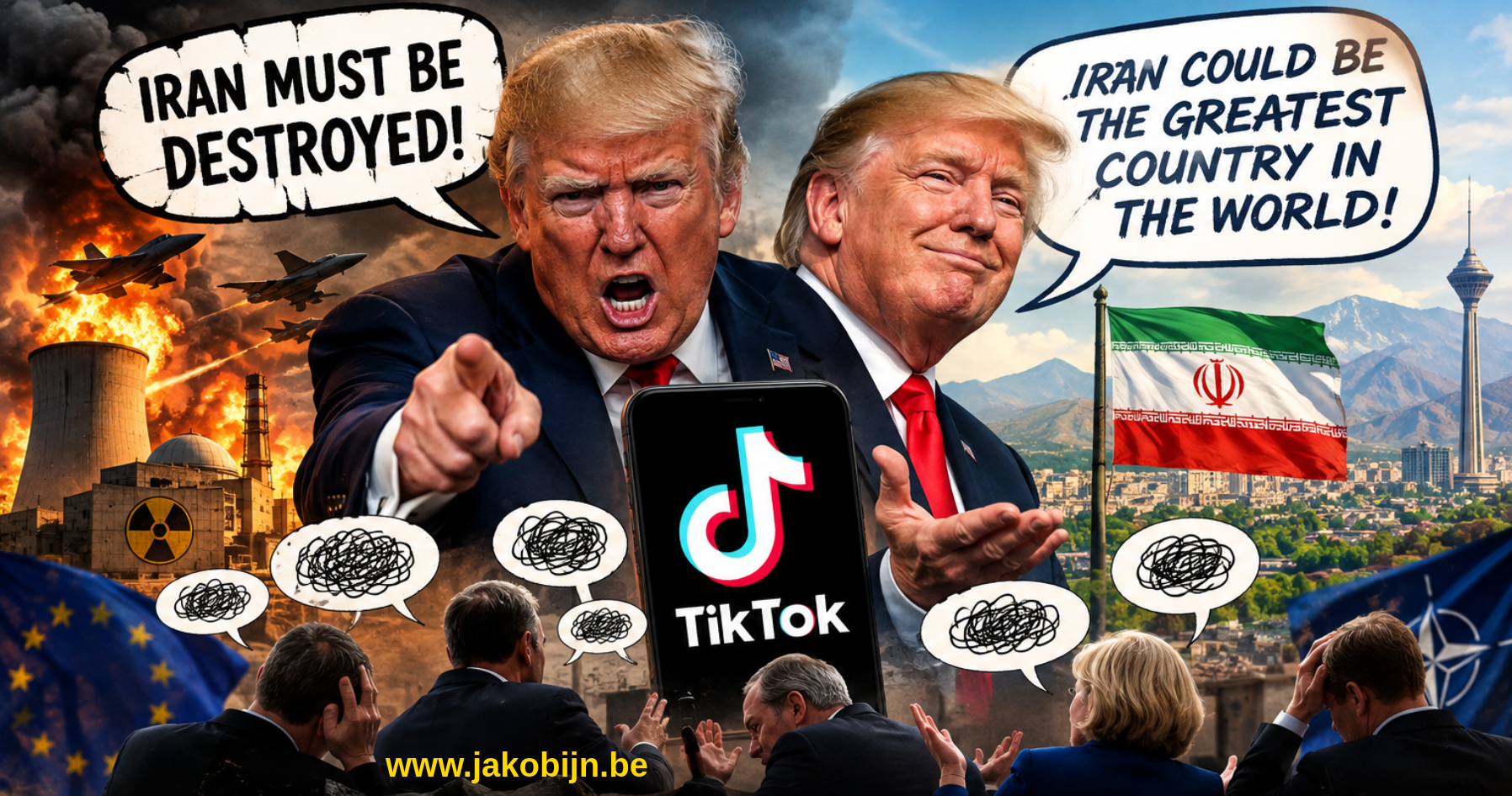
The West has become entangled in its own rhetoric. Western politics is no longer aimed at resolving conflicts, but at producing noise. One example is the erratic attitude of former American President Donald Trump toward Iran. On the one hand, Iran is portrayed as a country that must be destroyed, including attacks on nuclear plants and energy infrastructure. On the other hand, the same country is suddenly praised and it is suggested that it could become "the greatest country in the world."
These extreme contradictions are not only unachievable, they also reveal a profound lack of strategic cohesion. It is political theater, designed for the short attention span of a social media era. Like a TikTok video, the message must be loud, emotional, and direct, with no room for nuance, historical context, or long-term planning. The goal is not achieving a geopolitical result, but maximizing the "message": in this case, sending a signal to the base, dominating the news agenda, or manipulating stock prices.
The Lack of Concrete Diplomatic Processes
A striking contrast is drawn with the way diplomacy used to be conducted. I remember the Oslo process in the 1990s. Although that process ultimately had its own limitations, it was a process. It consisted of months of intensive negotiations, studying maps, weighing proposals, and seeking territorial and political compromises. It was a serious, albeit laborious, attempt to establish peace. Today, that kind of patient diplomacy has virtually disappeared. When there are negotiations at all, such as the recent shuttle diplomacy between the US and Iran, they happen hastily and without any real willingness to compromise.
Iran presented a concrete, seven-day de-escalation proposal, based on existing memoranda of agreement (MOU). Instead of responding to it, the proposal was ignored or rejected. The West seems incapable of responding to concrete proposals because it itself has no concrete goals. It floats above reality, while actors such as Iran, Russia, and China stand with both feet on the ground and know what they want, what they can demand, and what the limits of their actions are.
Intellectual Emptiness: Worse Than Nihilism
The Philosophy of the Vacuum
 One of the most alarming observations is the claim that current Western political culture is no longer even nihilistic. Nihilism still implies a philosophical position: a conscious rejection of meaning, value, or truth, often with a certain goal or a specific worldview.
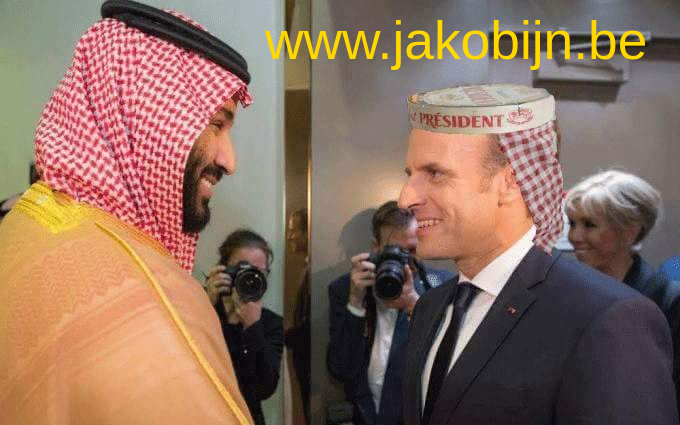
What we see now is worse: it is an absolute emptiness. It is the absence of the will to want anything at all. Western leaders utter words they do not mean, because they know those words will not be translated into deeds anyway. Emmanuel Macron can advocate dialogue with Russia in the same sentence while simultaneously promising to send more troops and weapons to Ukraine. He announced he would send troops to Yanbu in Saudi Arabia to protect an oil terminal, without having even the slightest idea of what those troops would concretely have to do there, especially since the Houthis fired missiles at precisely that area shortly after this announcement.
The Decoupling of Word and Deed
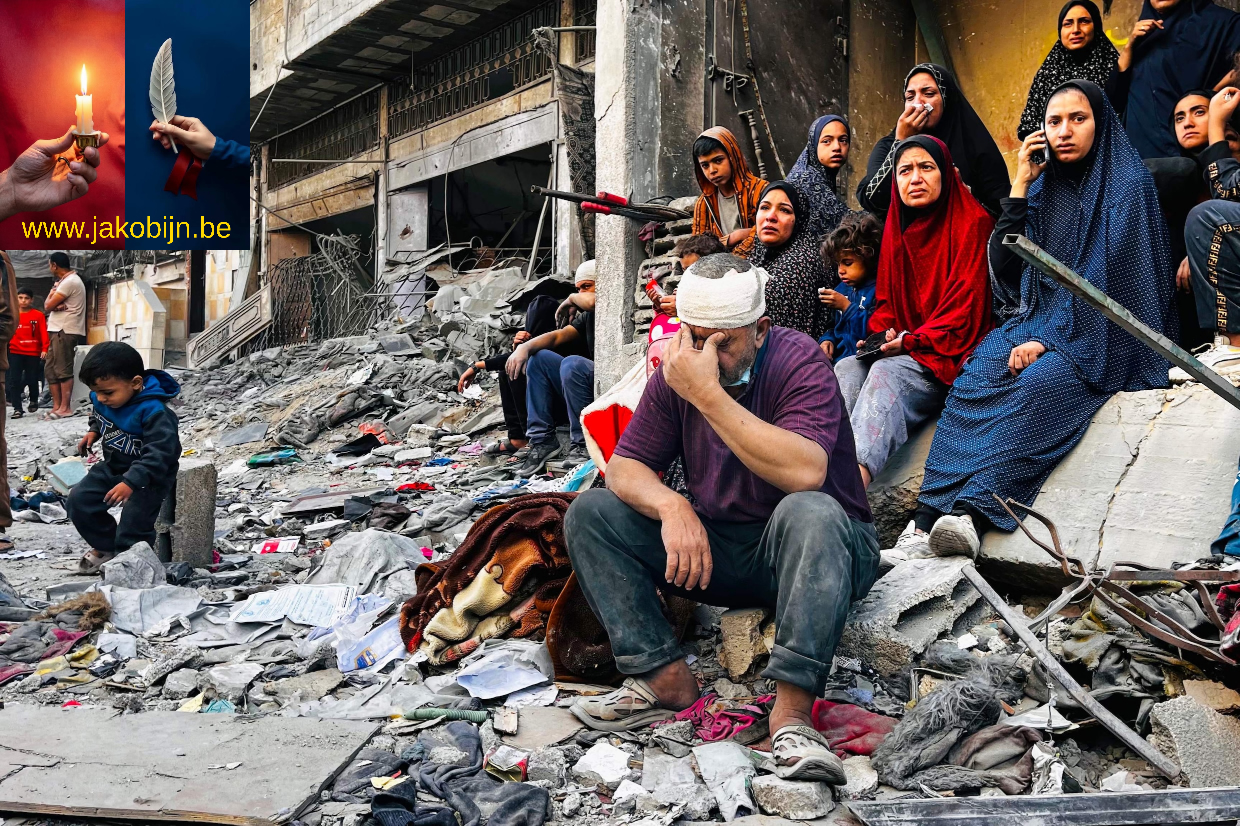 This intellectual emptiness manifests itself in a complete decoupling of word and deed. There is talk of genocide in Gaza, there are statements from the International Court of Justice, and there are resolutions from the UN General Assembly.
But what is the consequence? France, which likes to present itself as a moral leader, actually brought weapons exports to Israel to a historic high in 2023. There is shouting about the rule of law, but action is taken from pure opportunism and fear of electoral loss. This creates a situation of total unpredictability in international relations.
Countries can no longer rely on agreements, because the Western counterpart may chart a different course the very next day, not because of a strategic reassessment, but because of a whimsical decision or a poll that turns out badly. This unpredictability is not a sign of strength, but of fundamental weakness and institutional immaturity.
The Clash of Civilizations: Fantasy Versus Reality
The West in a Self-Created Fantasy World
There is a "cultural shock" and a return to a clash of civilizations, but not in the way Samuel Huntington once described. The clash lies in the difference between a West that lives in a self-created fantasy world, and a "rest of the world" (the Global South, Russia, China, Iran) that lives in hard reality. They regard the West as "The Poison of the World."
When a Chinese, Russian, or Iranian leader makes a statement, it is generally based on a calculation of what is feasible. They know their own capabilities and limitations. They understand that diplomacy is a game of give and take within the limits of physical and political reality. The West, by contrast, throws ideas into the air as if it were wishful thinking. The assumption that one can simply "annihilate" a country like Iran or "defeat" Russia without ever having thought through the consequences of such an escalation testifies to a dangerously infantile worldview.
Waging Holistic War Versus Tactical Obsession
 This difference in worldview translates directly into the way conflicts are approached. As Andrei Martyanov describes it: The West has developed an obsession with tactical, military enumerations. A destroyed Russian tank, a downed drone, or a targeted sanction is celebrated as a "victory."
They can no longer see the forest for the trees. In contrast, countries like Russia and Iran approach war and conflict holistically. They understand that war is a continuation of politics by other means, and that the political, economic, social, and cultural dimensions are at least as important as the purely military ones. The US may have destroyed buildings in Iran or elsewhere, but if it has achieved no strategic or political goal, it has lost.
The Vietnam War is the historical textbook example of this: the US won virtually every tactical battle but lost the war because it completely neglected the strategic and political level as well as the willpower of the oppressed Vietnamese population. The West seems not to have learned this lesson and is repeating the same mistakes in the proxy war in Ukraine and the Middle East.
The Illusion of Control and the Role of the Voter
Politics as a PR Exercise
The driving force behind this emptiness is the reduction of politics to pure public relations. Leaders no longer communicate with citizens to explain policy or share a long-term vision; they communicate to survive the next news cycle. The goal is maximizing the number of votes, full stop. There is no "why," no "for what," and no long-term goal. This dynamic is reinforced by the media ecosystem, which is rewarded for conflict and polarization, not for nuance or depth. The result is a political class that is afraid to speak the truth, because the truth is often complex, painful, and electorally risky. Instead, the easy, empty promise is chosen.
The Complicity of the Electorate
An uncomfortable truth is the role of the Western population itself. There is growing apathy and a lack of critical citizenship. Citizens accept empty promises and contradictory policies. Why does one pay so much more for diesel? Why do energy prices rise while promises are made about energy security? Why are sanctions imposed that harm one's own economy, without a clear strategic end goal being communicated?
The lack of pressure from society allows the political elite to continue this sham. As long as the voter does not demand that words be translated into deeds, and as long as people do not ask about the underlying strategy, "TikTok politics" will continue to prevail. It is a symbiotic relationship between a superficial elite and a disillusioned but passive population.
The Downward Spiral of the West
From 'Rules-Based' to 'Law-Based': The Loss of Credibility
It is necessary to name the broader historical and structural context of this decline. The TikTok-Facebook-WhatsApp madness of Western politics is not an accidental anomaly: it is the symptom of a deeper, structural decline of Western hegemony. A crucial distinction that must be made is that between an "international law-based order" and a "rules-based order." The first is anchored in the Charter of the United Nations, treaties, and international law. It is stable, predictable, and equal for everyone. The second is a Western invention, in which "rules" are flexible and can be adjusted or ignored at will by the most powerful players (particularly the US and its allies).
This shift has been fatal to the credibility of the West. Countries in the Global South, and increasingly also traditionally neutral states, see through this game. They see that sanctions are imposed only on opponents of the West (such as Russia), but never on the West itself, even when international humanitarian law is violated (as in Gaza or during the invasion of Iraq in 2003). This double-standard policy has declared the West morally and diplomatically bankrupt in the eyes of a large part of the world.
The Projection of Weakness as Aggression
The increasing war rhetoric from Western capitals is not a sign of strength, but of panic. As Jacques Baud and Pascal Lottaz rightly note: the worse the situation becomes for Ukraine, the louder European leaders speak about direct war with Russia. This is irrational, but it is a diversionary maneuver. Because the West is incapable of solving the problems it has itself created (in Iraq, Afghanistan, Libya, and now Ukraine), a new external enemy must constantly be created to mask internal failures. This is a classic characteristic of a dying hegemon: it becomes unpredictable, aggressive, and detached from reality. Pure bluff from a region that is regarded by 85% of the world's population as The Poison of the World. The EU likes to forget that it makes up only 5.4% of the world's population.
The Loss of Diplomatic Mediation Power
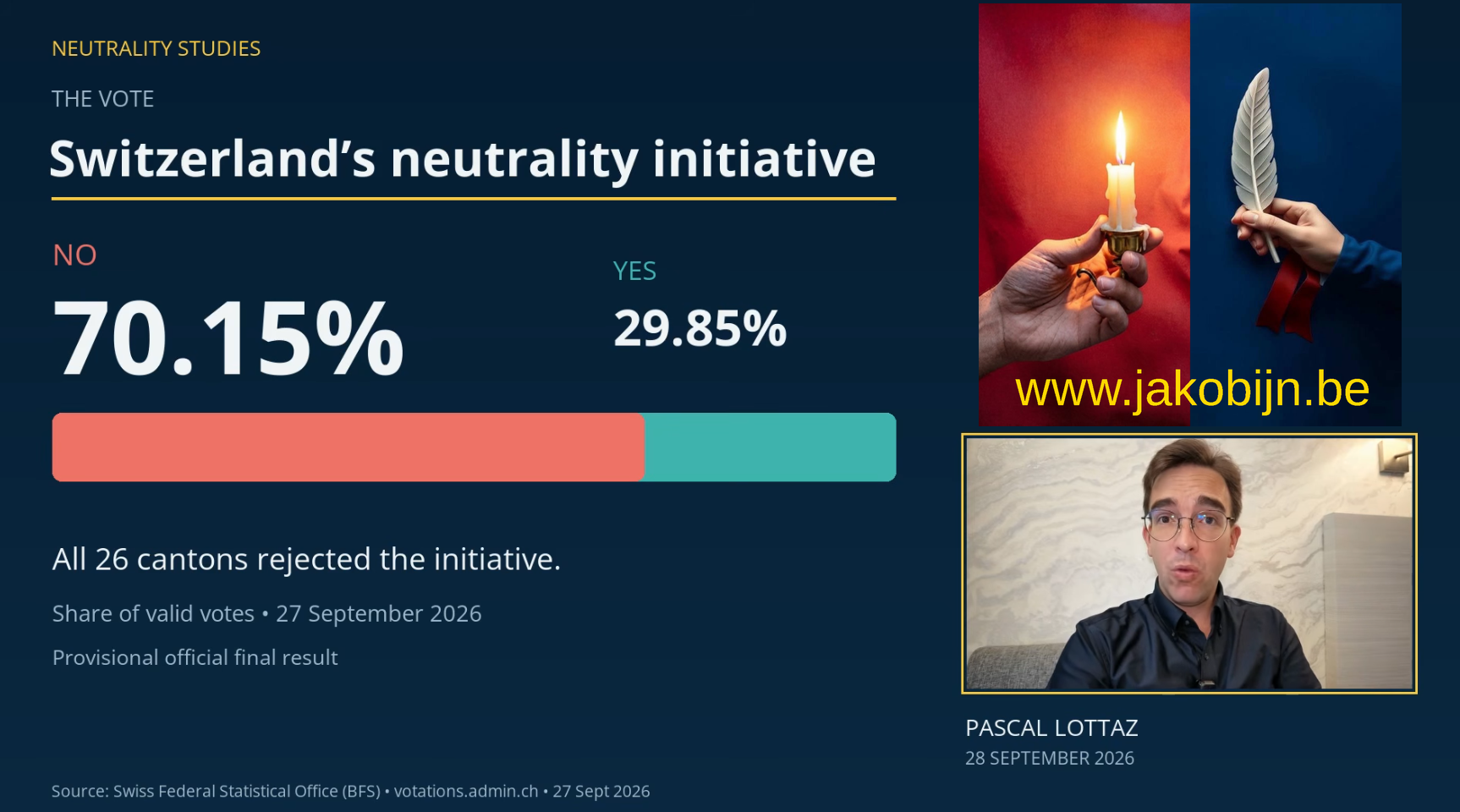
The example of Switzerland is illustrative of the entire West. Switzerland, traditionally the mediator par excellence, has sacrificed its neutrality to pressure from the EU and NATO by imposing sanctions against Russia. Europe is sliding ever deeper into a Russophobic war mentality. Switzerland—of all countries—recently provided the latest proof of this by deciding in a referendum to abandon strict neutrality. And this is about more than just the Swiss. The outcome is a consequence of the current propaganda climate in all of Europe and the general fear of Russia. The result? Russia refused to recognize Switzerland any longer as a "protecting power" for Ukraine in Moscow.
A few extra sanctions did not change the outcome of the war, however, but Switzerland did forfeit its unique, valuable role as an honest broker forever. This is the essence of Western short-sightedness: strategic, long-term values are sacrificed for short-lived, symbolic political gestures.
Recommendations for a Realistic Geopolitical Course
Given this somber diagnosis, it is not enough to simply complain. There is a need for intellectual and strategic renewal. For policymakers, diplomats, and the citizenry in Europe and the broader West, the following recommendations are essential to break the downward spiral.
Below is a list of authoritative sources from the United States, Russia, China, and Iran that support the thesis in my article: that the West suffers from a strategic and intellectual crisis, and that renewal of thinking and a return to realistic diplomacy are necessary to break a downward spiral. These sources have been selected on the basis of their academic, institutional, or policy authority, and offer both internal criticism (from the West itself) and external, sharp observations from global actors.
1. United States: Internal Criticism of Strategic Myopia
The US Army War College: "Avoiding a Long War" (2023)
Source: Kavanagh, J., & Shurkin, M. (2023). Avoiding a Long War: U.S. Policy and Strategy for the Ukraine Conflict. RAND Corporation / US Army War College. This is one of the most authoritative internal strategic documents of recent years. The authors explicitly warn that the US is becoming entangled in a war of attrition without clearly defined, achievable political end goals. The report urgently calls for a "strategic reorientation" and diplomatic off-ramps, because the current path of purely military escalation without political strategy leads to unacceptable risks for American security and global stability. It confirms the need for "strategic renewal."
Prof. Stephen M. Walt (Harvard Kennedy School)
Source: Walt, S. M. (2018). The Hell of Good Intentions: America's Foreign Policy Elite and the Decline of U.S. Primacy. Farrar, Straus and Giroux. (And his subsequent analyses in Foreign Policy). Walt, one of the most prominent realists in American international relations, documents how the US "liberal hegemony" approach has led to a series of strategic failures. He argues that the Western elite is stuck in an intellectual echo chamber in which idealistic rhetoric has taken the place of sober, interest-based strategy. This supports the diagnosis of "intellectual emptiness" and the urgent need for change.
2. Russia: Analysis of Western "Strategic Autism"
Fyodor Lukyanov (Russia in Global Affairs)
Source: Lukyanov, F. (Various editorials in "Russia in Global Affairs", including "The End of the World Order and the Future of the West", 2022-2024). As editor-in-chief of the leading journal "Russia in Global Affairs" and chairman of the Presidium of the Council on Foreign and Defense Policy, Lukyanov analyzes the Western response to the multipolar transition. He uses a term such as "strategic autism" to describe how Western elites refuse to acknowledge the reality of a changing world order. He argues that the West is stuck in a self-created fantasy and that any form of effective policy is impossible as long as there is no intellectual acceptance of the limits of Western power. This validates the call for a fundamental intellectual renewal.
3. China: Observations on Western Strategic Confusion
Prof. Wang Jisi (Peking University)
Source: Wang, J. (2022). "America’s Strategic Confusion and Its Impact on the World". Institute of International and Strategic Studies, Peking University. Wang Jisi, one of China's most respected international relations scholars and former adviser to the Chinese leadership, repeatedly points out that American foreign policy is dominated by domestic political polarization rather than a coherent long-term vision. He identifies this as "strategic confusion," in which the US responds with ad-hoc measures and rhetoric instead of a well-considered grand strategy. His analysis underscores that the West is losing credibility because it has no consistent, executable plan, which only makes the need for renewal more urgent.
4. Iran: The Failing Illusion of Coercive Policy
The Strategic Council on Foreign Relations (SCFR)
Source: Publications and policy analyses of the SCFR (including analyses on the failure of "Maximum Pressure" and the need for regional diplomacy, 2023-2025). The SCFR is one of the most important independent think tanks in Iran, affiliated with Iranian establishment thinkers. Their analyses consistently argue that Western policy in the Middle East fails because of a fundamental lack of understanding of regional dynamics and an obsession with unachievable, coercive tactics (such as mentioning "annihilation" or unrealistic demands). They emphasize that only a return to classical diplomacy based on mutual respect (such as the seven-day de-escalation proposal mentioned in the transcript) can work. This confirms the thesis that the current Western path is a "downward spiral" that can only be broken by intellectual humility and strategic renewal.
Prof. Seyed Mohammad Marandi (University of Tehran)
Source: Marandi, S. M. (Various lectures and publications, including via the "Tehran Times" and international forums on Western hypocrisy and strategic failure). Marandi often puts his finger on the sore spot of Western "TikTok politics": the gap between moral rhetoric (human rights, democracy) and the reality of policy (arms supplies, sanctions that hit civilians). He argues that this cognitive dissonance makes the West unsuitable as a reliable partner in diplomatic processes, unless there is a fundamental shift from ideological crusades to realistic weighing of interests.
What Needs to Happen
What stands out about these four sources, originating from four fundamentally different political systems, is the convergence of their diagnosis. Whether it concerns an internal American military strategic report, a Russian realist, a Chinese academic, or an Iranian think tank: they all signal that the West has lost its strategic compass. They not only substantiate the "bleakness of the diagnosis," but also make clear that the recommendations for intellectual and strategic renewal are not Western self-flagellation, but an objective necessity perceived by the entire international community. Ignoring this consensus will inevitably accelerate the downward spiral of the West's credibility and influence.
1. Return to Classical, Patient Diplomacy
The West must abandon the illusion that conflicts can be "won" or "resolved" via tweets, press conferences, or ultimatums. Diplomacy is a craft that requires time, discretion, and mutual respect. Europe must commit to restoring genuine negotiation channels, not as a sign of weakness, but as a mark of mature statesmanship. This means being prepared to sit at the table with adversaries (such as Russia, Iran, or the Houthis) without setting unattainable preconditions. The Iranian proposal for a seven-day de-escalation should have been seriously studied and taken as a basis for talks, instead of being arrogantly brushed aside.
2. Recognition of the Multipolar World and Abandoning the Superiority Complex
The greatest obstacle to Western effectiveness is the stubborn belief in its own superiority. The West must recognize that it is no longer the sole architect of the world order. Countries such as China, Russia, India, and the emerging powers of the Global South have their own legitimate interests, security concerns, and worldviews. Instead of demonizing or ignoring these, the West must learn to navigate this multipolar reality. This requires humility: acknowledging that one is not always right, and that the "rest of the world" often has a better understanding of the local dynamics in their own regions.
3. Restoration of Strategic Autonomy for Europe
Europe must free itself from Washington's echo chamber. American domestic politics, with its extreme polarization and unpredictability (as illustrated by Trump's fickleness), is a poor basis for European security policy. Europe must develop its own independent strategic vision aimed at the interests of the European citizen, not at executing the geopolitical agenda of any given American administration. This also means reconsidering the automatic adoption of sanctions and prioritizing European energy security and economic stability over ideological crusades.
4. Promotion of Media Literacy and Critical Citizenship
"TikTok politics" can only survive as long as the population accepts it. There is an urgent need to deepen public debate. Media, academics, and civil society organizations must take responsibility not merely to repeat politicians' superficial statements, but to see through them. Citizens must be encouraged to ask the difficult questions: "What is the concrete goal of this policy?", "What is the plan B?", and "How does this serve peace and prosperity in the long term?". Without a critical, engaged citizenry, politics remains an empty spectacle.
5. Redefinition of Neutrality and Independence
For countries that traditionally play a mediating role (such as Switzerland, but also countries like Austria or Ireland, and in a broader sense the EU as a whole), it is crucial to restore credibility. This means maintaining a strict, principled neutrality that does not waver with the political wind of the moment. A credible neutral actor is more valuable for international stability than a party that lines up behind one of the warring sides and thereby squanders any possibility of mediation.
Conclusion
These analyses are an uncomfortable mirror held up to the West. The title "The TikTok level of Western politics: without plan, without vision, without understanding of the adversary" is harsh, but it is an accurate description of a political culture that has become entangled in its own rhetoric. We live in an era in which the complexity of the world is increasing, but the intellectual capacity of Western leadership and its population to grasp that complexity appears to be diminishing. The obsession with PR, the absence of a holistic strategy, and the refusal to accept the reality of a multipolar world not only discredit the West, but also increase the risk of unnecessary and catastrophic escalations.
The way forward requires no new, even louder slogans. It requires silence, reflection, and the courage to return to the foundations of classical diplomacy: patience, mutual understanding, and the willingness to compromise in the higher interest of peace and stability. It is time to leave the TikTok mentality behind and rediscover the maturity needed to face the challenges of the 21st century. History will not judge the strength of our tweets, but the wisdom of our actions. And on that point, the West currently stands at a failing grade.
From October 15, I will be staying in Hanoi to continue working on my book: THE PRICE OF ILLUSION - American Veterans and Vietnamese Survivors - Email: de.jakobijn@gmail.com

Introduction to the first Hanoi article: From my permanent residence in the old center of Hanoi, where I lived from 1982 to 1988, the West appears not merely morally bankrupt, but above all clinically insane. Let me begin with some facts, such as postal code 100000: The population of Hanoi, a city that bears the scars of a criminal Western war, is now estimated at 9.4 million inhabitants. The total area of Hanoi is 3,328 square kilometers and the population density is 2,300 inhabitants per square kilometer. Ho Chi Minh City now has 10.5 million inhabitants. The Flemish Region has 6.9 million inhabitants and Belgium 11.8 million.
In 2030, Hanoi (GDP + 8.16%) will have as many inhabitants as ungovernable Belgium and be efficiently governed by a fraction of the number of politicians that Belgium (GDP + 0.3%) needs: Belgium has 6 governments, writes Fedasil. With 371 inhabitants per paid politician, writes VRT. In the 565 municipalities, more than 13,000 municipal councilors are to be elected. The 19 municipalities of the bankrupt Brussels-Capital Region are a sad symbol of this.