
Ukraine Will Be a Cancer on Europe & Iran a Quagmire for the USA
The Collapse of Western Diplomacy
By Frank Dumon
The contemporary geopolitical landscape is increasingly defined by a series of compounding crises, each exacerbated by a profound failure of Western statecraft. From the battlefields of Eastern Europe to the diplomatic corridors of the Middle East, the United States and its European allies appear trapped in a cycle of emotional rhetoric, strategic denial, and performative politics. In a recent and deeply revealing conversation, former US Ambassador Chas Freeman provided a stark, unvarnished assessment of three live diplomatic crises that the West is currently mishandling: the impending collapse of Ukraine, the illusion of American mediation, and the strategic vacuum surrounding Iran.
Freeman’s analysis cuts through the prevailing narratives of Western capitals, offering a sobering reminder that diplomacy is not a peacetime luxury, but a wartime necessity. As the United States continues to act as a co-belligerent rather than an honest broker, and as Europe remains paralyzed by a Russophobia that serves as a substitute for actual strategy, the consequences are becoming impossible to ignore. Ukraine is not evolving into a "whole, free, and European" success story; rather, it is on a trajectory to become a miserable, corrupt rump state that will act as a destabilizing cancer on both Europe and Russia. Meanwhile, in the Middle East, the absence of a coherent American plan for Iran, coupled with the Gulf states’ quiet departure from US patronage, signals a fundamental realignment of global power. This article examines these nine critical dimensions of the current geopolitical unraveling, drawing on historical precedent and diplomatic realism to outline the urgent need for a return to sober, technical statecraft.
The Implosion of Ukraine: From "Whole and Free" to a Revanchist Rump State
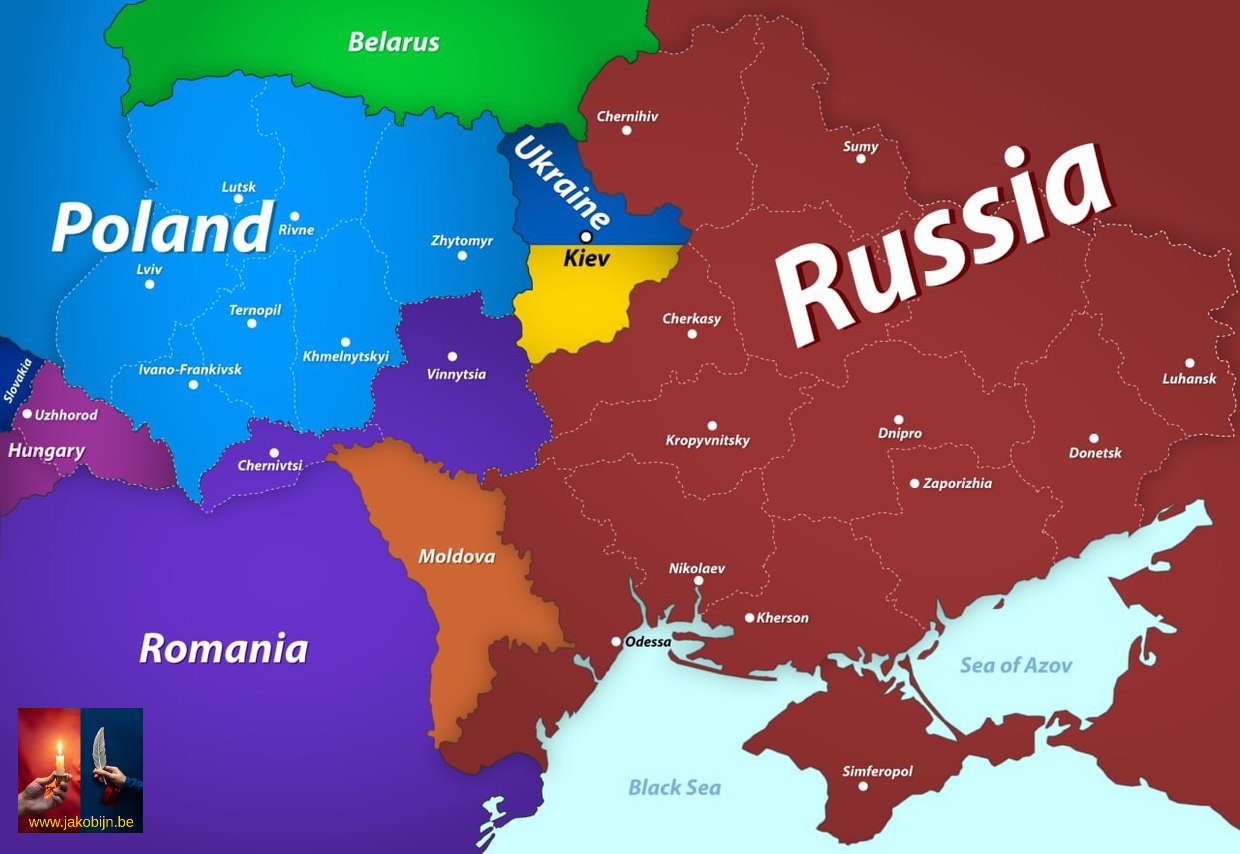
For years, Western policymakers have propagated the illusion that Ukraine is on an inevitable path to becoming a prosperous, democratic cornerstone of a "whole and free" Europe. The reality on the ground, however, tells a radically different story. Ukraine is imploding politically and losing decisively on the battlefield. The country is suffering immense territorial losses, facing a catastrophic winter without adequate heating infrastructure, and finding its agricultural export capabilities severely crippled.
The likely end-state of this conflict is not a victorious, integrated Ukraine, but a smaller, impoverished rump state. This diminished entity will be more corrupt than ever, economically devastated, and entirely unqualified for membership in either the European Union or NATO. More dangerously, it will likely be dominated by Western Ukrainian ultra-nationalists who will refuse to accept the reality of their country’s defeat. Instead of serving as a constructive buffer and a bridge between Russia and the rest of Europe, this rump state will be driven by revanchist nationalism. It will be a leveraged, unstable entity, perpetually seeking to drag its neighbors back into conflict. As Ambassador Freeman starkly warns, rather than being a keystone of stability, this fractured Ukraine will become a "cancer on both" Europe and Russia, exporting instability, corruption, and unresolved grievance for generations to come.
The Myth of the Honest Broker: Why Washington Cannot Mediate Its Own War
 A fundamental principle of conflict resolution is that a co-belligerent cannot simultaneously serve as a neutral mediator. Yet, the current US administration operates under the preposterous assumption that it can broker peace in a war it is actively fueling. Washington is not an honest broker; it is a direct party to the conflict. The United States provides critical intelligence support, facilitates long-range strike targeting, and continues to deliver advanced weaponry, thereby sharing a substantial portion of the war’s burden alongside European allies.
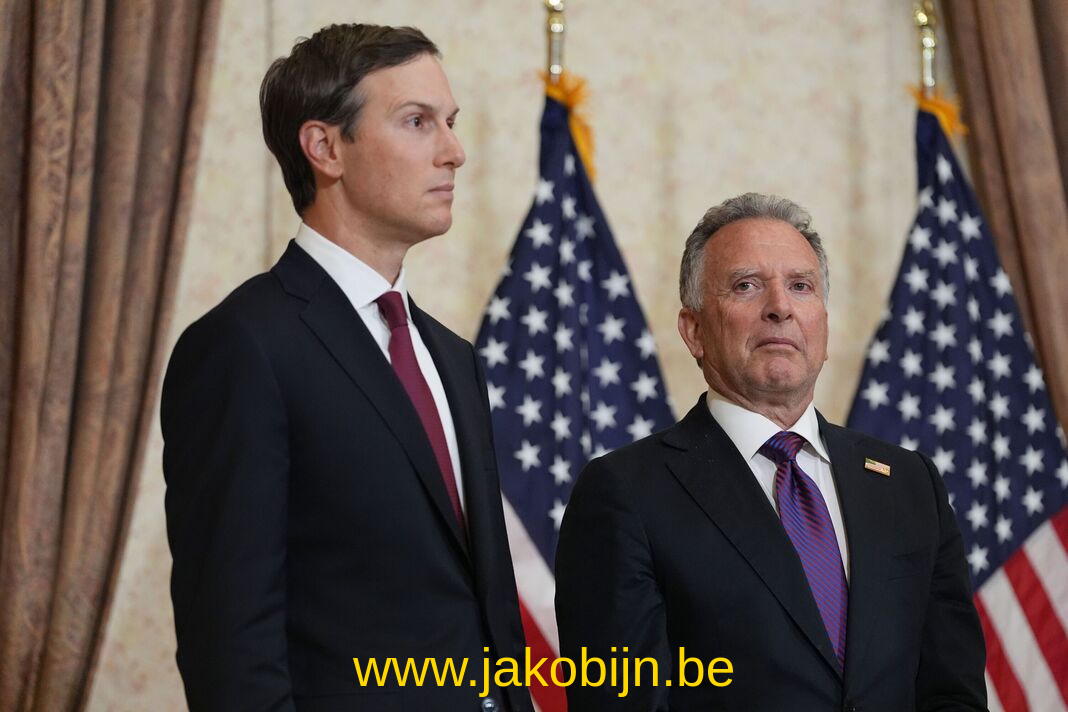
This inherent contradiction was laid bare by the recent, ill-conceived journeys of figures like Steve Witkoff and Jared Kushner to Moscow and Kyiv. These individuals, lacking official diplomatic capacity, formal training, or deep knowledge of the terrain, represent nothing more than the personal cronies of a former president. Their mission is less about statecraft and more about political theater, an attempt to feign diplomatic activity where none can genuinely exist. Peace cannot be negotiated by unqualified envoys making two-hour drop-ins. It requires sustained, technical, and deeply detailed negotiations conducted by experienced professionals. The Istanbul talks of 2022 demonstrated precisely what was possible when such technical negotiations were allowed to proceed. That framework was scuppered by external political interference, notably from figures like Boris Johnson, and it has been rejected and ignored ever since. Until the West acknowledges that it cannot mediate a war it is actively fighting, any "peace initiative" will remain a hollow pretense.
The Imperative of Wartime Diplomacy: Keeping Channels Open
One of the most dangerous fallacies of modern Western foreign policy is the belief that diplomatic relations should be severed during times of active conflict. Breaking off contact is not a strategy; it is a luxury that only the foolish can afford. Diplomacy must remain open precisely when the stakes are highest. As Ambassador Freeman notes, diplomats have an ethical responsibility to keep lines of communication open and to keep issues open to resolution by means short of war or harmful coercion.
History provides clear lessons on this matter. During the Sino-Indian border war of 1962, and later during the Sino-Vietnamese conflict, China deliberately kept its embassies open in Delhi and other capitals. The Chinese understood a fundamental geopolitical truth: you cannot manage a conflict, let alone resolve it, if you refuse to speak to your adversary. Diplomatic dialogue is the primary mechanism for preventing miscalculation, managing escalation, and laying the groundwork for eventual cessation of hostilities. To insult an adversary carelessly or to sever ties entirely is to abandon the very tools designed to prevent total war. The current Western tendency to isolate Russia diplomatically is not a display of strength; it is a profound failure of diplomatic statecraft that guarantees a longer, more destructive conflict.
Europe’s Strategic Amnesia and the Lesson of Vienna
Europe’s approach to the Russian Federation is currently dictated not by strategic calculation, but by an emotional and historically myopic Russophobia. As Freeman astutely observes, Russophobia is not a policy; it is a substitute for one. Historically, this sentiment was a highly effective tool of British diplomacy in the 19th century. By fostering suspicion of Russia, London successfully kept the European continent divided, balancing Prussia, the Austrian Empire, and France against one another, thereby preventing any single power from dominating the Eurasian landmass.
 Today, however, this historical tool has been repurposed by a continent that has forgotten the core lessons of its own diplomatic heritage. Europeans have no viable strategy for survival and prosperity without American backing, and they rightly fear that this backing is becoming increasingly unreliable. Yet, instead of developing an independent strategic vision, they remain locked in a state of denial, parroting moralistic platitudes about "wicked" adversaries while ignoring the material realities of geography and power.
The definitive lesson of European history is that there can be no durable peace on the continent without the inclusion of all European great powers in a collective security order. After the Napoleonic Wars, the architects of the Congress of Vienna in 1815 wisely chose to reintegrate a defeated France into the European balance of power, rather than permanently excluding it. Conversely, after World War I, the Treaty of Versailles pursued a vindictive and exclusionary peace, deliberately shutting out both a still-powerful Germany and the newly formed Soviet Union from the councils of Europe. This catastrophic error directly paved the way for the Second World War. Today, Europe is repeating this mistake by attempting to permanently exclude Russia from the continental security architecture. A stable, prosperous Europe is impossible without a normalized, mutually respectful relationship with the Russian Federation, a reality that current European leadership seems utterly incapable of acknowledging.
Israel’s Disproportionate Retaliation and the Erosion of UK Sovereignty
The collapse of diplomatic norms is not confined to Eastern Europe; it is equally evident in the Middle East, particularly in the relationship between the United Kingdom and Israel. Recently, the UK imposed minor, largely symbolic trade measures amounting to a mere £14 million annually. In response, Israel executed a disproportionate and highly calculated diplomatic retaliation. The Israeli government effectively shut down the UK’s ability to maintain relations with the Palestinians, closing the British Consulate General in Jerusalem, blocking UK participation in the International Support Group for Gaza, and halting British involvement in training Palestinian security services.
From a diplomatic standpoint, this is a profound test of sovereignty. Israel has effectively vetoed the United Kingdom’s independent foreign policy in the region, exploiting a minor trade dispute to enforce a broader political blockade. The assumption in London appears to be that reciprocating with equivalent diplomatic or financial measures would invite the wrath of the American political establishment, leading to a posture of passive acquiescence. This is a dangerous precedent. When a foreign power can dictate the terms of a sovereign nation’s diplomatic engagements through punitive retaliation, that nation has ceased to act as an independent actor. A responsible foreign policy would demand a firm, reciprocal response, including the potential expulsion of Israeli diplomats, to reestablish the boundaries of acceptable state-to-state conduct. The failure to do so signals a troubling erosion of Western diplomatic integrity.
Iran and the Illusion of Force Without Statecraft
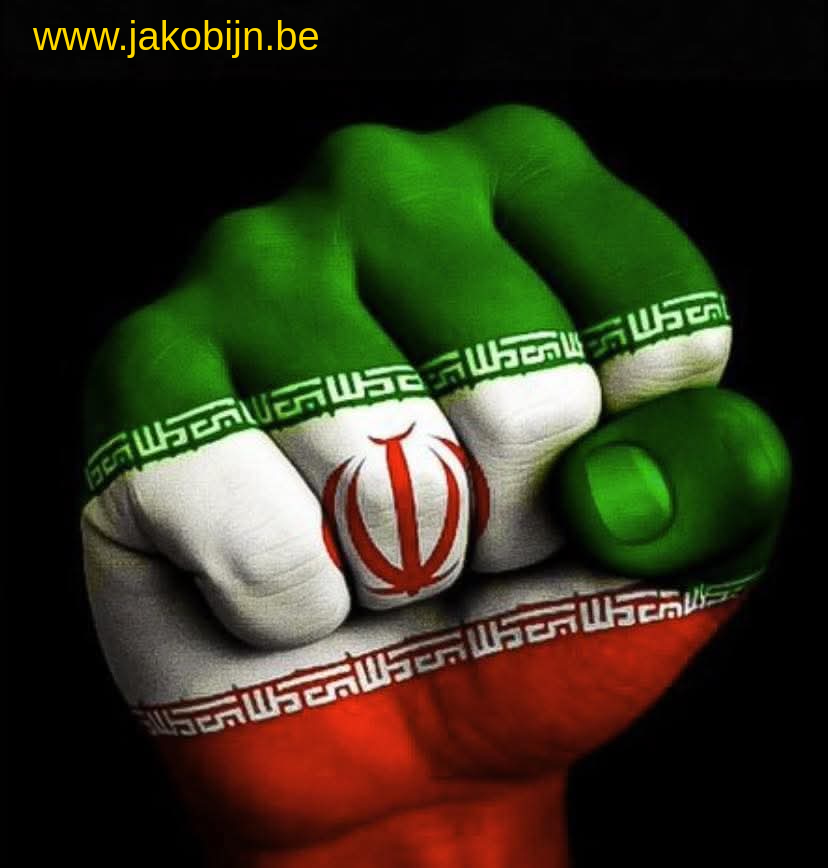
The third major crisis mismanaged by the West is the ongoing confrontation with Iran. The prevailing approach, particularly under the influence of figures like Donald Trump, is characterized by a complete absence of a coherent political plan. The strategy defaults to the arbitrary and capricious application of force, operating under the delusion that military pressure alone can yield favorable political outcomes. As the historical record consistently demonstrates, force without a clear political objective is not statecraft; it is merely violence.
The stated goals of the maximum pressure campaign against Iran have been an unmitigated failure. The objective of regime change has backfired spectacularly. Rather than empowering moderate, democratic forces, the external pressure has entrenched the Islamic Revolutionary Guard Corps (IRGC). The new regime is harder-line, more militaristic, and less constrained by theological reasoning than its predecessors. Furthermore, the goal of dismantling Iran’s nuclear capabilities has achieved the exact opposite. Having witnessed the fate of leaders who relinquished their deterrents, and observing the West’s inability to enforce agreements, Iran has been given a vigorous, practical demonstration of the need for a nuclear deterrent. The pressure campaign has made Iran’s development of a nuclear device far more likely, not less.
Instead of weakening and isolating Iran, Western policies have entrenched it, allowing it to expand its influence and throttle critical global hydrocarbon supplies. This has contributed directly to global energy and food crises. Without a diplomatic off-ramp or a negotiated framework, the US and its allies are trapped in a cycle of pointless escalation, undermining their own credibility while failing to achieve a single strategic objective.
The Gulf’s Strategic Autonomy: Moving Beyond American Patronage
While Washington remains fixated on ineffective coercion, the nations of the Gulf are quietly but decisively rewriting the regional security architecture. For decades, the Middle East was governed by a patron-client relationship, with the United States (having inherited the role from Britain in 1967) guaranteeing security in exchange for strategic compliance. That era is ending. Gulf states, led by Saudi Arabia and the United Arab Emirates, have recognized a fundamental truth: American military bases in the region do not serve as a shield; they act as a magnet for attacks.
Consequently, these nations are actively building their own cooperative security arrangements, moving decisively away from subservience to American power. A prime example is the emerging "Mecca Defense Agreement" or alliance, which seeks to consolidate a strategic relationship between Saudi Arabia, Pakistan, and Turkey. This is not a formal, NATO-style alliance with a unified command, but rather a pragmatic, flexible coalition designed to balance both an aggressive Israel and an assertive Iran.
This tripartite framework is formidable. It combines Pakistan’s nuclear capabilities and abundant labor force, Saudi Arabia’s financial resources, and Turkey’s advanced industrial capacity and formidable military. It is a clear repudiation of the notion that the Gulf must rely on Western protection. Notably, this realignment is supported by both Russia and China, as it serves their interest in diminishing American hegemony in the region. Even Iran, despite being a target of this balancing act, has welcomed the shift, recognizing that a multipolar Middle East is preferable to one dominated by a single, unpredictable external power. The Gulf states are pursuing strategic autonomy, and they are doing so without seeking counsel from Washington.
Conclusion: The Urgent Need for a Return to Realistic Statecraft
The convergence of these crises paints a grim picture of Western foreign policy. The United States and its European allies are attempting to manage 21st-century geopolitical realities with a toolkit defined by ideological rigidity, historical amnesia, and emotional reactivity. The belief that Ukraine can be sustained indefinitely as a proxy, that Iran can be bullied into submission without a diplomatic framework, and that the Gulf states will indefinitely tolerate a patron that cannot protect them, is a dangerous delusion.
Ambassador Chas Freeman’s warnings serve as a crucial corrective to this prevailing madness. The path forward does not lie in doubling down on failed policies or in relying on unqualified political cronies to perform diplomatic miracles. It requires a return to the sober, technical, and often unglamorous work of traditional statecraft. It requires acknowledging that durable peace in Europe necessitates the inclusion of Russia in a new security architecture. It demands that the West recognize its role as a co-belligerent in Ukraine and cease the pretense of neutral mediation. It requires the courage to maintain diplomatic channels even with adversaries, and the wisdom to understand that force is only useful when it serves a clearly defined political objective.
If the West continues to ignore these realities, it will not only lose the ongoing conflicts but will also forfeit its credibility and influence on the global stage. Ukraine will become the cancerous rump state that destabilizes the continent, Iran will accelerate its nuclear ambitions in a vacuum of diplomacy, and the Middle East will realign entirely without Western input. The time for polishing failure and rebranding defeat is over. The time for realistic, prudent, and courageous diplomacy is now.